
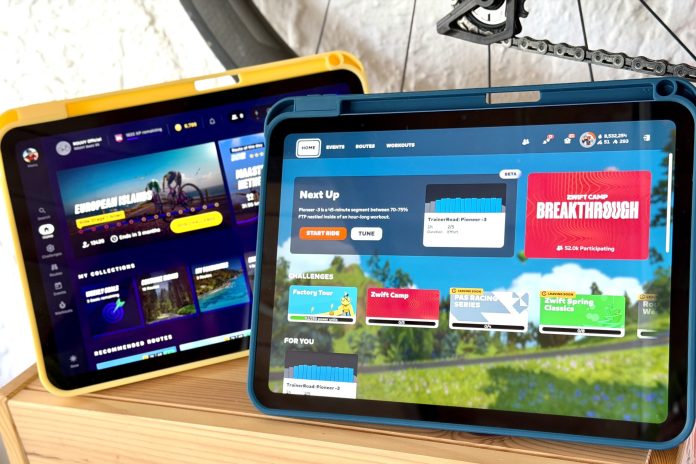

Zwift has announced that they have acquired Rouvy, including the FulGaz platform that Rouvy previously acquired. Likewise, Rouvy had bought Bkool last summer, but ended up folding that same platform in Rouvy last month and closing Bkool.
However, unlike the Rouvy/Bkool combo, Zwift says they plan to run the two companies as they are with separate roadmaps and subscription services. In fact, short of a few hardware compatibility tweaks, almost nothing meaningful changes on either side (including both staff and users).
Zwift specifically noted that “Both Zwift and ROUVY will continue to operate independently, with separate roadmaps and subscription packages”. Zwift did not disclose the financial terms of the acquisition.
What Changes?
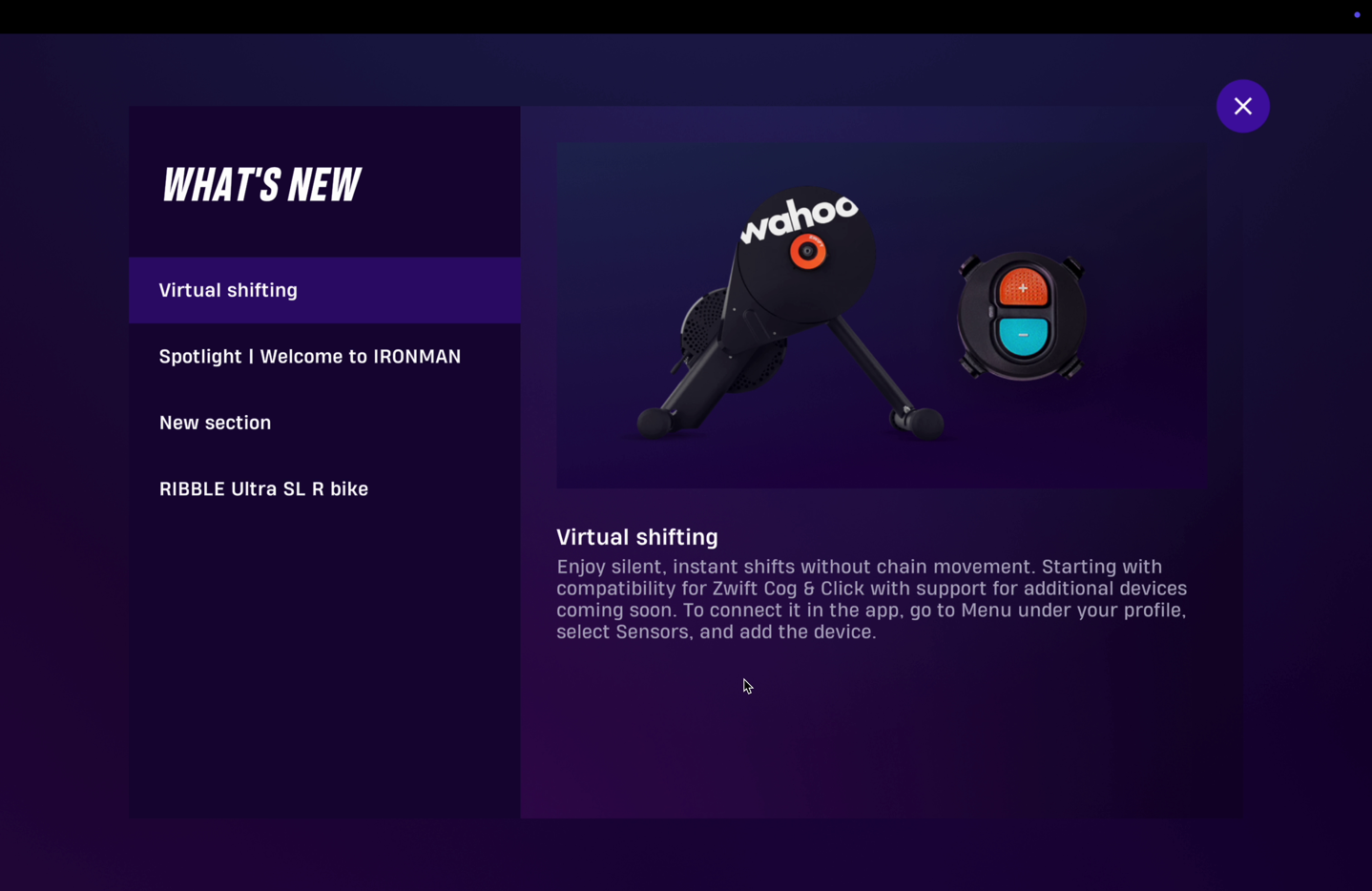
(Screenshot from last year, when Rouvy added unofficial support for Zwift hardware)
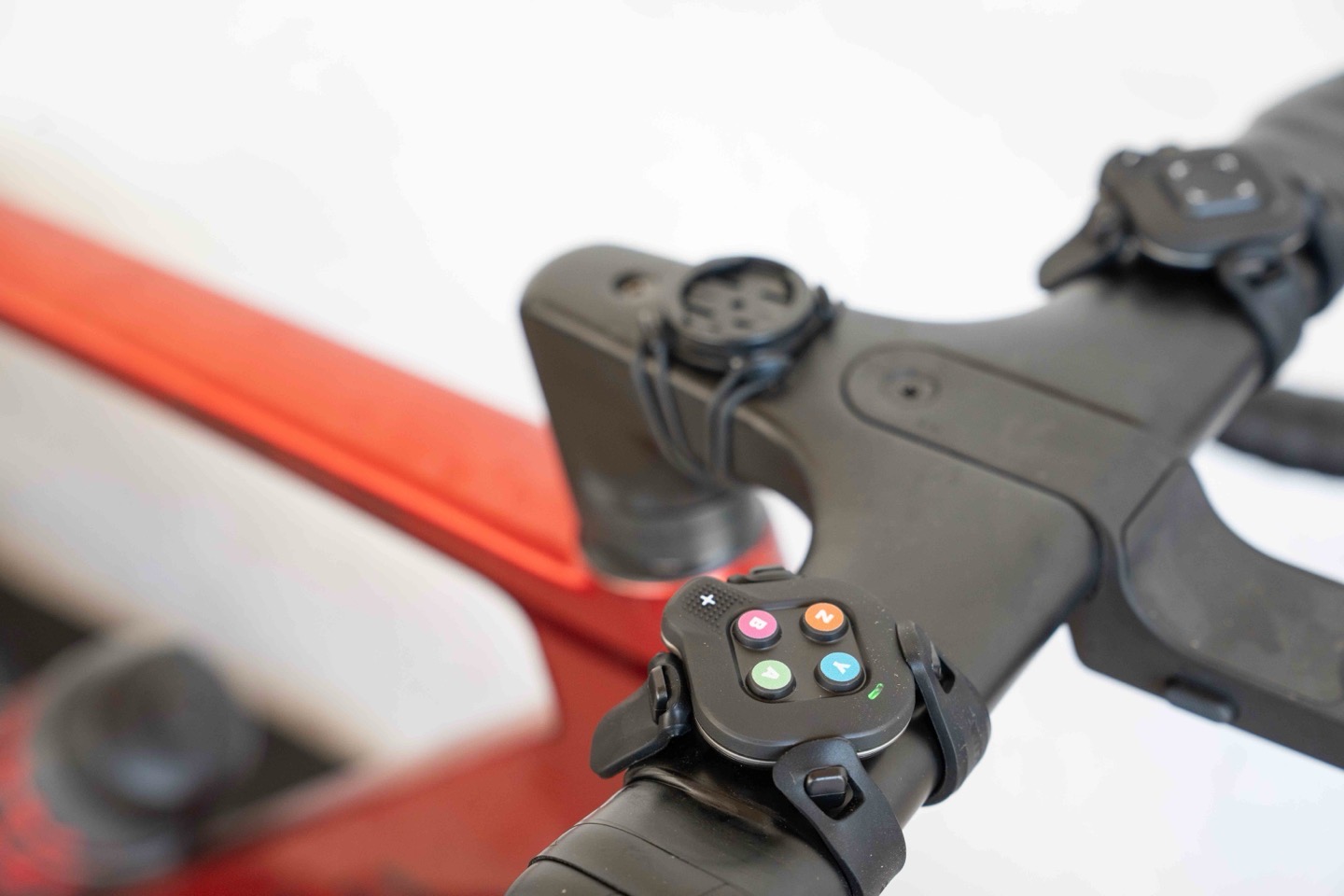
Actually, one main thing is changing going forward, which is the full support of Zwift hardware inside Rouvy. This focuses on Zwift Click/Cog, and the Zwift Ride platform. Right now, Zwift Play isn’t included, because it doesn’t run the Zwift Protocol (Zwift said it’s unclear if that will change down the road).
This is somewhat of a funny change, as it was Rouvy that first refactored the Zwift hardware to work within Rouvy (albeit with varying and often changing success). That was necessary because instead of adopting (or expanding) industry standards, Zwift created the Zwift Protocol and basically forced trainer manufacturers to use it (which they all did). That left apps like Rouvy somewhat out in the cold when it came to consumers looking to use Zwift Cog-equipped trainers.
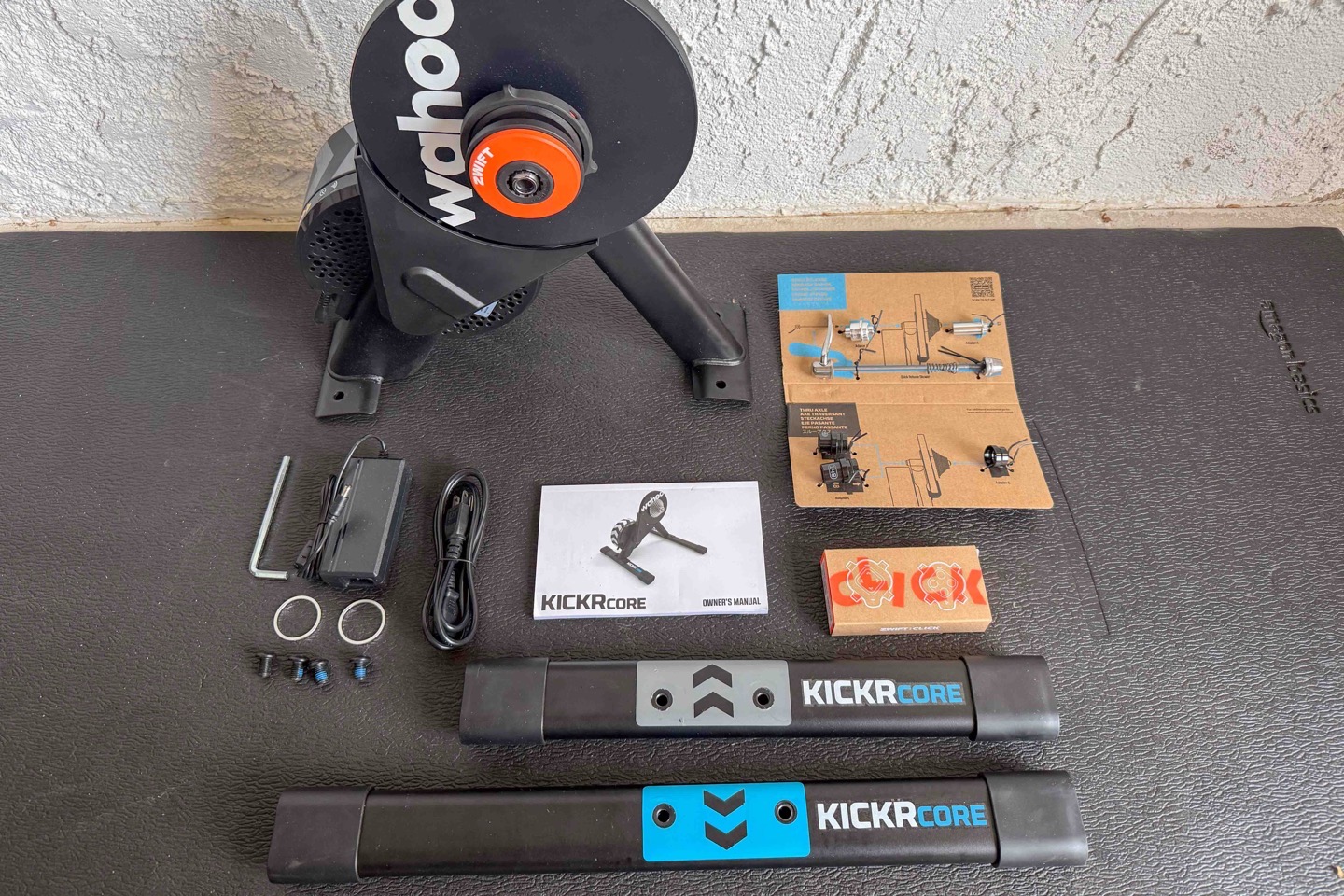
The bright side here for Rouvy customers is that Zwift says that as of today, that is officially supported on Rouvy. That comes in two stages. The first is a software update to Rouvy that improves compatibility, and the second is the actual support side of things. In addition, Zwift says they expect to continue refining/tweaking the integration within Rouvy to improve it a bit. Today, that integration will include virtual switching and in-game navigation. Although currently Rouvy as a platform has no support (or concept) for steering or braking, so that is not allowed today.
The real downside is that this doesn’t bring the Zwift Protocol closer to being an industry standard, and thus, that hurts consumers since the main promoter of trying to unlock that is now out of the picture (or, in the picture depending on how you look at it).
Other than that hardware change, really nothing else has changed. For example, ask me about all of the following:
Will users of any platform reach the other side? No, the subscription remains the same.
Will Rouvy highlight the characteristics of the Tour de France avec Femmes: No, that funding does not change.
Will team funding change in any way? No, the existing professional groups sponsored by both parties remain as they are.
Will completed workouts in Rouvy update your Zwift training history/load/ etc…? No, at least not anytime soon. Maybe down the road, but it didn’t sound like this was on the radar.
Will the various experiences be transported from one side to the other? No, there are no changes there either.
Will there be a squirrel in Rouvy? I didn’t ask this, though, I should. But I think we know the answer.
Is Rouvy CEO Petr Samek staying? Yes, he stays on the ship to lead the Rouvy side of things. That’s a good thing, as he’s a smart (and professional) duck, and I think he brings unique technical details that could benefit Zwift and Rouvy.
See, this is easy, right?
The future?
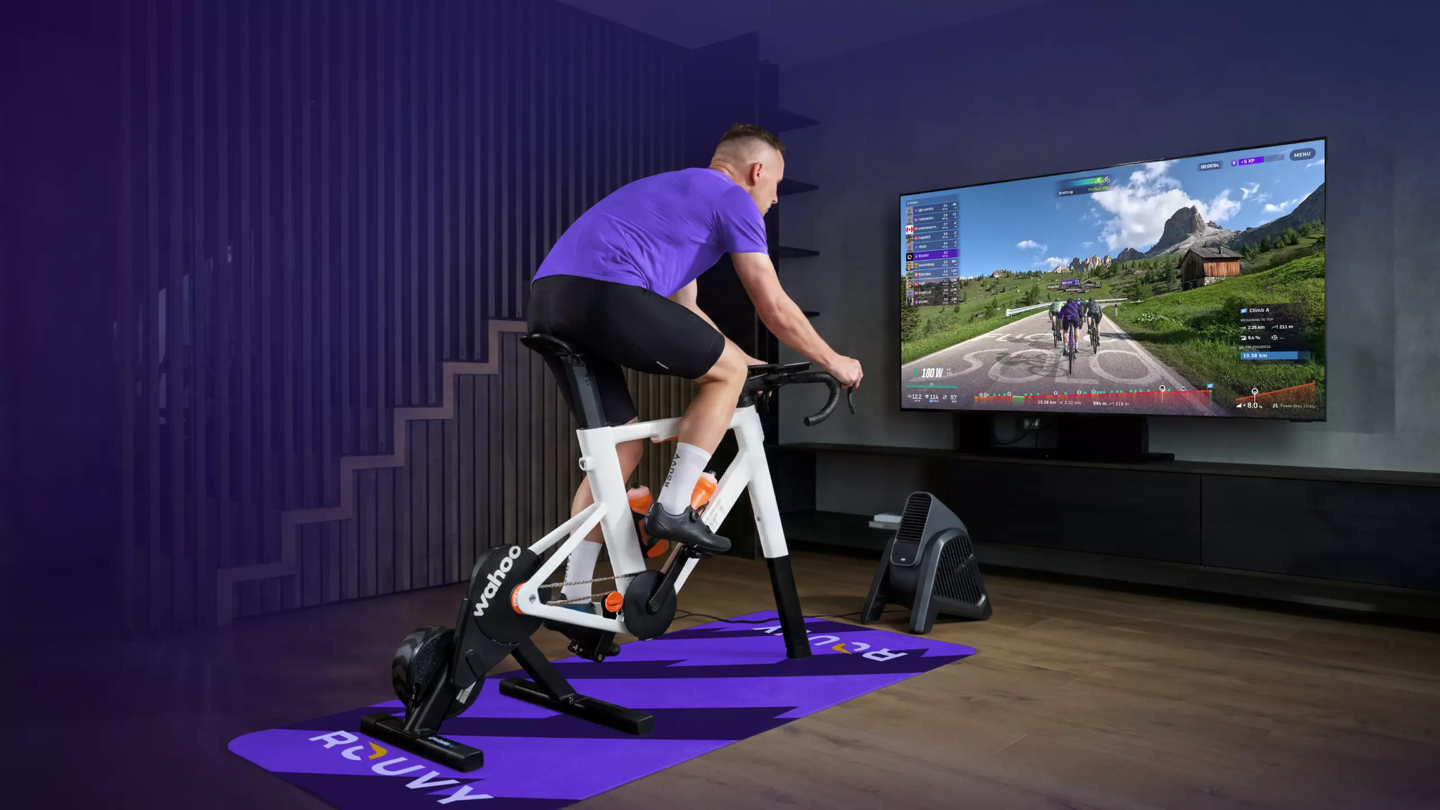
One thing I asked was what was the purpose of all this. Why bother getting Rouvy? A Zwift spokesperson said:
“We both believe that by working together we will be able to grow the industry together, without worrying about competition.
We have proven that there is a market for both video and visual experiences in indoor cycling, and to have those two experiences under one family is a strong point.”
This is almost identical to the press release speech from Zwift CEO Eric Min, which says:
“We have great respect for what ROUVY has achieved, developing an outstanding product and growing their global community by demonstrating that there is a strong market for real video experiences. ROUVY’s diverse experience is proof that we can be stronger together, and I am excited to see how this agreement will accelerate our mission to enable more people, more work, more often.”
However, perhaps the most exciting thing for me is that there are no subscription bundle plans or such right now. In other words, this is more like owning more buildings than making it as attractive as an enlarged arena for cyclists. And maybe that will change at some point, but with Zwift, Rouvy, and FulGaz under one umbrella, it makes sense to try to make that more attractive to consumers.
But again, while Zwift and Rouvy compete against each other in terms of being indoor training platforms, they are different types of platforms. In the same way that a mountain bike and a road bike are different. If you’re into Rouvy’s real course videos (but not Zwift’s virtual worlds), from a competing platform perspective, Zwift really isn’t on your search engine slide.
What it means for Competition:
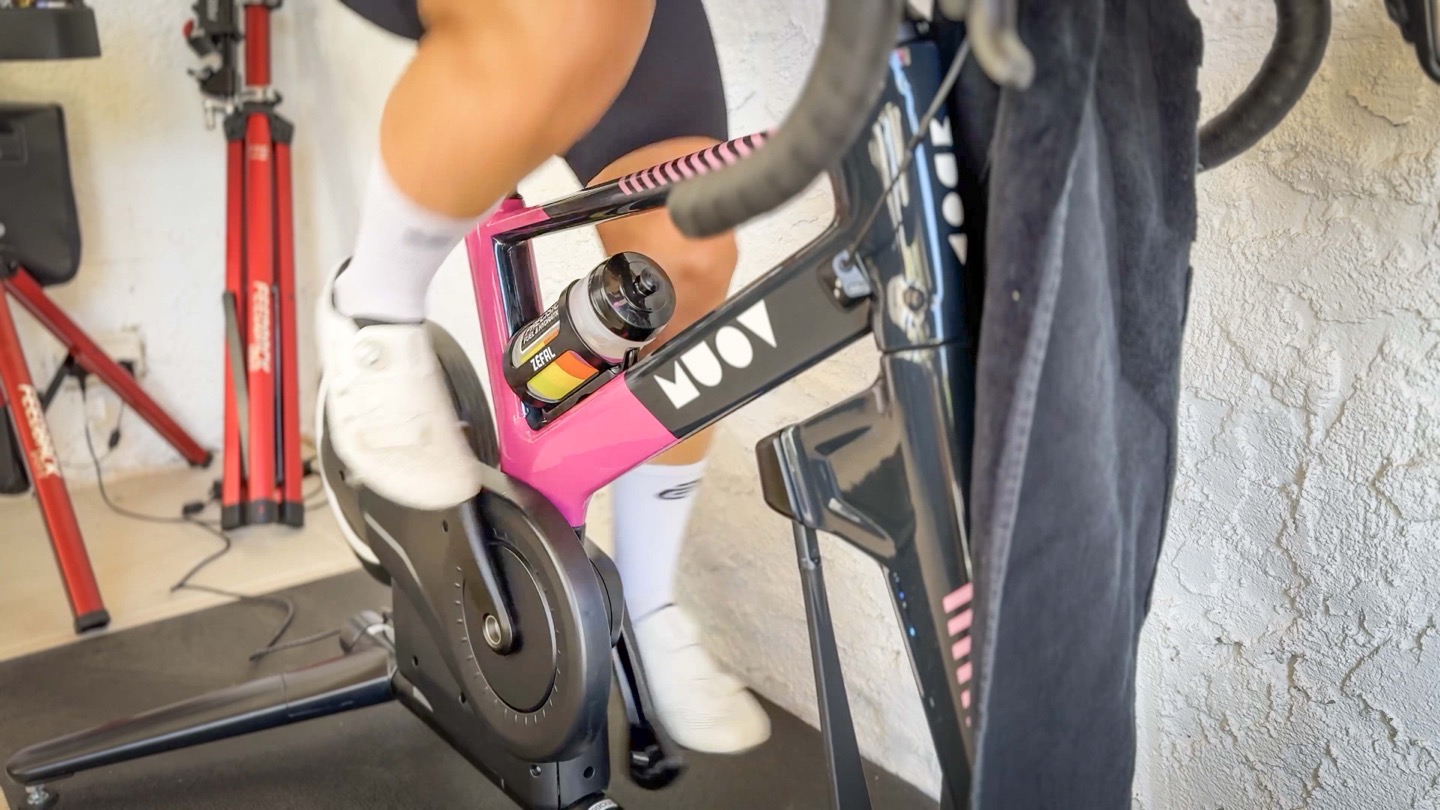
And I think ultimately it comes down to whether this hurts or helps consumers, and frankly, I think that depends on which consumers we want to talk about. That said, if you are a Rouvy user, I see this as a very good thing. You now have authentic and fair access to Zwift hardware (and more importantly, third-party trainers with Zwift Cog on them). Likewise, this opens up better integration for smart bikes that use the Zwift Protocol (for example, Muov Bike).
Next, if you’re a Zwift user, I don’t really see this changing anything about your location. You gain nothing, and you lose nothing. You’re still…still there…doing your thing.
The big question is how it affects the rest of the industry/consumers. And the first consideration is probably the price. Here’s the thing: I don’t think Zwift really cares, to some extent, what their competitors are doing on price. The reason is simple: Zwift knows that it has a unique prop value, for users who appreciate the features it has today.

(Above: TrainingPeaks Virtual)
Meaning, if you’re on Zwift today, then you’ve *already* chosen to pay that subscription fee by going to MyWhoosh (which is free), or TrainingPeaks Virtual (which might be a little cheaper, or a lot cheaper, depending on all sorts of things), or some other little third-party app. Previously Rouvy was not in that matrix of your competitors, because it is a completely different experience.
And to put another point on that, the most common refrain I hear is “I’ll jump on MyWhoosh, because it’s free”, except here’s the thing: Zwift keeps growing. And most importantly, Zwift realized they couldn’t compete on price with a government-sponsored app. It’s actually a simple fact. Instead, they will compete for where people want to be. For some people, they are perfectly fine with the MyWhoosh experience for free, because they don’t use the power or want additional features of Zwift. And for others, they decided they wanted to pay Zwift.
But critically, I don’t see that contributing to Zwift’s long-term thinking on pricing (short of Zwift trying to replicate pricing). In the same way that Peloton doesn’t care what Apple Fitness+ does on pricing, the user groups are very different, despite having some theoretical overlap. Similarly, we have seen TrainerRoad raise prices, because they decided to do so. Not because they had a high-value watermark. To be clear, Zwift isn’t saying it’s raising prices for any platform, but that’s ultimately a common concern when competitors merge.
Stated differently: Tech companies will continue to raise prices until enough people cancel that the lost revenue outweighs the revenue. Aside from a bunch of video streaming services, I got a notice a few days ago that my Netflix price is going up again. Competition doesn’t always translate to lower prices, although it can translate to better products, which I think is very appropriate here in this space.
If competitors like MyWhoosh and others didn’t exist, I suspect we would see Zwift’s pace of innovation slow down. But equally, almost nothing Rouvy did made Zwift adopt a new technology feature, because the concepts of the app were very different (video vs virtual world).
With that – we’ll see how things change next year. I am seriously interested.
Thanks for reading!
DID YOU FIND THIS POST HELPFUL? SUPPORT THE PLACE!
Hopefully, you found this post helpful. The website is truly a labor of love, so please consider becoming a DC RAINMAKER Supporter. This is for an ad-free experience, and access to (mostly) our bi-monthly “Shed Talkin’” behind-the-scenes video series.
Support DCRainMaker – Buy on Amazon
If not, maybe consider using the link below when shopping on Amazon. As an Amazon Associate, I earn on eligible purchases. It doesn’t cost you anything extra, but your purchase helps support this website greatly. It could just be buying toilet paper, or that pizza oven we use and love.