
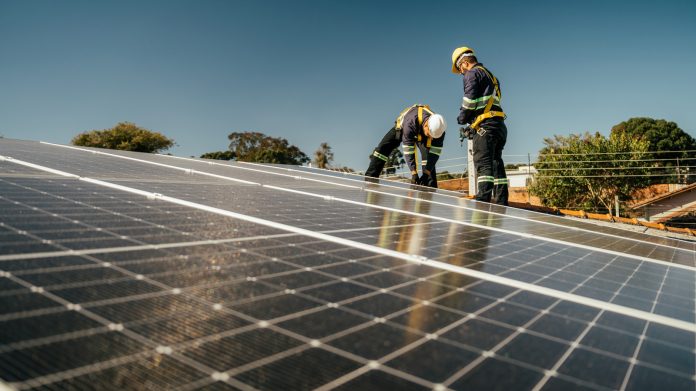

Installing solar panels has become a popular thing to do in recent years to power your home, business, or other facility. There are many pros and cons to consider before pulling the trigger on installation, but once you’ve decided that solar panels are right for you, there is one unwritten rule that you should consider for that installation. That would be the 20% rule.
If you look at your monthly electricity bill, it will probably be the same from month to month, barring any extreme cases. Those worst-case scenarios do happen, and if you’re using solar panels for power, it’s up to you to prepare for those situations, rather than relying on your local power grid. That’s why many solar power companies – including OUPES, EcoFlow, LiPower Group, Bluetti, and more – recommend installing enough solar panels to pay for energy use 20% above your average.
Figuring out how much power you need to account for this extra 20% is pretty easy. Look at the last year of your energy bills. Find out how many kWh your home or other building uses per month and calculate the average for those 12 months. Then, just add on an extra 20% of whatever that rate is. If you average 850 kWh per month, you need a solar panel setup to hold 1,020 kWh. This extra 20% doesn’t necessarily mean more solar panels on your roof, especially if you don’t have a lot of space. It just means the panels provide more power. An installation technician should be able to find the right setup for your needs.
When the extra 20% comes

There are several reasons why having a solar panel setup that costs 20% more than average energy consumption is a good idea. The most obvious reason is more than average power consumption. Obviously, this happens with an overused air conditioner in the summer or an overused heater in the winter, but there are other factors as well. For example, you may have a guest for a month using their own energy for the day above your normal rate, or you may have installed inefficient light bulbs. Yes, other devices can help reduce your power consumption, but having that buffer is great.
20% doesn’t help just by using your power. It can also help in times when your panels are not in the best condition to collect energy. If installed correctly, your solar panels should be in an ideal position to capture the sun’s energy. However, that can be difficult due to bad weather, heavy cloud cover, or just a tree growing over the panel that needs to be pruned. In these times, having an additional 20% of energy storage active can make up for this loss which can affect your average daily energy consumption.
Having this extra buffer also helps you if the average power consumption changes in the future. You may decide to switch from a gas-powered car to an EV, which requires an electric charger. Maybe you’re buying a second refrigerator or you’ve decided to switch your grill to an electric one. It’s always good to over-prepare, and the 20% rule helps you do that.