
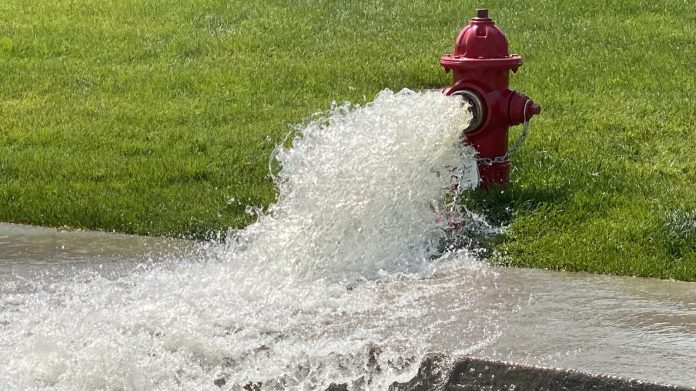

If you’ve ever seen a fire hydrant pouring water down a city street, you might be able to get a good idea of the type of pressure behind the flow. But the minimum pressure required for a hydrant is actually regulated by the National Fire Protection Association (NFPA) 291, which sets the standard at 20 psi. This is the number used during fire flow conditions.
“Fire flow” means the rate of available residual water supply that can be used in the hydrant system to support firefighting operations. The need to pressurize is there because the success of firefighting efforts depends not only on access to an unblocked hydrant, but also on obtaining sufficient power and volume of water as it is used. If the pressure is too low, the pipe streams can lose access and thus lose efficiency. Regular hydrant maintenance can include draining dirty water, helping to ensure that water is reliable when firefighters need it.
Technically speaking, fire hoses can operate below the 20 psi level, although some states do not allow it. Additionally, operating below 20 psi is difficult to do and can have a significant impact on system components if negative pressure occurs in the main water line. Pipes can absorb dirty water or even collapse. Because of this, 20 psi is considered a critical safety level and not a suggested guideline.
Within NFPA standards for fire hose inspection
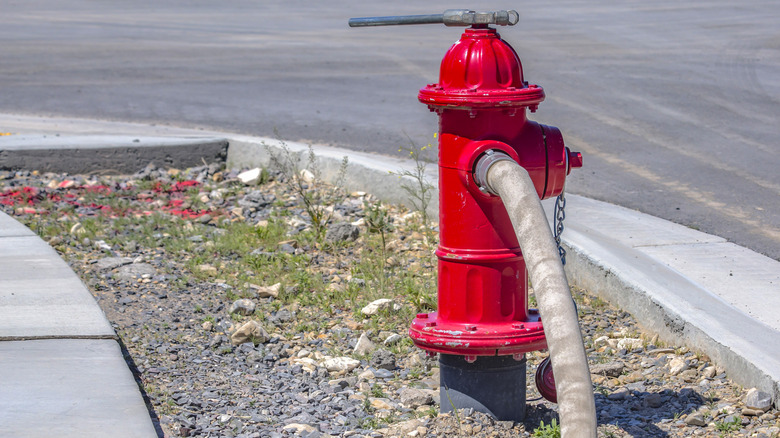
Although NFPA 291 addresses water pressure during fire flow conditions, it also explains why fire hoses are different colors. The color coding process shows the available water flow of the hydrant based on the rated performance. For example, green hydrants typically have a maximum flow capacity of about 1,500 gallons per minute (GPM). Green ranges between 1,000 and 1,499, while orange and red generally have lower GPMs. Because firefighters are familiar with the color codes, they know what to expect from a hydrant before connecting.
Determining the GPM of fire hoses involves testing, as outlined in NFPA standards. During these tests, technicians collect flow and pressure data, which can be taken from more than one hydrant at a time. This is often the best way to get a basic estimate of how the system is performing while under demand. This consistent process ensures that GPM numbers are based on actual performance and not estimates.
But to accurately measure fire flow pressure, NFPA uses fire hydrant static pressure. This is the pressure in the hydrant system when the water is not flowing. When water begins to flow from the hydrant, the pressure drops and converts to residual pressure, which is then used to determine real-world performance. Without the transition from static to static, there would be no way to truly measure the actual performance of the heater fire.