
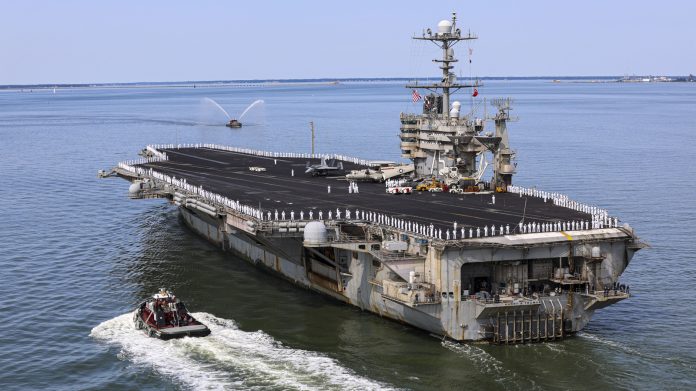

The modern ships of the United States Navy are among the most impressive ships that have ever sailed, but it is not easy to appreciate the technology and capabilities of aircraft carriers like the USS Gerald R. Ford. Other features, be it the carrier’s nuclear power plant, catapult, or advanced weapons, are obvious, but these ships have smaller, lesser-known features that are equally important.
One of these facilities is the onboard Metrology and Calibration Laboratory, commonly known as METCAL. Why, exactly, would you need a laboratory on a ship like an aircraft carrier, whose primary function is to launch warplanes? That’s because METCAL does the important, yet underappreciated job of keeping ship’s materials and associated instruments calibrated and accurate.
As the military emphasizes precision, correct measurement of equipment and tools is essential to safety and effective combat. Many of these measurement tasks are very involved, too. While some of this work can be done in traditional land-based laboratories, large ships that spend long periods at sea away from home ports rely on their own METCAL facilities and staff dedicated to these tasks. METCAL’s small, yet important role in the carrier’s day-to-day operations is one of the reasons why these ships are often compared to floating cities.
The science of measurement
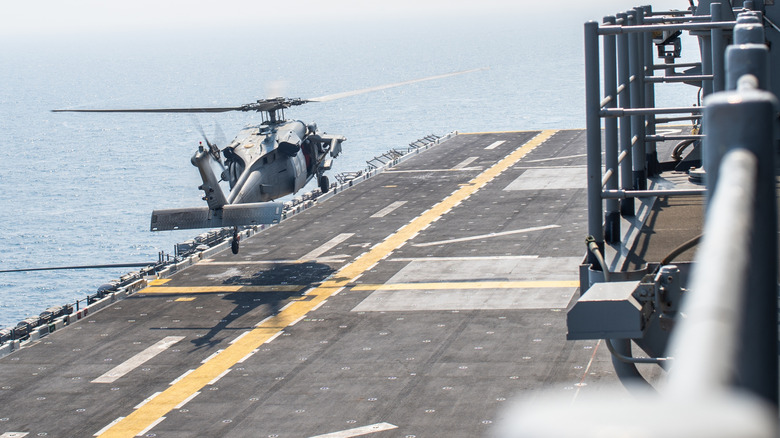
The Navy developed its METCAL program in the 1950s, after Navy employee Jerry Hayes discovered that incorrectly calibrated instruments were causing unreliable missile tests. The result was the establishment of the Navy Metrology Engineering Center. Note that while we are focusing on the Navy, metrology and measurement labs can be found throughout the United States Military.
Metrology is broadly defined as the science of measurement, which plays an important role in many scientific fields. The main department of Navy Metrology operates as part of the Naval Special Warfare Command (NSWC) Corona Division. Only certain Navy ships have their own METCAL department, usually large ships such as aircraft carriers and Navy amphibious ships such as the USS America.
Small vessels can be handled by shore-based METCAL facilities, but not large carriers and ocean-going vessels. Not only are these ships filled with equipment that requires calibration, but they also use aircraft that require the same calibration. Additionally, the amount of time these large vessels spend away from port means that having an on-board METCAL lab to handle calibration tasks is essential for independence.
Floating precision
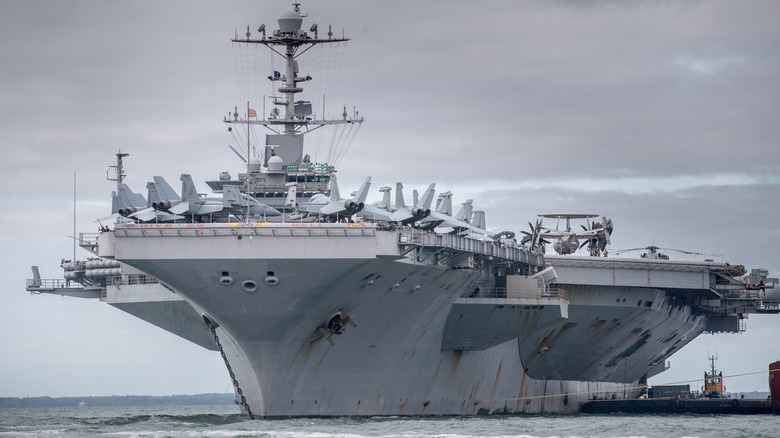
So how much work is done in the METCAL lab? In 2007, Navy METCAL was doing 525,000 measurements a year across its land and sea labs, and that number is probably higher today. There are also more than 5,000 calibration procedures for different types of equipment used by the Navy.
On board the USS Harry S. Truman, which was awarded the Navy’s best METCAL performance in 2021, there are approximately 12,000 pieces of equipment that require routine calibration, with the ship’s lab handling approximately 550 calibration tasks per month. These include night goggles, and members of the METCAL team are tasked with ensuring Navy pilots’ goggles are set correctly.
Even in port, the ship’s METCAL department can play an important role. In 2024, when the amphibious assault ship USS Essex was docked for repairs and maintenance, the ship’s METCAL lab successfully measured and maintained the ship’s firefighting system, a difficult task that was often achieved at great cost. For this achievement, Essex’s lab and its 13 technicians were honored with the Navy Self-Sufficiency Award.