Make Alcohol From Astronaut Breath? Yes. Here are the Winners of Phase 2 of the Deep Space Food Challenge
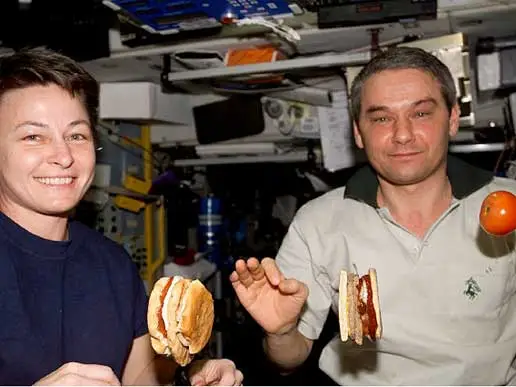
This week, NASA’s ability to keep astronauts fat and happy on their journey to Mars took another giant step forward for humanity.
That’s because the US space agency, in partnership with the Canadian Space Agency (CSA), has announced 11 finalists for Phase 2 of the Deep Space Food Challenge, a competition designed to help explore and better understand how these facilities can feed people in space.
The second phase of the competition started in January 2022, and both new teams and previous Phase 1 winners were challenged to build small prototypes of their ideas. Many teams have developed prototypes to use less resources, create less waste, and produce safe, healthy, and delicious food for astronauts.
A panel of judges, which included experts from academia, industry, and government, evaluated submissions on various criteria such as design innovation, scientific and technological approach, and the feasibility of their design.
The following US companies were selected as finalists:
- InFynity (Chicago, Illinois) uses fungal proteins to prepare nutritious and delicious foods.
- Nolux (Riverside, California) produces food with plants and fungi using artificial photosynthesis.
- Mu Mycology (Hillboro, Oregon) uses a closed mushroom cultivation system that allows for the sustainable growth of a variety of edible mushrooms.
- Kernel Deltech USA (Cape Canaveral, Florida) produces inert fungal biomass using a sustainable farming method.
- Interstellar Lab (Merritt Island, Florida) produces micro-greens, vegetables, mushrooms, and insects to provide micronutrients for long-term missions.
- Far Out Foods (St. Paul, Minnesota) is developing a nearly closed food production system called the Exo-Garden that can produce a variety of hydroponic mushrooms and vegetables.
- SATED (Boulder, Colorado), or Safe Appliance, is neat, functional, and delicious, cooking a variety of popular foods with long-time ingredients.
- The Air Company (Brooklyn, New York) developed a system that captures carbon dioxide emitted by astronauts, combines it with hydrogen produced by electrolysis of water, to produce alcohol that is fed to edible yeast to make proteins, fats, and carbohydrates.
In addition to these US companies, NASA and CSA recognized three international finalists from outside the US and Canada:
- Enigma of the Cosmos (Melbourne, Australia) has created a food production system with a flexible growth platform that can increase efficiency by at least 40%.
- Solar Foods (Lappeenranta, Finland) uses gas fermentation to produce single-cell proteins.
- Mycorena (Gothenburg, Sweden) developed a circular production system using a mixture of microalgae and fungi, resulting in a microprotein that uses less resources while producing less waste.
The top 5 US companies will be recognized as winners of the Phase 2 challenge, each awarded $150,000. In addition, up to three teams with the highest scores will be recognized as winners of the Phase 2 challenge. The winners of Phase 2 are scheduled to be announced in April 2023.
Looking at the winners, it’s clear that the big winner was…fungus. Six of the last eight have developed programs that cause mold in some way. But perhaps the most interesting program chosen by NASA comes from Brooklyn’s Air Company, which has technology that can convert astronaut breath into alcohol, which is then used as a feed medium for edible yeast that produces proteins, fats, and carbs. As it turns out, the company’s technology can produce vodka, which I think might come in handy during a long-haul flight.