This Nuclear Powered Battery Can Last 50 Years Without A Single Charge
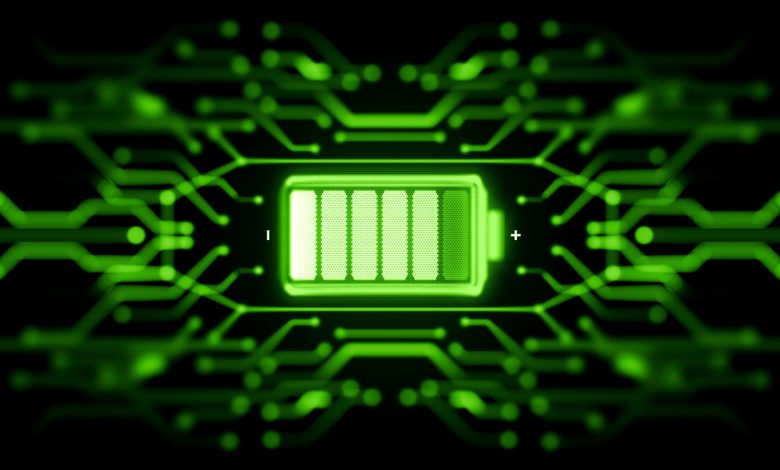
Batteries, in a sense, rule our lives. From the compact lithium-ion batteries that power our smartphones to the supercharged units that power our EVs, not to mention the entire battery environment that device manufacturers have invested in, it’s safe to say that we wouldn’t be where we are without battery technology.
The main disadvantage of batteries is, of course, their limited life. After all, even smartphones with good battery life rarely last more than a day or two before needing a recharge. This frequent recharging cycle will eventually wear down the battery, leading to a lot of frustration as the phone (or other device) takes longer to charge than it used to. The Chinese company, however, has shown that this does not have to be the case.
In January 2024, BetaVolt announced that it had developed a nuclear battery that it claimed could last 50 years without recharging. The coin-sized BV100, as it’s called, uses nickel-63 as a power source to produce 100 microwatts at 3 volts. The company also announced plans to launch a 1-watt model in 2025, although it’s unclear if that will happen. As for the BV100, news reports say it will enter mass production in 2025. Let’s take a look at how it works and why, for all the BV100 promises, you might not want to get too excited about it.
How does a nuclear battery work?
While the BetaVolt BV100 is certainly exciting, it is far from the first radioactive battery developed by scientists. Towards the end of 2024, for example, researchers at the University of Bristol are developing the first ever carbon-14 diamond battery, with an estimated lifetime of thousands of years. But even that battery was a relative latecomer to the game: RCA had developed an atomic battery as early as 1954. Similarly, a nuclear battery, in the form of a radioisotope thermoelectric generator (RTG, also known as a radioisotope power system), powered the US Navy’s Transit 4A and 4B satellites in 1961.
The basic concept of nuclear batteries is relatively simple. They use the decay of radioactive elements, which can continue for decades, and convert this energy into electricity. RTGs, for example, do this through the Seebeck effect, which produces a voltage with a temperature difference (caused by the heat of radioactive decay) in a suitable conductor.
BetaVolt’s BV100 works on the same basic principles, but incorporates beta radiation instead. In the BV100, the beta particles emitted by the nickel-63 core are absorbed by diamond semiconductors, which then convert the electrons produced from radioactive decay into electricity. So, the result is a small battery that can last for 50 years – all without posing a significant threat to living things.
We may not see nuclear smartphone batteries anytime soon
BetaVolt’s January 2024 press release highlighted the possibility of its battery eliminating the need to charge smartphones and allowing drones to stay in the air almost indefinitely, both of which sound very exciting. However, it is important to note that not all observers are so optimistic.
Speaking to Live Science in 2024, materials scientist Juan Claudio Nino pointed out the low voltage of the BV100, saying that while it is “within the range of a pacemaker or maybe a wireless sensor,” it simply “doesn’t have enough power to use a cell phone.” One hundred microwatts is far enough to power a smartphone; smartphones can use up to 4,000 milliwatts for a video call, so any nuclear battery designed for a smartphone would need to be able to produce orders of magnitude more than BV100.
Simply increasing the battery is not a viable solution either, as Wired pointed out in 2024. Considering a typical smartphone draws up to 2 amps of use, we would want a nuclear smartphone battery to produce a constant 1.5 amps to make it a viable alternative. However, a BV100 style battery that can produce that much amperage at that time would need to be made from 680 pounds of nickel-63. Even the world’s largest iPhone may struggle to find room for a battery that large.