Israel’s Tastewise Turns Diverse Data into Real-Time Insights Using AI
Those who rely on data to make important business decisions know the saying, “Garbage in, garbage out.” Data is abundant for those in the food world, but it is a challenge to select the right data, understand what the information means, and how it relates to your specific situation.
Enter Tastewise, an Israeli market intelligence platform that harvests a lot—and we mean a huge array of structured and unstructured data—and turns it into actionable insights. Partnering with Nestle, Mars, PepsiCo, and others, Tastewise recently upped its game by adding AI power using ChatGPT to its operations.
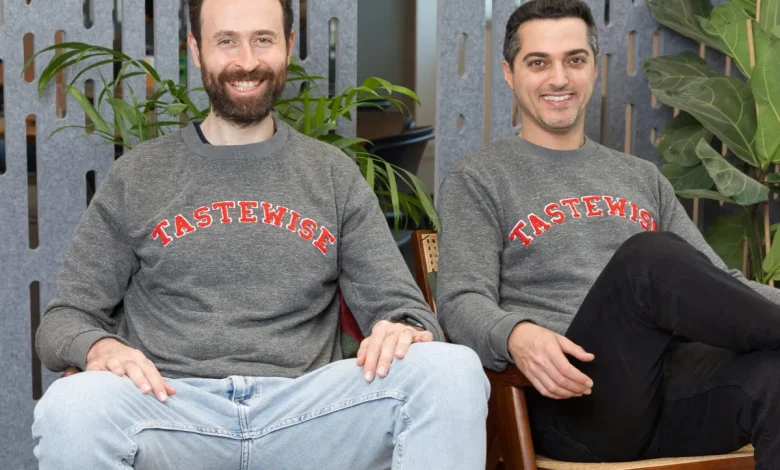
In a recent interview with The Spoon, Alon Chen, Tastewise Co-Founder, and CEO explained the company’s origins. After working for Google, Chen ran into Eyal Gaon, who became the founder and CTO. The two men discussed the gap between bringing new products to market and ultimate success.
“We found early on that 90% of innovations—tens of thousands of new products that come to market every year—fail, right? CPG companies and others succeed; they innovate very slowly and focus on acquisitions because they can’t keep up. We looked at this and said, why is that?
The answer was clear to the two men. Companies, especially in the food space, are focused on retail data, which goes stale faster than a week-old banana. “Sales data is not good for the food industry because if something is successful and you see that in the sales data, you are already 18 months late,” Chen noted.
Which led to a two-part solution—the foundations of the Tastewise platform. The first step is collecting data from many sources from restaurant menus to cooking sites on the web. The trick to turning raw information into actionable insights is to take structured (quantitative) and unstructured (qualitative) data and provide users with easy-to-understand answers. For example, Tastewise can tell a CPG customer that customers are enjoying the latest food fads. The details of those results can go deep into the geography and demographics of those trends and the foodies behind them.
“We call it fast-moving consumer data,” Chen noted. “Consumer data is moving fast, which is a completely new field that we think is emerging today and is now being integrated into the different workflows and activities that nig companies do. Tastewise is a data layer that brings consumer preferences and needs to the food product and the food production life cycle.”
Taking the SaaS data platform to a new level, Tastewise has added AI functionality to its product line. Called TasteGPT, users can ask questions like:
- What product ideas are most relevant to my Gen Z consumers?
- What concepts should I invest my R&D budget in?
- Where should I first introduce my new beverage product?
- Where is my underrepresented competition, and what can I do about it?
- What should I focus my next marketing campaign on?
“AI is influencing the way consumers choose what to eat and drink in countless ways. Consumers are also more informed than ever before, and they expect us to meet their needs accurately, directly, and on demand,” Chen said at the March launch of the new AI capability. “TasteGPT can now help companies get closer to their consumers by capturing the power of food, nutrition, and nutrition needs, and stay competitive in a rapidly changing market.”
“Artificial intelligence is the only way to reduce the lack of reliable data by enabling organizations to make sense of large amounts of data,” Gaon said. “With the right AI tools, data turns into meaningful insights that drive better decision-making and innovation in real time.”