The Home Is Still the Largest Source of Food Waste (44M Tons), and It’s Getting Worse
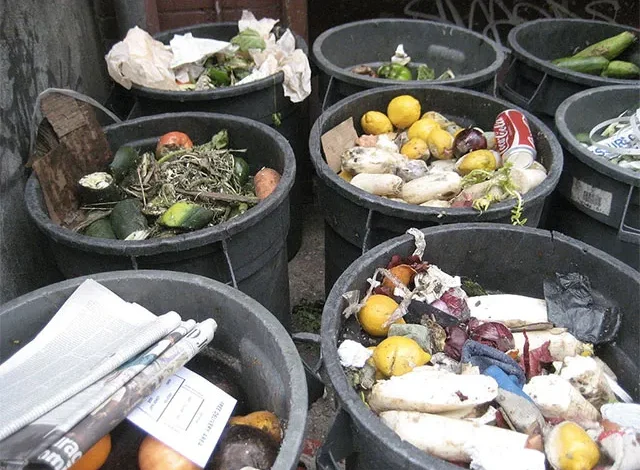
Last week, ReFED released its latest Food Waste Monitor, part of the ReFED Insights Engine, an interactive tool that tracks food waste sources, solutions, costs, and impact.
The organization monitors food waste through the lens of excess food production, meaning how much excess food is produced that can ultimately be consumed. According to ReFED, there were 91 million tons of excess food in the US in 2021 (the latest year for which they have data), about 36%, or 32.7 million pounds, ending up in landfills.

Other sources of excess food include sewage (6.91 million tons, 7.6%), composting (16.6 million tons, 18.3%), food that cannot be harvested from the farm (12.7 million tons, 14%), and animal feed (7.81 million tons, 8.6%) among others.
The Food Waste Monitor also isolates where food waste occurs in the system. Consumers have long been known to be the biggest culprits when it comes to food waste, and we’ve gotten worse over the past five years, going from 45.6% (39.6M tons) of food waste in 2016 to 48.4% (44.1M tons), meaning the home now accounts for nearly half of all food waste in the US.

In addition to calculating the total amount of excess food in our system and how much is wasted, the ReFED Insights engine also has a solutions database that evaluates and measures different solutions to reduce food waste. As can be seen in the figure below, the database divides the solutions where they affect food along the value chain (each stage is called a ‘place of production’), from the harvest to the consumer’s premises and beyond, and estimates the collective financial benefit of the various solutions aimed at each stop on the path they are likely to have.

According to ReFED, redesigning consumer environments has the greatest potential to reduce food waste, with an annual financial impact of more than $30 billion in total food costs. Within that category, ReFED estimates that the biggest possible lever to reorganize areas is consumer education campaigns, which can help consumers better understand the problem of food waste and how to deal with it in their food planning, how to store their food, etc.
An explanation of the financial and environmental benefits of consumer education campaigns is below. It not only breaks down the direct dollar impact, but shows the total amount of food diverted (3.22M tons), emissions reduction (18.7M metric tons of CO2e), and water saved (795B gallons).

Although the ReFED solutions database addresses the ways in which consumers can reduce consumption through technology (smart home or technology to increase the life of food) it does not show the economic impact these types of solutions can have. That’s not really ReFED’s fault, because the truth is that there hasn’t been much innovation in this space.
One category I didn’t see in consumer solutions that could be added is consumer food tracking and meal planning applications, which have been active areas in terms of new products and consumer acquisition (although it’s unclear how much impact they’ve had).
There is a lot of data and insights in the ReFED Insights engine, so you should definitely check it out for yourself.