Octave MRE 220 Vacuum Tube Power Amplifier Review – HiFiReport
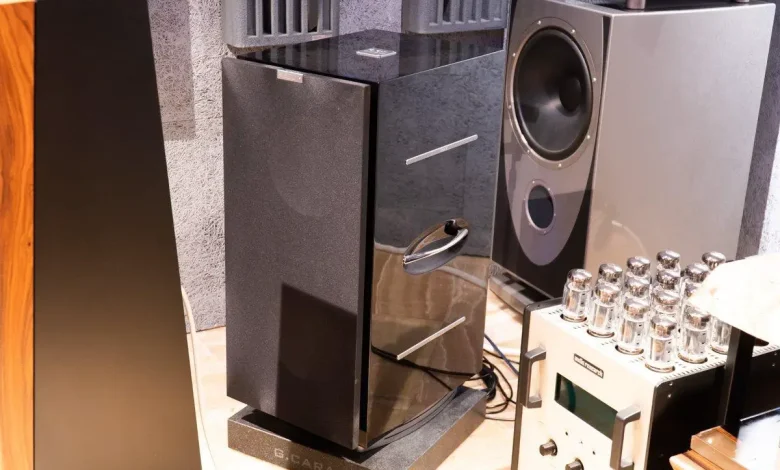
Have you ever encountered a vacuum tube amplifier that boasts lightning speed, rapid response, formidable power, expansive dynamics, and potent bass? Tube amplifiers are not monolithic entities. If you believe their sonic signature is limited to being mellow, warm, and sweet, then German tube amplifier manufacturer Octave is here to tell you: you are mistaken.
While it’s true that many tube amplifiers emphasize the soft listening experience derived from second-order harmonic distortion, Octave aims to deliver a more comprehensive sonic performance.
Octave, founded in 1980 by Andreas Hoffman, initially operated as a transformer factory. The extensive knowledge accumulated over years of transformer manufacturing laid a solid and reliable foundation for the subsequent establishment of Octave as a high-end audio brand.
Transformers can be considered the soul of a vacuum tube amplifier. Having mastered their production, Octave naturally possesses a significant advantage in designing and manufacturing tube amplifiers.
Key Features: Ultra-Wide Bandwidth, Stable Power Output, High Signal-to-Noise Ratio
The MRE 220 stands as Octave’s flagship monoblock power amplifier, second only to their Jubilee series. The standard configuration employs four KT88 power tubes per channel, delivering 140W per channel. For those seeking even greater power output, an upgrade to KT120 tubes is available for an additional cost, boosting the output power to 220W.
Beyond its high power output, Octave emphasizes the MRE 220’s other impressive performance specifications. Firstly, its frequency response spans an ultra-wide 5Hz to 80kHz, with a full power bandwidth extending from 20Hz to 70kHz. Secondly, the MRE 220 boasts stable amplification output, remaining unfazed even when speaker impedance dips to 2.5 ohms. Thirdly, the MRE 220 achieves a remarkably high signal-to-noise ratio of -116dB. This figure surpasses not only most tube amplifiers but also many solid-state amplifiers in terms of low noise floor.
In fact, these three key features—ultra-wide frequency response, stable power output, and high signal-to-noise ratio—are not exclusive to the MRE 220 but are characteristic of Octave’s entire range of tube amplifiers.
Eco Mode for Energy Efficiency
Furthermore, the MRE 220 incorporates other features common to Octave tube amplifiers. The first is the inclusion of Eco Mode for energy conservation. When activated, if no music signal is detected for 10 consecutive minutes, the amplifier automatically enters standby mode. In this state, the voltage supply for tube filaments is reduced, and the amplification stage is temporarily disabled. Consequently, the MRE 220’s overall power consumption drops below 20W, much like a modern luxury automobile’s energy-saving features.
Upon sensing an input signal, the amplification stage is automatically reactivated. However, being a tube amplifier, a 30-second warm-up period is required before full operation resumes. If Eco Mode is deactivated, the amplifier consumes 180W of power even without an audio signal input.
User-Friendly Tube Rolling and Bias Adjustment
Secondly, located near the input terminals on the rear panel is a toggle switch for ground lift. This setting caters to the grounding configuration of RCA and XLR input terminals, allowing users to optimize grounding based on their system setup.
Thirdly, like other Octave tube amplifiers, the MRE 220 accommodates tube rolling. A “Power Selector” switch on the rear panel allows users to select “High 220W” mode when using KT120 power tubes. For tubes such as KT88, KT90, KT100, and EL34, the switch should be set to “Low 140W” mode. In the latter setting, the MRE 220’s output is reduced to 140W per channel.
While an increasing number of tube amplifiers now feature automatic bias adjustment circuits, and Octave’s V70 SE incorporates “Dynamic Bias Control,” the MRE 220 retains a more traditional approach, requiring manual bias adjustment. However, Octave has simplified this process considerably.
Traditional bias adjustment necessitates a multimeter for measurement and adjustment. Octave replaces this with an intuitive LED indicator system. The front panel knob, located on the right side, not only controls Eco Mode but also offers V1-V4 settings for adjusting the bias of the four power tubes. Bias adjustment screws are conveniently positioned next to each power tube. Bias accuracy is indicated by a row of LEDs located on the top panel, near the rear transformers. A central green LED illuminates when bias is correct, while yellow LEDs on either side indicate bias that is too high or too low. An Eco Mode indicator light on the left illuminates when energy-saving mode is engaged, and a red light on the right signals activation of the protection circuitry.
External “Black Box” for Performance Enhancement
Finally, like many Octave tube amplifiers, the MRE 220 supports external power supply upgrades. Octave offers two optional external power supplies, the Black Box and Super Black Box, for users seeking further performance enhancements.
These “Black Boxes” increase the total capacitance of the power supply. While Octave amplifiers are already known for their excellent drive and control, upgrading the power supply can be a straightforward solution when driving particularly demanding loudspeakers. Adding an external power supply results in improvements across the board, including enhanced dynamic range, improved separation, expanded soundstage width and depth, and increased retrieval of subtle details. Overall musical reproduction across the frequency spectrum becomes clearer, and the amplifier becomes less susceptible to external variables and interference.
HiFiReport & Wo! Crème brûlée: A Synergistic Experience
The MRE 220 listening session took place at HiFiReport Audio, located in the Minsheng Community of Taipei. Had the listening session been elsewhere, the following narrative might have taken a more conventional turn. However, being at HiFiReport Audio made the experience particularly interesting.
HiFiReport Audio is helmed by Weng Han-Chang (affectionately known as Xiao Weng), a seasoned audio veteran. His background includes experience as an audio repair engineer and audio magazine editor. After leaving the publishing world, he established HiFiReport Audio, becoming his own boss, dealing in audio equipment, and also acting as the (agent/distributor) for German horn loudspeaker manufacturer Odeon.
With a technical foundation and a passion for audio, Xiao Weng approaches audio with his own unique perspective. He has showcased Odeon loudspeakers at several audio exhibitions, often positioning the speakers along the long wall of the exhibition room—an unconventional approach in such settings. While maximizing soundstage, this arrangement inevitably sacrifices seating capacity, making it less appealing to most exhibitors. However, this unorthodox setup is one of Xiao Weng’s specialties. Reasoning that there is only one true “sweet spot,” and all other seats are secondary, he prioritizes showcasing Odeon’s capabilities by creating an expansive soundstage, full-bodied sonic images, and rich bass, leaving a lasting impression on listeners.
HiFiReport Audio itself is a unique hybrid audio retail space. It is combined with “Wo! Crème brûlée,” a French dessert shop run by Xiao Weng and his wife, Sophia. The storefront serves as both a pastry shop and a high-end audio showroom. Customers can enjoy coffee and desserts while being serenaded by the beautiful music emanating from Odeon loudspeakers, creating a pleasant afternoon ambiance for families and friends.
“Long time no see!” Even with my hat and mask, Xiao Weng recognized me as soon as I pushed open the glass door. Indeed, it had been at least four years since I had witnessed his audio prowess at an exhibition or had the opportunity to experience his tuning expertise.
Xiao Weng pushed open a “secret door” beside the counter, leading me downstairs to HiFiReport Audio’s “headquarters.” Once the door closed, the ambient noise from the pastry shop upstairs was effectively sealed off. “We recently renovated this space, extending it further back. The acoustics are even better than before.” While I had no prior experience with the HiFiReport listening room’s acoustics, I found the current sound to be remarkably natural. Even at high volumes, the ample space, coupled with strategically placed acoustic treatments in the partitions and ceiling, ensured a relaxed listening experience, free from any sense of sonic pressure, with open and effortless sound.
Matched with Octave’s Flagship HP 700 Preamplifier
Xiao Weng paired the MRE 220 with Octave’s own flagship HP 700 preamplifier. This preamplifier features a separate power supply design and a modular architecture. The rear panel includes two slots for optional phono stage modules, including MM and MC phono stages, and RCA or XLR output modules. It also offers tone controls (bass and treble), channel balance adjustment, and gain control, providing considerable flexibility and broad compatibility with various amplifiers and loudspeakers.
Odeon Tosca 2020 Loudspeakers: A Mid-Range Marvel
The loudspeakers used were Odeon’s Tosca 2020, the fourth model in their lineup. Unlike the higher-end models featuring large circular horns and segmented cabinets, the Tosca 2020 adopts a more conventional column-style enclosure. Its slightly deeper cabinet design results in a narrower front baffle, making it easier to integrate into typical home environments.
Despite its conventional appearance, the Tosca 2020 incorporates Italian-made compression driver tweeters. The tweeter is coupled with a 17cm circular wooden horn, enhancing high-frequency efficiency. Below the tweeter are two Scan-Speak manufactured wood fiber cone woofers. The cabinet is constructed from 20mm thick plywood and incorporates a Helmholtz resonator for low-frequency filtering. The bass reflex port is located at the bottom of the cabinet, allowing for more flexible placement, even close to walls. With a high sensitivity of 93.5dB, the Tosca 2020 is also amplifier-friendly.
Unconventional Source: AirPlay from YouTube Music
The truly surprising element of this listening session was the music source. Beforehand, inquiring about the source, I was informed it was a dCS Rossini. I assumed it was a CD player, thinking to myself that the Octave pre-power combination paired with a dCS Rossini was an unusual pairing. Upon arriving at HiFiReport, I asked Xiao Weng, and I initially thought I had misheard him. He said, “We’re listening to YouTube.” You read that correctly, and I heard correctly. Xiao Weng was using YouTube Music as the primary source.
The setup was remarkably simple: an iPhone running the YouTube Music App, streaming via AirPlay to the Rossini DAC. The Rossini in use was the latest Apex iteration, specifically the Rossini Apex Upsampling Network DAC 2.0. Consequently, the CDs I had brought along were rendered useless.

Xiao Weng explained that, based on his experience with AirPlay, dCS DACs produced the best sound quality when used with this wireless streaming protocol. I couldn’t comment on this, as I had no prior experience using AirPlay for serious music listening. My AirPlay experience was limited to streaming videos to my TV and children’s audiobooks to a speaker. I had never considered AirPlay as a viable high-fidelity music playback method. Therefore, regarding the effectiveness and optimal equipment for AirPlay, I had to defer to Xiao Weng’s expertise.
“Li Ren” (The Farewell Song) Convinced Me
He selected Jacky Cheung’s “Li Ren” (The Farewell Song) on YouTube Music. As the opening piano chords began, the solid and full-bodied arpeggiated chords ascended from the lower register. The whistling sound from the right rear emerged, conveying a sense of melancholic resignation and forced nonchalance. Against this backdrop of lonely, desolate twilight, Jacky Cheung’s deep and steady voice delivered the poetic lyrics: “Silver boats sway and bend, hanging in the velvety sky, your thoughts, scattered and blue, rest in my silent heart…” The lyricist is Li Manting. The masterful use of reduplication in the lyrics creates a sense of rhythm, akin to musical rhythm in singing. Jacky Cheung masterfully rendered the rhythmic nuances of these repeated words, imbuing the song with profound poetic depth.
Why am I focusing so much on the music? It’s simply because Xiao Weng’s system tuning was exceptional. This was the sonic signature I remembered from Xiao Weng: a grand, full, solid, and projected sonic image. Jacky Cheung’s vocal presence materialized between the Tosca 2020 loudspeakers. Every word, every phrase, every musical passage resonated deeply within me.
Xiao Weng’s Philosophy: Music for Everyone
Xiao Weng asked me with a touch of pride, “What do you think? YouTube sounds pretty good, right?” “I don’t feel like I’m listening to YouTube,” I replied truthfully. Despite my initial skepticism towards YouTube as a source and my reservations about Xiao Weng’s unconventional approach, “Li Ren” had almost completely swayed me.
Xiao Weng explained that he used to listen primarily to CDs (indeed, I had seen him play CDs at audio shows). However, upon discovering the potential of YouTube, he decided to explore this avenue. “How many people still buy CDs these days? Many audiophiles don’t even own a handful of CDs,” he questioned. He pointed out the complexities of using overseas streaming services like Tidal and Qobuz, often requiring users to bypass geographical restrictions, a hurdle many are unfamiliar with. Furthermore, setting up a NAS can be daunting for many users. “We need to lower the barrier to entry for enjoying music if the audio market is to have a future,” Xiao Weng asserted, a sentiment that resonated with considerable logic upon reflection.

His aim was to find the simplest and most accessible solution with the most extensive music library, and that, he believes, is the universally accessible YouTube. AirPlay is equally user-friendly, requiring just a single tap. The smartphone serves as both player and remote control, and smartphones are ubiquitous and always within reach. Therefore, he advocates for YouTube, a platform often overlooked by the audiophile community but incredibly convenient and universally familiar. For an ad-free experience, a YouTube Premium subscription is available, offering more comprehensive playback options compared to the free tier.
A pertinent question arose: His proposed music solution relies on AirPlay from YouTube to the audio system. But what about non-Apple users? Xiao Weng’s response was nonchalant: “Most of the customers I encounter are iPhone users.” Whether this is entirely true or not is his business. However, it is undeniable that AirPlay support is more prevalent in audio equipment than Chromecast support.
Unearthing the Finest Details in Recordings
He then played a duet performance of “I’m Really Hurt” by Hebe Tien and Jacky Cheung. Hebe Tien’s clear and sweet voice opened the song a cappella. Following applause, the accompanying piano entered with arpeggiated chords and the main theme’s harmony, serving as an introduction to Hebe Tien’s vocals. The live setting added more reverb to the vocals, enriching Hebe Tien’s voice and creating a different kind of melancholic atmosphere.
Through Xiao Weng’s system, Hebe Tien’s vocals were solid and focused. Her unembellished voice, the articulation of consonants, and the nasal resonance were all rendered with clarity. This was the Octave sound I recognized, paired with the compression driver tweeter of the Odeon Tosca 2020. These subtle details and vocal textures were clearly delineated. Octave, in this regard, is quite different from the conventional perception of “tube amplifiers.” It possesses first-rate resolution—let me reiterate: first-rate resolution. In my multiple encounters with Octave, including this renewed experience with the HP 700 and MRE 220, I am consistently impressed by their ability to reveal the most minute details in recordings. This is truly remarkable.
High Resolution Ideal for Jazz
With such high resolution, does it lack “” (rhythm and flavor/musicality)? It depends on your definition of “.” If you associate it with a thick, colored, mellow, and slow sound, then Octave is not that. However, when it comes to jazz, a genre often considered to be all about “,” Xiao Weng’s tuned system sounded incredibly engaging.

Take Denise King and Massimo Farao Trio’s rendition of “I Can’t Take My Eyes Off You” as an example. The opening introduction featured piano, bass, and drums, seamlessly leading into Denise King’s rich vocals. Octave imbued the performance with a highly transparent soundstage. The trio was not only clearly positioned within the soundstage, but each instrument also possessed distinct individuality, with solid and focused sonic images. The percussion, in particular, was remarkably realistic in its attack and subtle nuances. Denise King’s vocals were noticeably richer and deeper than Hebe Tien’s, but through Xiao Weng’s system, I didn’t just hear a thick female voice. The subtle vocal details and the changes in vocal resonance were all clearly audible, without any omissions.
Lacking “”? I found it incredibly captivating! This jazz performance was truly excellent.
Amplifier Control Evident in Stable Soundstage and Powerful Percussion
Xiao Weng then played a track designed to be a sonic shockwave: Joe Hisaishi conducting the New Japan Philharmonic World Dream Orchestra in a live performance of the “Mission Impossible” theme. This wasn’t a pure audio track from YouTube Music but a YouTube video. Xiao Weng pointed out that one advantage of YouTube is the availability of both audio and video content. While HiFiReport also had a projector, Xiao Weng demonstrated only the audio aspect of the video. He suggested that at home, viewers could use a TV box to output video to a TV or projector and audio via optical output to an audio system. “This is another benefit of using YouTube,” Xiao Weng stated. I, however, saw this as a benefit of AirPlay, as discerning streaming enthusiasts often overlook AirPlay, sacrificing convenience and the dual enjoyment of audio and video.
This arrangement of the “Mission Impossible” theme incorporated numerous variations and expanded the musical richness through more diverse instrumentation, particularly the inclusion of extensive percussion elements, making the music sound rich and dynamic. Xiao Weng increased the volume to over 95dB, even approaching 100dB. Despite this intense volume, the soundstage remained remarkably stable. The MRE 220 fully demonstrated its capabilities—it was a tube amplifier, yet possessed powerful drive. The percussion was crisp and impactful, with drum sounds that were solid and punchy. The brass section was bright and slightly aggressive, which could be mitigated by reducing the volume.
Xiao Weng commented that this track, when played on YouTube, could indeed sound a bit “” (stimulating/aggressive), but that was also related to Octave’s inherently direct sonic character. He suggested that switching to a more mellow and rich amplifier like the EAR Yoshino 509 would reduce the “fire.” However, this “” sensation, enjoyed occasionally, was also refreshingly flavorful. Lowering the volume would eliminate the “fire,” but it would also diminish the music’s impact. Can you eat Mala hotpot without the spice? While not an everyday meal, enjoying Mala hotpot occasionally is still incredibly satisfying.

Dynamic Performance at a First-Rate Level
Speaking of film scores, Hans Zimmer is a perennial favorite among audiophiles. His expansive and deep soundstages, rich and full orchestral textures, deep and surging bass, coupled with his many creatively conceived sound effects, guarantee a stunning sonic experience. Xiao Weng played “Dream of Arrakis,” a famous track from the soundtrack of “Dune.”
This piece evokes a surreal dreamscape. To create a sense of science fiction and alien mystery, Hans Zimmer and his collaborators invented new instruments to produce unique sounds that matched his cinematic vision. The dynamic range of this score is vast, spanning from the quietest passages to powerful crescendos. The track opens with sharp, fragmented sounds approaching from a distance, followed by powerful percussion. Ethereal synthesizer textures then introduce a rhythmic, deep, and mysterious electronic pulse, reminiscent of a heartbeat. The oboe-like sound that follows is revealed to be the melody hinted at in the introduction. As the music intensifies, vocals and an alarm-like wail are layered in. In a mere three minutes, this complex and multifaceted piece successfully creates a suspenseful, eerie, and mysterious atmosphere.
Xiao Weng played the track at high volume, showcasing the capabilities of the Octave MRE 220 and the prowess of his (distributed) Odeon loudspeakers. The two sudden bursts of percussion were particularly ferocious and impactful, delivering first-rate shock value. It was hard to believe this was produced by a tube amplifier, and even harder to believe it originated from a pair of relatively compact floorstanding speakers like the Tosca 2020.
Unleashing the Subwoofer: An Added Dimension
“The bass and atmosphere are truly amazing!” I shared my impressions with Xiao Weng. He replied that it was due to the addition of subwoofers. Positioned behind the Tosca 2020s, one on each side, were REL 212/SX subwoofers. Following the manufacturer’s recommendations, they were connected to the amplifier via speaker cables using a high-level connection, effectively in parallel with the Tosca 2020s. Each REL 212/SX subwoofer unit houses four drivers: two forward-firing 12-inch woofers, and one rear-firing and one downward-firing 12-inch passive radiator.
Adding subwoofers not only increased the bass quantity but also improved the depth, extension, and smoothness of the low frequencies. Furthermore, it enhanced the sense of envelopment and expanded the soundstage, even contributing to the three-dimensionality of the sonic images.

Playing “Dream of Arrakis” again, the percussion remained powerful, but it sounded less weighty and impactful. Some of the alien sound effects and sharp, dissonant musical elements that Hans Zimmer intentionally created became sharper and more brittle without the subwoofers. The most significant difference, however, was in the sense of envelopment.
Xiao Weng explained that he set the crossover frequency at 40Hz. The Tosca 2020’s official low-frequency response extends down to 34Hz, but the specification didn’t specify the dB roll-off. Therefore, the overlap in frequency range was minimal, effectively seamlessly integrating the subwoofers with the main loudspeakers. However, low frequencies generate harmonics extending up to eight octaves, which contributes to the perception of clearer sonic images and a richer, more substantial sound. This effect is attributed to the influence of these upward-extending harmonics. Furthermore, lower frequencies are less directional. In other words, subwoofers can introduce a signal that is nearly out of phase. This is why activating subwoofers can widen the soundstage and even create a sense of envelopment.
Unrestrained Drums: Direct Impact, Heart-Pounding Thrills
He then played another track, “This is a piece that REL brought to my store to demonstrate to me.” Also found on YouTube, the moment he played it, I was stunned. Even after listening to numerous tracks throughout the session, I was still taken aback by the impact of this piece.
It was a track co-created by Japanese jazz drummer Akira Jimbo and bassist Brian Bromberg, titled “Brombo,” a portmanteau of their names. The instrumentation is simple: a drum kit and a double bass. However, reproducing it properly is far from simple. Or rather, achieving the sound quality I experienced at HiFiReport that day is beyond the capabilities of most audio systems.
The drum sound was incredibly potent, with an impact that felt like a direct punch to the face, delivering heart-pounding thrills. The crisp and rapid response, coupled with the full, solid, and elastic drum sound, was truly remarkable. The delicate and shimmering cymbal sounds added sparkle and softened the intensity of the drums. The double bass articulated round, bouncy sonic “beads,” joining the drums in a joyful cacophony. Listening to these energetic and unrestrained sonic particles rolling, jumping, and tumbling before me was truly exhilarating.

I don’t know if other tube amplifiers can reproduce such crisp, fast, and powerful drum sounds, but Octave can, the MRE 220 can—this I am certain of.
A Trip to HiFiReport: An Eye-Opening Experience
A visit to HiFiReport was indeed an eye-opening experience. Firstly, the Octave MRE 220 paired with the HP 700 is truly impressive. I knew they were good, but I didn’t realize they were this exceptional. This visit broadened my horizons. Secondly, the Odeon Tosca 2020 is also remarkable. Despite its modest size, its energy and scale far exceeded expectations. Whether it was detail retrieval, soundstage scale, or sonic image presentation, it consistently delivered satisfaction. Furthermore, Xiao Weng’s tuning expertise is undeniable. By incorporating subwoofers and super tweeters (Elac 4Pi Plus.2), he created an expansive and enveloping soundstage, clear, rich, and three-dimensional sonic images, and well-defined layers. This level of skill requires dedicated practice and refinement.
Finally, I witnessed the potential of streaming music from YouTube via AirPlay to a high-end audio system. This was a music listening method I had never considered. While I knew it was technically feasible, I had dismissed it as “un-audiophile.” Xiao Weng’s demonstration was a valuable lesson.
Intrigued? Would you like to visit HiFiReport Audio, listen to music with Xiao Weng, and have your own eye-opening experience? And before you leave, be sure to grab a box of crème brûlée—it’s delicious!
Specifications
* Type: Vacuum Tube Monoblock Power Amplifier
* Tube Complement: KT-88 × 4 (per channel)
* Inputs: RCA x 1, XLR x 1
* Frequency Response: 5Hz-80kHz
* Signal-to-Noise Ratio: >100dB
* Output Power: 140 Watts @ 4Ω
* Total Harmonic Distortion: < 0.1% @ 10 W into 4 Ohm * Dimensions: 488 × 229 × 412 mm (W×H×D) * Weight: 31.4 Kg