Perplexity’s personal computer: What is it, what can it do, and how much does it cost?
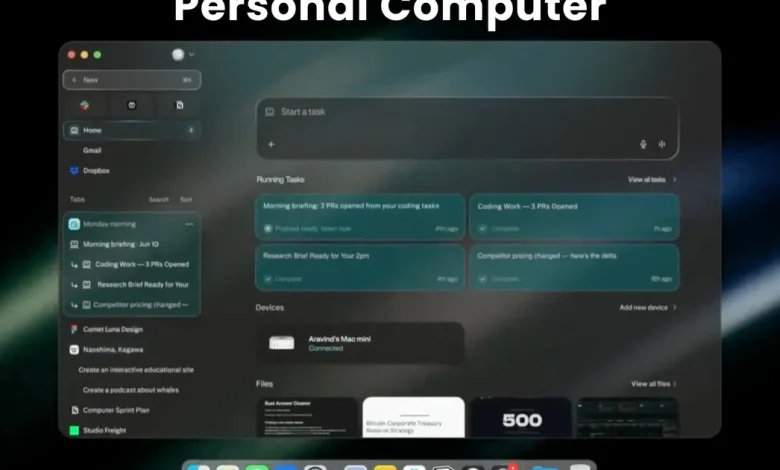
At Ask 2026’s first developer conference – held a week ago in San Francisco’s North Beach – Perplexity unveiled The Personal Computer, a cloud-based AI agent designed to act as a continuous digital worker. It’s always open. Never take a lunch break. Which is more than can be said for most workers.
So what is Perplexity’s Personal Computer?
A personal computer isn’t hardware Perplexity generated – it’s software. A continuous, 24/7 evolution of the former Perplexity Computer, it runs continuously on a user-provided Mac or similar machine that is always available, giving the AI direct access to local files, applications, and sessions.
It integrates 19 to 20 different AI models – including special versions of Claude, Gemini, and Grok – to manage complex workflows in the same way. It provided a high-level goal; breaks that down into sub-tasks and manages them from start to finish, over weeks or months if needed.
How safe is personal, always-on AI?
All work is done inside a sandboxed cloud environment with a file system separated from the browser – so the AI can’t go wrong with your downloads folder after hours. Every action requires user confirmation, and the built-in audit trail covers everything.
You don’t share a screen on a Mac; you direct the AI agent running through it, remotely, while you get on with the rest.
What can you do with a Personal Computer?
This is where it stops sounding like a press release. A developer can command it to monitor a GitHub repository overnight and drop a Slack-formatted snapshot into the team’s channel before standing up – no scripts, no panic.
A researcher can throw an article into it before going to sleep – really dirty, half-short and all – and wake up to a structured report released from live sources, sitting in their inbox. No rabbit holes at 11pm. There are no seventeen open tabs.
Someone who runs a small business gets a lot of value without a doubt: it points to Gmail, tells you what’s important, and monitors customer questions, drafts answers based on how you’ve written before, and only bothers you when something really needs someone.
The personal stuff should work too – Idea notes stay synced, email threads are shortened before you open them, a Salesforce pipeline that updates itself while you’re in back-to-back meetings wondering why you got into this field.
Gmail, Slack, GitHub – Connects to everything

The personal computer connects to Gmail, Slack, GitHub, Notion, and Salesforce, monitoring triggers and running tasks on all of them. CEO Aravind Srinivas formulated a philosophy at the conference: “A traditional app takes instructions; an AI app takes intentions.”
Bold – whether paying $200 a month for an AI that rearranges your life at 3 in the morning is progress or a low-grade concern remains, frankly, open.
Who can get it, and how much does it cost?
Access is limited to Perplexity Max subscribers for $200 per month, Mac-only at launch, with a waiting list. Subscribers get 10,000 monthly credits for accounting jobs. The enterprise version adds security controls, compliance features, and single sign-on – suggesting that Perplexity targets power users and corporate buyers simultaneously with the same product.
Nothing else on the market really does what Personal Computer does – not at this level of local cloud integration, not with multiple models that work in parallel, not at this level of manual release.
The $200 monthly price tag tells you all about who Perplexity is really building for; this is not humanism dressed up in business clothes — the other way around. Each person will find its use, for sure. But the real opening is business-shaped: teams mired in repetitive workflows, founders who can’t yet hire, jobs running on duct tape and spreadsheets.