Daphna Heffetz, CEO of Wanda Fish
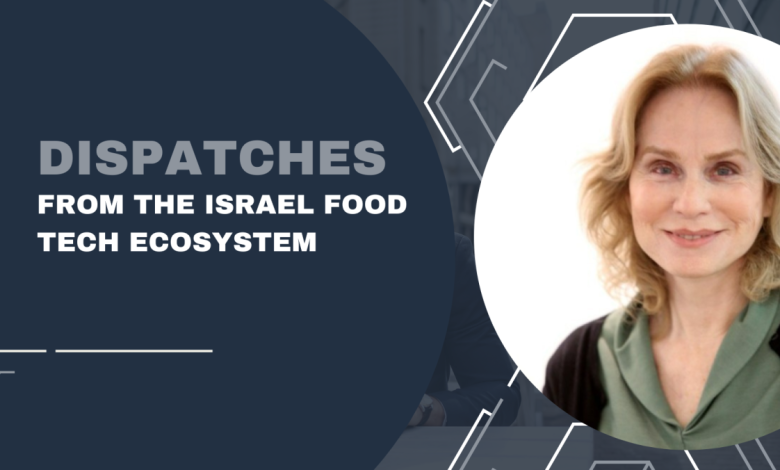
Daphna Heffetz is the CEO and Founder of Wanda Fish, a mobile agriculture company that aims to produce cell-based fish meat, starting with bluefin tuna. We talked about making completely cell-based fish from plant materials, the problems our oceans face today, and why Wanda Fish will only sell to high-end restaurants to begin with.
J: Tell me about your background and how you came to be the CEO and founder of Wandafish.
D: I have been in the biotechnology industry for a long time but my focus is on life sciences. About two years ago, Kitchen Hub approached me and tried to interest me in starting Wanda Fish. I didn’t have enough knowledge about sea affairs at that time, so I started reading and talking to several people.
J: Can you tell me more about what Wanda Fish does and what makes it different from other cell-based fish products?
D: What we do is a variety of farmed fish fillets. Our strategy is to have a premium product from high quality fish such as bluefin tuna and yellowtail. We produce a whole cut fish fillet that combines muscle cells and fat and makes it similar to the fish itself by taking all the nutrients from the fish itself. We start by taking a one-time sample of fish tissue and do not go back to the fish. We separate the necessary cells, mainly muscle, and fat, which make up the fish fillet and grow them in the same way as they will grow in the fish body. We do it in the lab first and later in a clean production environment in a bioreactor. All ingredients are plant based, no animal is used as animal parts are replaced with plant based ones. We do not add additives or supplements because all the cells are taken from the fish and contain nutrients from the fish itself.
J: How much of a problem does Wanda Fish solve?
D: The reason why it is so necessary is because the world’s population is growing rapidly. Also, the ocean is highly polluted and 80% of its pollution is man-made. Also, there is illegal fishing that puts many species of fish at risk. More than 70% of the oxygen we all breathe comes from the ocean.
J: What stage is Wanda Fish in right now?
D: It is already in the lab stage but in the process development and scaling up gradually. We work with tabletop bioreactors that have all the features of large bioreactors.
J: Who are the top customers?
D: The product will initially be offered to restaurants. However, in the next section, it will be sold for sale and you can find it in the store.
J: What is the reason for this strategy?
D: Many of our most advanced companies that started in 2017 or 2018 are also looking to sell to restaurants. One of the reasons for that is that it’s like a clinical trial, you sell to people, and you get feedback. Also, this helps distribute the product. And above all, in restaurants, the selling price is high. Even before price parity, you can sell to restaurants without losing money because the price point is so high.
J: Is there a particular type of restaurant that you sell?
D: Because we focus on a variety of high quality fish, we are looking to start in high-end restaurants. This will be everywhere, hopefully in Asia and Japan and the US and Israel. We will sell to countries based on economic and regulatory conditions.
J: What are the challenges of adapting to selling in different markets?
D: Unique market education. Because we will not be the first in the market as there are several companies before us, which are still producing, the market education will be less when we enter the market. In fact, there are some voluntary organizations, such as GFI, that have conducted market and consumer research in the consumer world already. Through them, we have ideas for market acceptance.
J: What do the next few years look like for you, and what goals are you trying to achieve?
D: We are developing with bluefin tuna as our first product and gradually increasing with cost reduction and price parity. This can be done by increasing the cell density in bioreactors, cheap ingredients, and recycling the medium. We are starting the regulatory process in several areas and hope to work with major international food suppliers.
J: When do you think you will be ready to market?
D: This will take a few years, but the aim is to be on the market by 2026.