5 Things You Didn’t Know Ethernet Ports Could Do
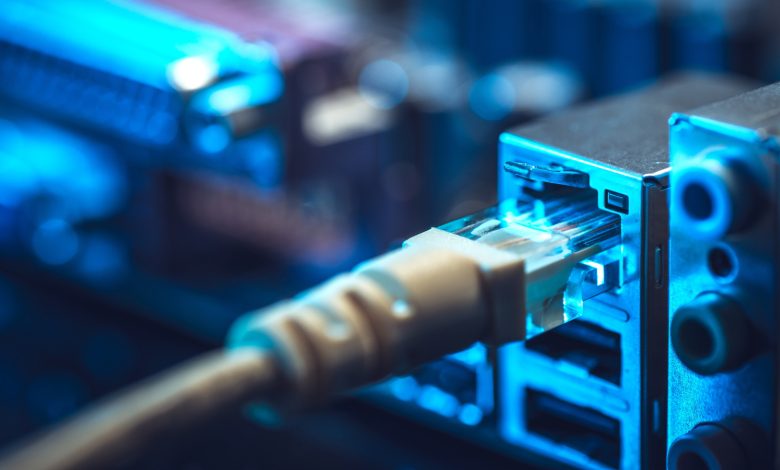
Even if you are not an IT expert, Ethernet cable is straightforward. Plug one end into the wall, the other end into your router (and the other into your computer) and get online. Voilà. Of course, that’s an oversimplified view of how Ethernet is made and how it works, but the point is, Ethernet provides the Internet in an almost magical way – which seems to be the inspiration behind its “ether” moniker, inspired by the ancient physics concept of the light ether, once thought to be a wave that runs the universe. As long as you use the correct color of Ethernet cable, and ensure that your Ethernet cable is not too long, your devices receive Ethernet. End of story. Ethernet ports do nothing but facilitate that process, right? Believe it or not, Ethernet ports can do a lot if you let them.
This article briefly goes into some of the things that Ethernet ports can do. In most cases, what you see below is limited to technical and/or industrial applications, so you probably won’t use it in your home. Still, it’s proof that Ethernet is an incredibly useful and flexible standard. Simply calling it an Internet standard is a misnomer, because in reality, Ethernet is a very high standard that wears different hats depending on the situation. Here are five.
Send Power over Ethernet (PoE)
At the most basic level, an Ethernet cable is simply a group of unshielded or shielded twisted pairs. Wires carry electricity, not just signals. So, in theory, a cable should be able to carry enough current to power something, and so should an Ethernet cable. Power over Ethernet, or PoE, allows an Ethernet cable to carry enough power to support low-voltage devices again we are still providing data. A small note: this should not be confused with Powerline Ethernet, which uses the same concept by making existing power cables support a network connection. You couldn’t power the whole house over Ethernet, but you could, say, things like lights and alarms.
You can already see why this can be useful. Why have multiple cables that increase the cost and require a professional installation technician (and time) to get both internet and power, when you can get just one? In addition, it may prevent the need for expensive and constructive installation (ie, tearing out walls and floors) just to run one new device, since existing wiring can’t do the job. In addition to this, it can be stronger and safer (fewer potential fire hazards).
PoE is the foundation of industrial applications. All buildings can ideally connect their sensors, CCTV, point of sale systems, digital displays, and more to this comprehensive, scalable system. To be clear, this is not a complete overview of PoE; there are a number of specifications and standards for cables that support that output. Choosing between Cat5 and Cat6 is only part of the equation. At home, you can use it to, say, power your security cameras via PoE injection.
Wake devices with Wake-on-LAN
Being able to wake up a device on a cord rather than walking and physically pressing a button is easier. Take, for example, HDMI-CEC on your TV, which allows you to simultaneously activate smart TVs and game consoles as soon as you turn on the TV. In the same way, there is Wake-on-LAN for Ethernet ports. The standard uses so-called magic packets to tell the receiving device to resume operation from an idle state, such as a computer in sleep mode. Normally, you’d have to do this by going to that computer and pressing the power button or moving the mouse, but Wake-on-LAN means you can be anywhere in the house or even anywhere in the world. The LAN part (LAN stands for local area network) can be a bit misleading as Wake-on-LAN can be configured to work from almost anywhere with the right network setup.
You can set this up for a Windows or Mac device. In Windows, you have to make sure it is enabled in your BIOS and then configure it on the software side with the device. On Mac, as long as “Wake up for network access” is enabled in macOS settings, compatible apps or devices can send a wake-up signal; you can also use a third party app that will send those magic packets.
So what can you do about this? An obvious option is to control the PC remotely when you are not around, whether you are on the ground or on a plane. Some applications handle this entire process for you, such as TeamViewer. If you turned that old PC of yours into a home media streaming server, now you don’t have to leave it on 24/7. You can use Wake-on-LAN to start it only if you will be watching.
Monitor devices with SNMP
When it comes to network devices – especially in business settings – it’s important to understand that many of them are controlled remotely rather than directly. Think of something like a security camera, without a screen, keyboard, and mouse, instead of relying on a computer to tell it when to record, where to send videos, etc. In the technology industry, this is sometimes referred to as running something “headless,” especially when it comes to things like servers. One thing routers (and therefore Ethernet ports) support is SNMP, an acronym that stands for Simple Network Management Protocol.
Without getting too deep into the weeds, you basically have a Network Management Station that manages a bunch of SNMP agents or devices. If the office where you work uses, say, a printer, the IT team is probably monitoring it via SNMP. And that’s the key word: caution. SNMP is not a remote control tool; to make sure that everything is working normally, especially in a network with many different devices where it would be difficult to share information. Even setting aside professional content such as offices, it can still be a useful diagnostic tool for home network problems.
Support audio network
You’ve probably seen the theme by now: Ethernet cables can do more than just “internet” in the abstract sense. Since most buildings already have – or can easily install – the more Ethernet ports they can fill, the better. Another area where Ethernet helps is audio/video (AV) networking; think concerts or churches where live music and video need to be sent to speakers and screens reliably. Usually these things go with a special AV cable. But if Ethernet can handle everything in one, why not?
How you do this depends on what level you want to use. There are competing sets of standards such as AES and IEEE’s Audio Video Bridging (AVB); then you have commercial options like Dante and RAVENNA, which serve businesses that want to modernize their AV system and can use open standards like AES.
We’re intentionally keeping things simple here because an Ethernet AV network can be very complex, with multiple host devices and multiple routes that only experts will understand. It’s mostly a commercial thing, but in some cases you can use Audio over IP if you’re going to, say, build your own home theater. Anyway, the point isn’t to give you the lowdown on how the technology works, but rather to show that Ethernet can support these things instead of a traditional AV setup – and it might even be better.
Enable separate virtual networks (VLANs)
You’ve heard of LANs. Ever heard of VLAN? Virtual Local Area Networks are like virtual machines or Docker Engine containers, where there is a separate, virtual, logical network that pretends to be different from its real network. So on a single network, you can technically have multiple VLANs that share the same set of devices but act as if the others don’t exist, and therefore interact only with other devices confined to their particular VLAN. Ethernet facilitates this by marking traffic.
So what’s the point of all this virtualization? One of the biggest advantages is isolation. A virtual machine is a good way, for example, to safely test a USB drive without compromising the security of your real machine. In the same way, VLAN can be a great help in placing protective digital walls on home networks. Let’s say, for example, you get a lot of visitors and you want to allow them to connect to Wi-Fi without being able to see or touch other network devices. You can isolate them by VLAN and rest easy knowing they won’t mess anything up. Without VLAN, you will have to buy additional hardware. As a virtual machine, as long as you have partitioning resources, it’s very doable – and may even improve performance.
That’s a home setup. The uses are many and varied in applications; VLANs can be useful in Voice over IP (VoIP), IoT networks, and secure remote access. Consider how important it would be to make sure that strangers connecting to free Wi-Fi cannot touch other sensitive parts of the network. There are other ways to segment a network, such as having separate guest networks or subnets, but VLANs are one good option.