Strava data raises new security concerns after fleet leak
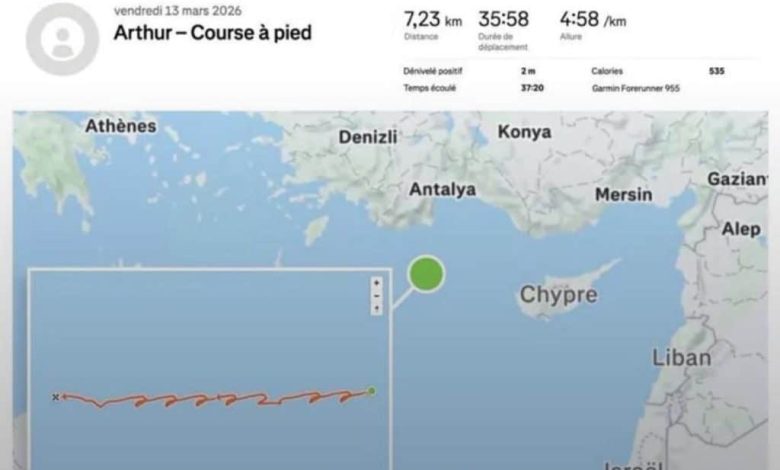
A French naval officer has reportedly revealed the real-time location of the aircraft carrier Charles de Gaulle after uploading footage from the deck to Strava. The incident once again raises questions about how detailed fitness tracking data can reveal more than users expect.
It all boils down to a simple idea. Someone runs, records it on their watch, and uploads it to Strava. That functionality includes GPS data, time stamps, and often a physical route map. In most cases, it is harmless. In the wrong case, it is empty.
How simple running becomes sensitive data
The latest case involved a French naval officer aboard the aircraft carrier Charles de Gaulle. While the ship was operating in the eastern Mediterranean, the officer briefly went on deck and uploaded it to Strava. The map shows a small loop, which makes sense for running on the carrier, but also includes precise GPS coordinates and a time stamp.
This is where things get interesting. Those coordinates effectively place the ship at a specific location at a specific time. When you frame that with publicly available information about usage, it fills in gaps that weren’t meant to be filled.
The shape of the route adds another layer. It’s not just any run. A tight, repetitive loop with no roads or landmarks. That makes it clear that this is happening in a bigger ship than on earth. You don’t need to think too much to figure out what kind of ship it is.
There is no hacking involved here. The data is uploaded by the user, just like any other workout. In this case, it looks like a shared run without much thought about who might end up seeing it.
Even with privacy settings in place, things can still get in. Fans still have access. Segments can expose parts of a route. And if someone takes screenshots or shares the work, that’s it.
That’s the tricky bit. Strava does exactly what it’s supposed to do. It tracks movement and displays it clearly. The problem isn’t the feature, it’s where and when that feature is used.
It’s not the first time
If this sounds familiar, it is. Back in 2018, Strava’s global heat map revealed activity patterns in remote locations. Those patterns ended up highlighting military bases that were hard to see.
What has changed since then is not the core problem. It’s a scale. There are now more devices, more users, and more detailed data generated every day.
Modern wearables track with high precision. They record often. They sync quickly. All of that increases the chances that something serious will slip.
Our takeaway
The unfortunate truth is that most users don’t think about sensitive information when it comes to uploading. They focus on their practice, not on how that data can be interpreted.
Strava offers privacy controls. You can hide the start and end points. You can make tasks private. You can limit visibility to followers only. But those settings are not always used properly. And even if there are, the cases are still there.
Sign up for our monthly newsletter! Check out our YouTube channel.
And of course, you can follow Gadgets & Wearables on Google News and add us as a favorite source to get our expert news, reviews, and opinions in your feed.
The post Strava data raises new security concerns after shipyard leak appeared first on Gadgets & Wearables.