Are Deep Sea Fish Farms the Future of Aquaculture? Forever Oceans thinks so
The growth of aquaculture has been one of the biggest stories in the fishing industry over the past few decades, as farmed fish has grown from about 20% of the catch in the 1990s to half of all fish caught in 2020, according to a report released by the United Nations.
But fish farming, although praised by many experts as a way to reduce the stress on the ever-decreasing wild fish population, appears to be fraught with problems for others. Critics say fish farms can expose local fish to pests like fish lice, as well as antibiotics and other chemicals. They also say that the farms are polluting the water with unnatural amounts of concentrated fish waste from the closed areas of the farms. Farmed fish can also escape from enclosures, which can harm wild fish through reproduction, especially if farmed fish are genetically modified.
But a new generation of fish farming startups believe that pushing aquaculture away from shore and into the deep sea, aided by the use of advanced technologies such as sensors, automation, and artificial intelligence, will alleviate many of the problems associated with nearshore fish farming and produce a clean, abundant harvest that is much needed around the world.
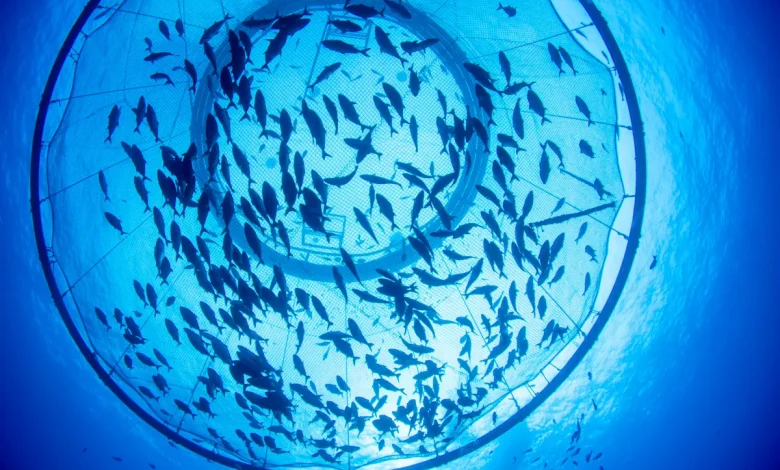
One such company is Forever Oceans which has developed a system of farming fish miles away from the ocean in the open ocean. The company, a spinoff of Lockheed Martin, says it can place its fish enclosures 10 miles offshore, up to 6,000 thousand feet deep, and allow them to drift naturally in ocean currents using a “patented single point.”
Forever Oceans uses sensors and cameras to monitor water quality and fish behavior, and “AI-driven” management software can make precise adjustments to feeding amount and timing as well as control hazards such as algae blooms. Underwater images captured by the system’s cameras are processed by what the company describes as biomass software to determine when the fish are ready to be harvested. The entire system, which the company says greatly reduces human interaction with the fish population, is controlled hundreds of kilometers away from a central operations center where “one worker can monitor and manage our entire farm network via laptops or cell phones.”
Forever Oceans and other startups in the space believe that pushing fish farms farther offshore and deeper underwater allows fish to live in a more natural environment. They say ocean currents can wash away pollutants and naturally clean enclosures, keeping disease at bay. Proponents believe these systems are better than land-based systems because open sea farms use deep ocean currents as a natural filter, resulting in less energy use and better access to naturally-supplied nutrients.
While it’s too early to say that deep-sea aquaculture is growing into a significant piece of the overall aquaculture market, there is definitely momentum. Since the launch of the first aquaculture project off the coast of Norway in 2018, a number of startups such as Forever Oceans, Mowi, Innovasea, and Blue Ocean Mariculture have started working on programs to allow fish farming in the open sea.
Perhaps unsurprisingly, this new movement to push deep-sea fish farms is not without its critics. Last fall, a coalition of environmental groups launched a legal challenge to the permit for a facility off the coast of Florida run by Ocean Era, the company that outsourced the Forever Oceans technology. They say the EPA issued the permit without adequately evaluating the site’s impact on the environment.
On the other hand, Forever Oceans continues to push forward, building farm systems around the world. Last June, the company said it would raise 2,500 tons of fish to be harvested in the next 12 months at its farm in Panama and would bring additional fish capacity from farms being developed in Indonesia and Brazil. And this week, the company announced farm-raised Kanpachi, a popular sushi-grade ray-finned fish, is now on the menus of 75 restaurants across the US, including Charlie Palmer Steak in Napa and Michelin-star Gravitas in Washington DC.