Sip & Snack? Meet the edible cup of coffee

While most of us feel guilty when we drink water from a plastic bottle, we don’t feel bad about drinking a cup of joe from a paper cup. After all, they are connected, right?
Not immediately. An important part of paper coffee cups is the plastic lining that prevents them from composting. Additionally, the production process of these cups produces a large amount of CO2 emissions due to the loss of carbon sequestering trees and the energy consumption required for production and distribution.
But what if we could eat our cup instead of throwing it in the compost bin after enjoying our morning drink?
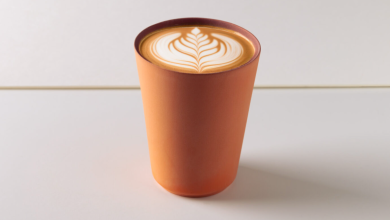
That’s the idea of a Bulgarian startup called Cuffee, which creates an edible cup of coffee that users can consume after finishing their drink. The cup, made from vegan ingredients such as oat bran, wheat flour, and water, resembles an ice cream cone shaped like a coffee cup that can withstand temperatures up to 85 degrees Celsius (185 Fahrenheit) and stays crisp for up to 40 minutes after filling. Available in two sizes, 110 and 220 ml, the cup also has a low calorie content (56 or 105 kcal).
The idea for the Cupffee edible coffee cup comes from Miroslav Zapryanov, the company’s founder and CEO at Cupffee. As a student, Zapryanov began to consider the environmental compatibility of plastic waste and disposable coffee cups and spent years creating a recipe in his kitchen. Today, with a special machine and production process, this idea has become a company capable of producing up to 2.5 million cups per day. These mugs are produced in Plovdiv, Bulgaria.
The company has partnered with coffee brands such as Lavazza, resulting in the launch of Cupffee in 18 countries. The company has been supported at Wimbledon and operated by Etihad Airways from Abu Dhabi to Brisbane on Earth Day. This partnership led to the company’s first external investment of EUR 500,000 in a pre-seed funding round from Eleven Ventures, and a EUR 1.3M grant from the European Innovation Council.
Cupffee joins other startups like Good-Edi (edible cups) and IncEDIBLE Eats (edible grains/vegetables) that believe the path to sustainable single-use consumption is to, well, consume. I like the idea but I have to wonder how many people are willing to eat a coffee or ice cream cup or spoon every time they get a drink or ice cream. I also ask if coffee drinkers want to be on the clock, make sure they drink or throw it away within 40 minutes before the cup goes sour.
Another challenge is cost. According to the Cupffee website, a cup costs between 45 cents and 62 cents per cup when purchased in packs of 200, compared to 18 cents for a paper cup. At 2-3 times the price of a standard cup, restricted food service providers may be restricted from using these products.
But who knows? Over time, many customers will avoid disposable containers by bringing their own cups. But not everyone carries a mug with them all the time, so those who forget their travel mugs might be okay with buying a cup of joe poured into their breakfast bowl.
You can watch how Cupffee makes its edible coffee cups in the video below: