Sony WF-1000XM6 vs WF-1000XM5 – Comparison of Flagship Earbuds in 2026

The Sony 1000X series has consistently defined what true wireless noise-cancelling earbuds should sound and feel like. The arrival of the Sony WF-1000XM6 builds on the success of the Sony WF-1000XM5, but how significant is the leap in productivity? If you’re deciding between these two top Sony headphones, this detailed comparison follows the same structure as our in-depth review to help you decide which model best suits your needs.
What You Get
| WF-10000XM6 | WF-1000XM5 |
|
|

See & Feel
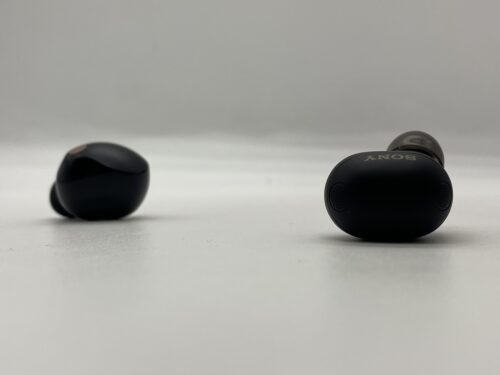
The WF-1000XM5 marked a noticeable change in Sony’s earbud design language. It was smaller and lighter than its predecessor, with ergonomic, round housings that sat securely in the ear. The glossy finish added a premium aesthetic, and the reduced footprint made long listening sessions comfortable for most users. With the WF-1000XM6, Sony slightly increases the housing size to accommodate additional microphones and improved internals. While the earbuds are slightly larger, the contouring has been adjusted to improve weight distribution. Depending on ear shape, some users may find the XM6 a little too stable, while others may prefer the compact feel of the XM5.
In everyday use, both models feel premium and well-built. The difference isn’t dramatic, but the XM5 prioritizes compactness, while the XM6 balances the slightly increased size with improved performance hardware.

Design and performance
The WF-1000XM5 introduced Sony’s refined driver system, combined with improved internal DAC and amplifier circuits. Its HD Noise Canceling Processor worked alongside multiple microphones to provide highly accurate sound detection and compression. The touch controls were responsive, customizable with the Sony Headphones Connect app, and intuitive for everyday use.
The WF-1000XM6 builds on this architecture with Sony’s latest HD Noise Canceling Processor QN3e and an expanded microphone array. The goal is more accurate environmental detection, especially in the mid-to-high frequency range common in public transportation and busy urban areas. Internal signal processing has been improved to improve resolution and improve clarity across the spectrum. XM6 does not reboot the system but fine-tunes almost every internal part.

Bluetooth
Both the WF-1000XM5 and WF-1000XM6 support modern Bluetooth standards and wireless high-resolution audio. They are compatible with LDAC, allowing high bitrate streaming on compatible Android devices. Multi-point pairing enables simultaneous connection to two devices, which is important for users switching between phone and laptop throughout the day. The XM6 further improves connectivity with improved Bluetooth stability and next-generation codec support, including LE Audio compatibility. This makes the XM6 future-proof, especially since LE Audio is widely used. In practical use, both models deliver stable wireless performance with minimal dropouts, but the XM6 stands up more confidently for long-term collaboration.
Battery Life
Battery life remains constant between generations. Both earbuds provide approximately eight hours of playback with active noise cancellation enabled, while the charging case extends the total listening time to approximately twenty-four hours. Quick charge capability allows for short bursts of listening after a short charge time. Sony didn’t significantly increase battery life with the XM6, but maintaining solid performance while upgrading the internal processing is an achievement in itself. For most users, endurance will feel similar between the two models.
Sound stage
The WF-1000XM5 already delivers one of the most expansive soundstages in the true wireless category. Imaging sounded wide with the in-ear design, with convincing stereo separation that allowed instruments to sit clearly on the left and right. While the depth was decent, the presentation was a little lean. With the WF-1000XM6, the spatial presentation sounds more open and layered. There’s a subtle but noticeable increase in visual depth, and imaging sounds more accurate in complex mixes. The instruments occupy more defined spaces rather than clustering together in busy passages. While the physical limitations of wireless earbuds still exist, the XM6 creates a more three-dimensional listening experience overall.
The Low End
Both earphones have Sony’s standard thickness, but have different levels of clarity. The WF-1000XM5 features a full-bodied low end with strong sub-bass extension. Bass hits hard but avoids excessive bloom, keeping the overall presentation balanced rather than consumer-friendly. It’s hard enough for electronic music and hip-hop while still being manageable for acoustic recordings.
The WF-1000XM6 strengthens the low frequencies further. Sub-bass feels more controlled and balanced, with better definition between kick drums and basslines. Rather than increasing quantity, Sony is improving quality. The XM6’s bass sounds clean and clear, especially at high volumes, where the XM5 can sometimes sound soft at the edges.
Mids
In the WF-1000XM5, the midrange is clear and natural, the vocals are slightly forward. Male and female vocals both sound smooth, and instruments such as guitars and pianos maintain a good body. However, in dense mixes, the layering can sound a little compressed compared to wired audiophile gear. The WF-1000XM6 improves separation in the center. Vocals stay sharper in the mix, and there’s better contrast between overlapping instruments. Acoustic textures sound lifelike, and subtle background details come through easily. The XM6 does not significantly change the tonal balance, but improves the clarity and fine detail recovery.
They are high
Treble on the WF-1000XM5 offers a nice sparkle without falling into the harshness. Cymbals and high frequency detail are present and crisp, although a little smooth to prevent fatigue. Tuning favors long listening times rather than extreme analytical sharpness. The WF-1000XM6 extends the range with a touch more air and openness. Treble feels a little more refined, with improved extension that contributes to an increased sense of space. Importantly, Sony maintains control—no harsh sharpening or balancing. The result is a cleaner and more resolving top end that improves overall visibility.
Summary
—
MAJORHIFI may receive commissions from sales.