Huawei FreeBuds Pro 5 review: premium ANC earbuds that undercut Apple and Sony
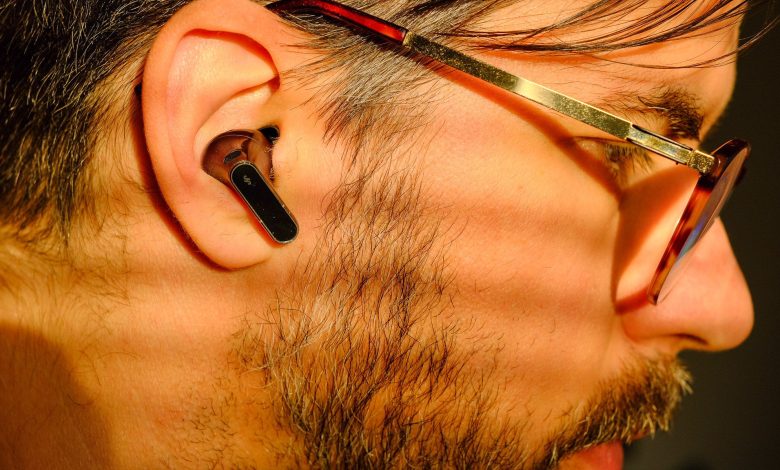
I am an avid user of Apple AirPods Pro, although I prefer the second version to the latest version. Whenever I’m not testing headphones, I usually reach for AirPods Pro 2 or AirPods Max. That may change, thanks to the Huawei FreeBuds Pro 5.
The Chinese brand’s latest earbuds match Apple’s best-selling in-ears in terms of ANC, audio performance, battery life, and comfort. I’ve been using the FreeBuds Pro 5 for a week, and time after time, the buds remind me that there’s life behind the AirPods Pro.
Huawei Freebuds Pro 5 review
Price and availability
HUAWEI FreeBuds Pro 5 is available to buy from February 26 for £179.99 (~$243 / €206 / AU$343). Until April 4, the FreeBuds Pro 5 will be available for £149.99 (~$202 / €172 / AU$286) with a special £30 introductory discount through Huawei, and 12 months of Huawei Loss Care.
(Photo credit: Matt Kollat)
Even at full price, the FreeBuds Pro 5 are one of the most affordable earbuds in the category. Bose’s 2nd-gen QuietComfort Ultra Earbuds cost £299 / €349 / AU$299, while the Sony WF-1000XM6 are in the £250 / €300 / $299 price bracket. Apple’s latest AirPods Pro 3 will set you back £219 / $249 / €249, which is very close to Huawei (but still more expensive).
Design and build quality
Huawei FreeBuds Pro 5 leans heavily on premium, minimalist aesthetics, with its compact form and classic colors designed to highlight a refined, classy feel. As expected from Huawei, the earbuds and case are positioned as much as style pieces as they are audio gear.
The charging case features a new excimer film for a skin-friendly texture, while the blue adds a vegan leather with a glossy surface that is fingerprint-, wear- and scratch-resistant.

(Photo credit: Matt Kollat)
Huawei also highlights the hidden hinge design for a seamless look and the visual signature “round star” with ring light, which reinforces the product’s polished, detailed design.
The buds themselves are 10% smaller and 6% lighter than the previous generation, with an optimized shape to lower pressure points and improve stability. I prefer the slim body and foldable head unit design of the AirPods Pro 2, but the FreeBuds Pro 5 are far from great.

(Photo credit: Matt Kollat)
Multiple sizes of ear tips (XS to L) are included to create a secure acoustic seal and accommodate different ear shapes, with a design tuned for long listening sessions without fatigue.
Although the FreeBuds Pro 5 is not specifically designed for exercise, it carries an IP57 rating for dust and water resistance, while the case is rated IP54.
Ergonomics and touch control
FreeBuds Pro 5 uses a touch system that includes touch, swipe and pinch input directly on the stems, similar to AirPods, including Apple AirPods 4. I am very happy that the control panel is not in the main part of the bud, which usually means that you have to keep pushing them deeper and deeper into your ears to skip tracks or increase the volume.
You can swipe up or down to adjust volume, double tap to play or pause, and use long press or pinch to change noise canceling modes, control calls, or skip tracks.

(Photo credit: Matt Kollat)
From an ergonomic perspective, the earbuds are designed to balance stability and long-term comfort. Huawei says the design is informed by extensive ergonomic research, which optimizes contact surfaces to reduce pressure points while keeping the buds securely in place.
The smaller, lighter design compared to the previous generation is intended to help them “go right in,” supporting extended listening sessions without discomfort. I wore them very well all day (~ 4 hours at that time, twice in one day), and I did not feel pressure or discomfort, which is very good, especially considering that they provide an acoustic seal, which inevitably reduces the air flow in the ear.
Four sizes of silicone ear tips are included to create the perfect acoustic seal and accommodate a variety of ear shapes. Huawei offers an ear fitness test through the Huawei Audio app, similar to Apple and other brands. The music it plays is loud, but not unbearable.
Features
FreeBuds Pro 5 includes a ‘dual engine’ AI active noise cancellation (ANC, which combines two acoustic units with a real-time environmental sensor to resist external noise. Even better, you can adjust the ANC power in the app, or let the keys manage it in ‘Smart dual-core’ mode.

(Photo credit: Matt Kollat)
I’ve tried ANC on the train and in the office, and it’s the same as Apple’s. The company says the FreeBuds Pro 5 samples ambient noise up to 400,000 times (!) per second to ensure no unwanted noise enters your ears. The result is a 220% improvement in noise cancellation performance compared to its predecessor.
As for the sound quality, the earbuds use a dual-drive acoustic system with independent high-frequency low-frequency drivers, supported by two DSPs and DACs to improve crossover accuracy and reduce distortion.

(Photo credit: Matt Kollat)
They also support high-resolution wireless audio and Huawei’s audio profiles. Sadly, 2.3Mbps Lossless Audio is only available if you use the FreeBuds Pro 5 and compatible Huawei smartphones and play lossless audio files – admittedly, a niche use case. I was testing the buds using my iPhone 16 Pro, and even though everything sounded clear, it wasn’t a lossless experience.
Huawei is not alone in this. Many audio brands offer lossless/high-quality audio options, but with caveats. My Spotify also says I’m streaming songs in lossless quality, but my Bluetooth headphones say otherwise. Most Android phones support high-bandwidth codecs, but they aren’t lossy, either.

(Photo credit: Matt Kollat)
That said, I had zero issues with sound quality while listening to music and watching movies. The Huawei Audio app offers a number of calibration options, but I found standard tuning to be perfect in most cases. Sound isolation is excellent, and I didn’t find any unwanted artifacts at normal volume levels.
The FreeBuds Pro 5 offer a multi-point connection, and to my surprise, it actually works. I tend to switch between my iPhone and MacBook, but the Huawei buds do the job almost as well as the AirPods. There was a slight hesitation when I turned off the music on the phone just before clicking the video on the Mac, but it was always resolved quickly.
Battery life and charging
Huawei rates the FreeBuds Pro 5 at up to 9 hours of playtime on a single charge (noise off), which extends to around 38 hours with a charging case, putting them in a competitive position among premium ANC earbuds. The earbuds support wired and wireless charging, and the case has a 537 mAh battery, while each bud holds a 60 mAh cell.
In my testing with ANC enabled, endurance dropped significantly below the headline figure, which is expected given the extra processing required to stop the noise. Tracing the release curve, the buds dropped from 35% full in 4 hours and 15 minutes (65% draw) which equates to about 15.3% per hour.

(Photo credit: Matt Kollat)
That yields a total global ANC time of 6.4 to 6.7 hours, the curve shows a slight acceleration towards the end, indicating that the final value will remain close to the lower limit.
Charging performance proved to be solid. The quick boost from 22% to full took about 30 minutes using the case, which itself dropped from 100% to 84% in the process. While the official numbers highlight solid longevity in ideal conditions, real-world ANC usage paints a generally outstanding battery performance.
The decision
The Huawei FreeBuds Pro 5 tick almost all the boxes. They sound great, offer good noise cancellation, and are comfortable to wear. They also charge quickly and sell for a lot less money than most flagship in-ears, making them one of the best (if not the best) value for money options out there right now.

(Photo credit: Matt Kollat)
A few ecosystem limitations prevent them from universal appeal, but for many people, they are a distinct standout from Apple, Sony and Bose. I would recommend them to anyone, except audiophiles, but they won’t consider Bluetooth ANC buds with different EQ settings anyway.