These 5 US Airlines Are Most Likely to Have Common Flight Delays
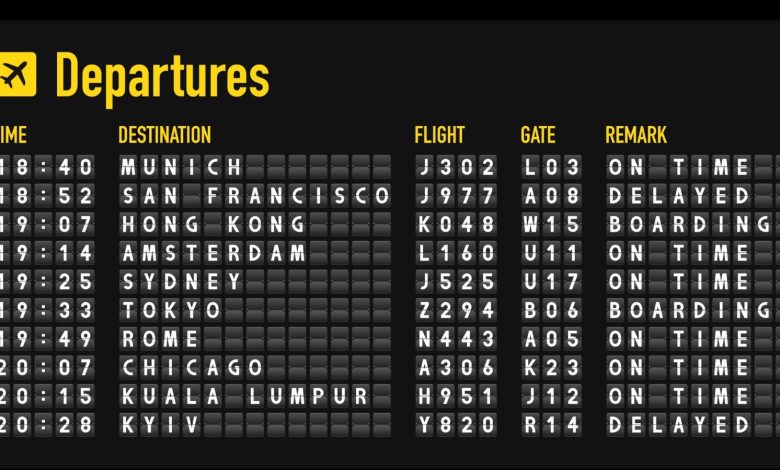
No one likes a delayed flight; it’s unfair, disrupts schedules, and imposes additional costs on both passengers and the airline. There can be several reasons for such incidents – from technical issues and climate change to labor strikes and busy airports – and in most cases, the airline has no direct control over them. However, some airlines have a better handle on their operations than their competitors, allowing them to keep delays to a minimum.
So, if you’re booking a flight and want to minimize your chances of getting hit with a late flight (or a canceled flight), we’re taking a look at the five American carriers that had the highest percentage of delays. We pulled our numbers from the US DOT’s Bureau of Transportation Statistics reports on the arrival performance of the marketing carrier, with data from March to October 2025. Unfortunately, we’re not sure if we’ll get the latest data, as major US airlines have asked the DOT to stop publishing performance statistics and plead to make flying worse for everyone.
In addition, we looked at the ratio of delayed flights compared to the total number of flights. After all, it wouldn’t be fair to compare Delta, which had 207,770 delays out of more than 1.1 million flights and the best on-time rate in the United States, with Frontier, which operated less than 134,000 flights, with more than 37,000 late.
Frontier Airlines
The worst performer by far is Frontier Airlines, with 37,329 delays out of a total of 133,328 flights in the period covered. This means that 28%, or more than one in four flights, are delayed. It also had the second highest number of cancellations, with 2,111 flights, or 1.58% of its schedule, grounded. This is probably one of the reasons why this airline has a low level of reliability and customer satisfaction, and its cheap fares are the only thing that goes well for its passengers.
While airlines can’t do anything about airport traffic congestion and weather-based delays and cancellations, other issues, such as crew schedule restrictions, can often be mitigated with advanced crew scheduling systems. Even delays caused by unexpected technical problems at hub airports can be corrected by having a ready spare aircraft available or by reducing the number of flights each flight offers per day. However, these measures can be expensive for airlines, especially low-cost airlines that rely on thin margins.
To make matters worse, Frontier says it does not offer refunds, hotel accommodations, or monetary compensation to passengers affected by flight delays or cancellations. The best you can get is a seat on the next available Frontier flight and meal vouchers if your delay or rebooking is more than three hours and is considered a “controllable circumstance” such as delayed baggage, flight damage, or mechanical trouble. If the delay is described as an “uncontrollable event,” such as those caused by weather, Air Traffic Control, or an incident such as a bird strike, you may be able to rebook the flight. Alternatively, you can claim a full refund under 14 CFR Part 260 if the delay is more than three hours for domestic flights and six hours for international flights.
JetBlue
JetBlue is the second worst airline when it comes to delays, with 38,117 flights, or 24.52%, arriving 15 minutes (or more) late out of 155,432 total scheduled flights. While this isn’t as bad as Frontier, it’s still close to one in four flights delayed. It also ranked third for cancellations, with 1,885, or 1.21% of flights, affected. This number is likely to be influenced by an urgent software update of the Airbus A320 family aircraft in late 2025 which has led to many cancellations and delays. The update was prompted after a JetBlue A320 made an unauthorized emergency landing on the plane due to solar radiation. This is especially noteworthy considering that the JetBlue fleet is built entirely by Airbus aircraft.
JetBlue explains its policy regarding refunds and options in the event of a delay or cancellation. According to the airline’s website, flights affected by weather disturbances, domestic delays of more than three hours, international delays of more than six hours, or changes from a nonstop to a connecting or connecting flight are eligible for a fee waiver. This allows you to change your flight at no additional cost or receive a full refund on the original payment method.
American Airlines
This is the first and only airline to remain on our list of airlines with the worst on-time performance. According to the US DOT, of the 1,363,530 American flights (which, unfortunately, is the highest number of scheduled flights during our time), 333,396 flights, or 24.45%, are delayed. That number is so high that it is greater than the total number of planes operated by Frontier and JetBlue combined. American Airlines is also the worst airline when it comes to cancellations, with the airline canceling 28,204, or 2.07%, of its plans.
Still, it seems that American is trying to do something about this, at least for the affected passengers. The airline is said to be testing an AI tool that tracks passengers who may miss their connecting flights due to delays on the previous flight. It will then adjust the connecting flight without affecting the rest of the day’s schedule, ensuring that passengers can still reach their destination on time. The system would also benefit the airline, as it would not have to deal with rebooking the affected passengers (although it may anger some customers who may have to wait an hour for an incoming flight).
If you’re flying American and experience a major delay or cancellation caused by the airline, it says it will provide you with an approved hotel voucher and round-trip airport transportation if the delay is overnight. In addition, it will provide food vouchers for delays of three hours or more after scheduled departure. Unfortunately, if you are affected by unexpected delays and cancellations caused by weather, you have no right to anything other than rebooking on the next flight with available seats at no additional charge.
Allegiant
Despite having one of the few airlines (second only to Hawaiian before it merged with Alaska Airlines), Allegiant still managed one of the worst performances at the time. The airline had 22,210 delays, which is 24.40% of its total of 91,015 flights. But despite offering some of the cheapest flights available, it still manages to have the best cancellation record in our time, reporting only 238 canceled flights, or just 0.26% of its entire schedule.
Like Frontier, which is also a low-cost carrier, Allegiant says it does not offer delayed passengers any meals, alternative transportation, or reimbursement for overnight expenses. If your flight is rescheduled due to a delay or cancellation and you choose not to take it, your only options are to switch to a different flight on the same route or cancel the remaining flights and receive a refund for the unused portion of your ticket.
This may be a deal breaker for some people, but those looking for the best deals on airfare may be willing to take the risk. The airline mentions on its page the possibility of receiving reimbursement from Allianz Travel Insurance for cancellations. Therefore, it may be a worthwhile investment to spend more money on this type of insurance, which is one of the services offered by AAA and is probably more affordable than a legacy plane ticket.
Southwest Airlines
After the big three (American, Delta, and United), Southwest Airlines has the largest number of flights, at 954,366 scheduled flights. However, it also has a significant number of delays, at 211,262 flights, or 22.14% of its schedule. However, it has a good track record when it comes to cancellations, with only 5,602 canceled flights, or just 0.59% of its total number of flights.
Southwest Airlines pioneered the low-cost carrier (LCC) model, so like the other LCCs listed above, don’t expect to get any benefits from it in the event of a delay, except for the minimum amount required by law. However, it is one of the few US airlines that offers Wi-Fi, which costs only $8 per device throughout the flight. While you may not enjoy this service on short hops across the country, you may find it a valuable but affordable offering on long-haul flights, such as the seven-hour-plus flight from Phoenix to Honolulu.