I tested XGIMI’s MemoMind One and they prove that smart glasses don’t need a camera to be great.
The problem, if you can name one, with most smart glasses right now is that they all look the same. Most smart glasses often come with a camera next to the lenses, built-in speakers, the ability to take photos and videos, and an AI chatbot. That is the formula that everyone follows. That’s not what XGIMI, a brand better known for its projectors, is trying to do with its MemoMind glasses.
At MWC 2026 Barcelona, XGIMI showed its new MemoMind One smart glasses, which skip the camera entirely. Instead of relying on cameras to make the glasses “smart,” the company uses a waveguide display that generates valuable information right in front of your eyes whenever you need it.
These smart glasses focus on helping, not recording everyone around you
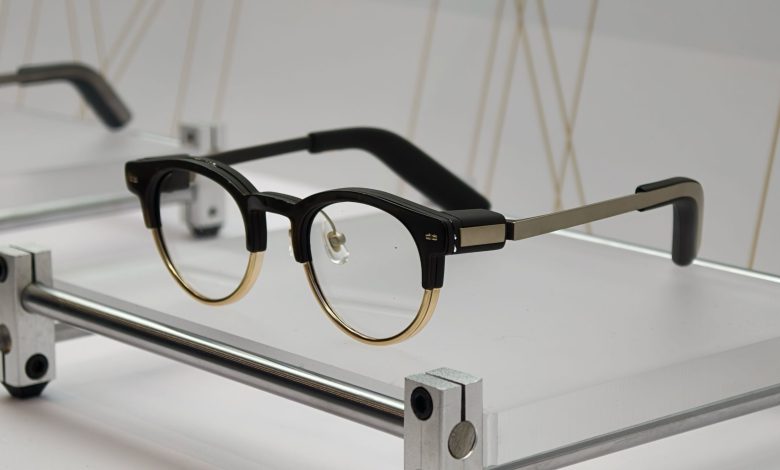
Right off the bat, the XGIMI MemoMind One looks just like any other pair of prescription glasses, although you’ll quickly notice that the frame is slightly thicker towards the end. This is probably where the company put the battery.
The stem of the glasses, near where they meet the lenses, houses the small projectors (this is where I think XGIMI’s core technology comes in). It produces a small display directly in front of your eyes when you wear glasses.
The waveguide display shows useful information such as time, date, notifications, news, calendar events, and weather. It can also act as a teleprompter when you’re giving a keynote or presentation. To put it simply, the experience is similar to the warning displays you see in other cars that cover basic information in the real world around you.

The glasses have a small square area on the lens where the projector shows the information. The interface appears as green text floating in your view. It is not very visible to others, although it can be seen from certain angles.
In addition to displaying notifications and acting as a teleprompter, the glasses can also act as a live translation tool. They listen to the other person’s voice through a microphone and display the translated text in real time. I saw a demo where the program translated Chinese to English, and it worked surprisingly well.
Although, my favorite feature was the memory function. You can tap and hold the button on the right stem of the glasses to save information. For example, you can say, “Remind me that I have to check in for my flight at 1pm,” and release the button. The glasses will show that reminder at the exact time you need it.

There are also several AI features involved, with glasses using what XGIMI calls a “hybrid LLM operating system” that allows switching between different AI models depending on the task.
Meanwhile, XGIMI says the glasses should deliver around 16 hours of battery life on a single charge. Charging takes place via two-pin connectors at the end of the trunk.
So yes, in addition to charging your phone, smartwatch, and earbuds, you may need to charge your glasses. There’s no charging case yet, but the company says it’s working on one that could extend battery life to about a week per case.
I didn’t get much time to use these smart glasses at the XGIMI booth at MWC, but one thing I immediately appreciated about the MemoMind One was the company’s decision to go cameraless.

To me, smart glasses shouldn’t just be about recording the world around you. They should focus on displaying useful information when you need it, right in front of your eyes, without forcing you to take out your smartphone. And MemoMind One seems to be on the right track.
XGIMI says the glasses will be available in a wide variety when they launch later this year. There will be full and half rim frames, square and round shapes, prescription support, and sunglasses attachments.
I’m still a little skeptical about the $599 price tag the company has set for them, but maybe spending more time with the glasses will change my mind.