China Installed Pedestrian Bumpers on Certain Streets
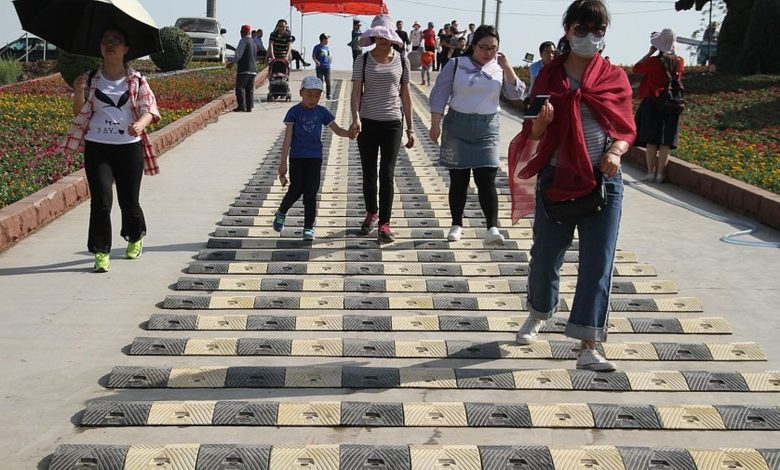
You know the speed bumps: the high, hidden ones on the road that keep other drivers (not you) from recklessly pulling into parking lots and routinely ignoring posted speed limits on neighborhood streets, near hospitals, and in school zones. Depending on city and state regulations, they come in a variety of shapes and sizes but typically range anywhere from 3 to 6 inches in height, and can easily be called lumps or humps. According to the Federal Highway Administration, these protuberances can reduce speed by 10 mph. Whatever they are called, and wherever they are installed, they are always intended to slow down traffic and protect pedestrians.
However, several years ago, China took that idea and turned it completely on its head. Instead of putting the brakes on traffic, speed bumps are placed in at least one unusual place with the primary goal of slowing down, of all things – foot traffic. In 2017, news spread online that Chinese authorities had installed what looked like pedestrian speed bumps along the Beijing-Hangzhou Grand Canal in the ancient city of Taierzhuang.
Officials discovered that the thousands of tourists flocking to this UNESCO World Heritage Site (which dates back to 486 BC) tended to spend more time glued to their smartphones (no doubt watching cat videos) than marveling at the beauty of the Grand Canal. So, they decided to install more than 50 black and yellow rubber bumps — referred to as “cooling devices” rather than “speed bumps” — on the path leading down to the main site. This road soon became known as the “Board Road.”
Why was the Grand Canal chosen as a place for pedestrian speed bumps?
Officials hoped that the installation of the “Board Road” would slow down the crowds who frequented the site, forcing them to stop and take in the spectacular view of the Grand Canal, which includes historic buildings built during the Qin and Han dynasties. As part of the longest and oldest artificial river in the world, it runs about 1,104 kilometers between the cities of Beijing and Hangzhou. The China National Tourism Bureau in Singapore said, “It’s like a treasure trove of Instagram-worthy places that stretch over 12 kilometers from north to south.” Speed bumps also reduce the logjam to get into those good places.
Interestingly, the photos show that the speed of pedestrians is not constant throughout the road, as a few feet on both sides are always free and clear. When they were first installed, visitors thought they might be stairs to climb up the hill away from the Grand Canal. Despite this confusion, it ultimately helped site officials manage the high volume of visitors and ensure that people remained orderly and respectful in one of the country’s most protected areas.
China has no qualms about putting speed bumps in unusual places. Also, in 2017, China Global Television Network (CGTN) reported that similar black and yellow speed bumps were installed approximately every five meters on a 656-meter stretch of pavement in Beijing’s Fengtai district. According to the Facebook report, the local authorities said that military equipment and vehicles were being inspected; However, many local people using that road reported damage to their vehicles. Additionally, several photos show that this road was heavily used by pedestrians. Maybe they should try “speed tables” like the ones being tested in Cincinnati, Ohio.