thin and light versus affordable – what’s the tradeoff?
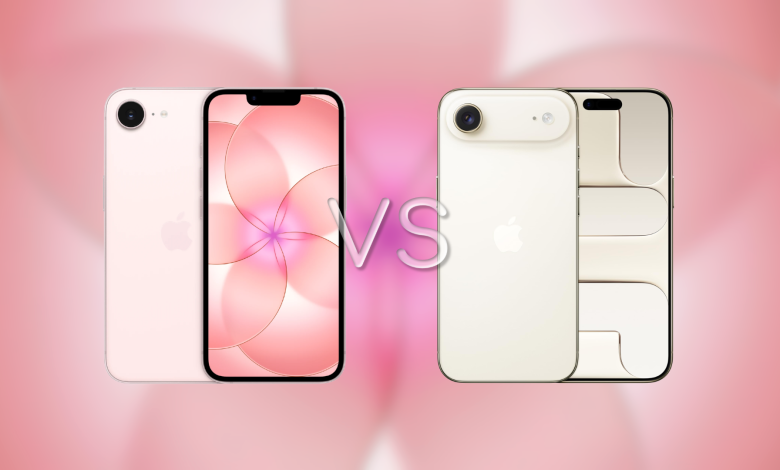
Apple’s current lineup offers consumers two very different options at opposite ends of the design spectrum. The newly announced iPhone 17e focuses on price and usability, while the iPhone Air focuses on a slimmer design and stronger performance hardware. Both of these devices share modern Apple technology such as the A-series chip family, iOS 26, and support for Apple Intelligence, yet they target completely different priorities.
The iPhone 17e enters the market as Apple’s most affordable model in the iPhone 17 family, starting at around $599 and offering 256GB of storage by default along with the new A19 chip and MagSafe support. Meanwhile, the iPhone Air sits next to the premium tier with a thinner body, larger display, and more powerful A19 Pro chip, bringing it closer to flagship performance.
So the comparison between these two devices comes down to a clear question: do you prefer a lightweight premium design, or a phone that brings a lot of important features at a lower price?
A quick comparison
| A feature | iPhone 17e | iPhone Air |
|---|---|---|
| The original price | ~$599 | ~$999 |
| Show | 6.1-inch OLED | 6.5-inch OLED |
| The chip | Apple A19 | Apple A19 Pro |
| RAM | 8GB | 12GB |
| Rear camera | 48MP single lens | 48MP single lens |
| Front camera | 12MP | 18MP |
| Storage | 256GB / 512GB | 256GB / 512GB / 1TB |
| Battery | ~ 4005 mAh | 3149 mAh |
| Design focus | Affordable price | Ultra slim premium design |
The numbers above show how Apple ranks each device. The iPhone Air delivers solid hardware and a slim design, while the iPhone 17e focuses on value and everyday usability.
Design and display
Apple built the iPhone Air around one clear goal: extreme thinness. The device measures approximately 5.6 mm thick, making it the smallest iPhone produced by Apple to date. It also has a large 6.5-inch OLED display, which makes it more comfortable for media, gaming, and multitasking.
The iPhone 17e follows a different design strategy. Apple also used the same standard chassis as previous models, which helps keep production costs down and keeps the device accessible to more consumers. The phone features a 6.1-inch Super Retina OLED display and a notch rather than the new Dynamic Island interface seen on higher-end models.
Here are the key design differences:
- The iPhone Air focuses on a very slim design
- The iPhone Air uses a large display for media and productivity
- The iPhone 17e uses a compact 6.1-inch size that many users still love
- The iPhone 17e retains the older notch design than the Dynamic Island
People who prioritize comfort in the hand or portability may find the smaller Air attractive, while users who prefer a smaller phone may enjoy the 17e’s size.
Performance and hardware
Both phones rely on Apple’s A19 chip design, but the Air version uses the more powerful A19 Pro processor. The difference is especially important for tasks such as gaming, high-resolution video editing, and heavy multitasking.
The iPhone 17e is still very efficient in daily tasks because the A19 chip includes a six-core CPU, Neural Engine for AI features, and effective performance improvements over previous iPhone chips.
The performance difference is particularly noticeable in these areas:
- The power of the chip
- iPhone Air: A19 Pro for strong GPU performance and CPU performance
- iPhone 17e: A19 chip with fewer GPU cores
- Memory
- iPhone Air: 12GB RAM
- iPhone 17e: 8GB RAM
- Storage options
- The iPhone Air offers up to 1TB of storage
- The iPhone 17e stops at 512GB
For most everyday users who browse, stream, and use social media apps, the iPhone 17e already provides enough performance. Power users and gamers will notice the difference in Air.
Camera skills
Apple has kept the camera hardware simple in both models. Each phone uses a single 48MP rear camera that can produce high-resolution images and supports 2x zoom mode.
The front camera is clearly different between the two models.
| Camera feature | iPhone 17e | iPhone Air |
|---|---|---|
| Rear camera | 48MP wide | 48MP wide |
| Zoom in | 2x zoom | 2x zoom |
| Front camera | 12MP | 18MP |
So the iPhone Air offers slightly stronger front camera performance for video calls and selfies, while the main rear camera experience remains the same on both phones.
Battery life and charging
Battery capacity tells an interesting story in this comparison. The iPhone 17e actually carries a larger battery, which helps balance the device’s slower hardware.
- iPhone 17e battery: about 4005 mAh
- iPhone Air battery: about 3149 mAh
Both devices support MagSafe wireless charging and Qi2 compatibility with wireless charging speeds of up to 15W.
The Air’s slim design limits the size of the battery, which means that battery life is largely dependent on Apple’s software development and the efficiency of the A19 Pro chip.
Price and value
The price remains the main difference between these two devices.
- The iPhone 17e starts all around $599which puts it firmly in Apple’s budget-friendly segment.
- The iPhone Air starts next $999it puts it next to the premium models.
That roughly $400 price gap changes the price equation for many buyers.
Users who simply want a reliable iPhone with a modern processor, a good camera, and long software support will find the 17e a solid choice. People looking for Apple’s newest design language and strong hardware performance may justify the Spirit’s higher price.
Which one should you buy?
The decision between the iPhone 17e and the iPhone Air depends on what is most important for daily use.
Choose the iPhone 17e if you want:
- The lowest price in the iPhone 17 range
- Strong performance of daily activities
- Long battery life
- A compact phone that feels familiar
Choose iPhone Air if you want:
- The smallest iPhone design available
- Large display for media and games
- Strong performance from the A19 Pro chip
- More RAM and higher storage options
Both devices cater to different types of consumers. The iPhone Air focuses on design and power, while the iPhone 17e focuses on value and usability. Consumers who understand what’s important will find it easier to decide which trade-offs make sense for their daily use.