Do SAD Lamps Really Work?
NANCY: It is screaming “I am being used under medical supervision. I have no aesthetic value, but I might be able to help you survive in life.”
CAIRA: I’m Caira Blackwell.
ROSIE: I’m Rosie Guerin. And you’re listening to The Wirecutter Show.
ROSIE: Caira, you okay?
CAIRA: No.
ROSIE: Yeah. Is it by any chance because you live in a basement, and it is February?
CAIRA: Oh, what do you think?
ROSIE: I think maybe it has something to do with it.
CAIRA: I think that might have a really big factor. Yeah, yeah, yeah. I mean, I talk about this all the time, but I do live in a basement, and I don’t get any light, ever. And it’s especially hard in winter, when it’s in full swing, because it just feels like I’m in darkness all the time.
ROSIE: Yeah, and the days are shorter too. Have you ever considered getting one of those big lights that they advertise that you should use in winter so that you are less sad?
CAIRA: Yeah, the technical name is actually a light-therapy lamp, but since they’re pegged for use during winter, when seasonal affective disorder hits, they’re often referred to with their acronym, S-A-D, or SAD lamps.
ROSIE: So they’re literally called SAD lamps.
CAIRA: They’re literally called SAD lamps, for the saddies of the world. But yeah, I’ve thought about it. I’ve read about it a lot. But I don’t know, it’s been kind of hard for me to decide if I should dive right into it, for a couple of reasons. I wasn’t sure how well they might work, and they’re a little bit expensive. I mean, I think our top pick is about $200 for this really bright, ugly lamp.
ROSIE: So you want to have some sense of if they work, how they work, what to expect before you jump in.
CAIRA: Yeah.
ROSIE: Well, we got to phone a friend, then. We’re going to chat with Nancy Redd. We love Nancy.
CAIRA: We love Nancy.
ROSIE: We love Nancy. We last talked to Nancy about toothbrushes and sunscreen, and she’s incredibly knowledgeable. She covers health and personal care here at Wirecutter. She’s been here a long time. Nancy is the source.
CAIRA: I can’t wait to talk to her. So we’re going to take a quick break, and then when we’re back, we’re going to talk about what exactly these SAD lamps do, if they work, how they work, and which one Nancy would recommend. Be right back.
ROSIE: Welcome back. Our guest is Nancy Redd. She’s a senior staff writer here at Wirecutter. Welcome, Nancy.
NANCY: Hi.
ROSIE: Hi. Today we’re talking about light-therapy lamps, also known as S-A-D or SAD lamps. So can you break down what seasonal affective disorder is and how sunlight plays into it?
NANCY: Okay. So seasonal affective disorder, also known by the acronym SAD, is a seasonal pattern of depressive episodes. So officially it should be diagnosed by a physician, and it’s actually classified as major depressive disorder with seasonal pattern, but that acronym isn’t as fabulous as “SAD.” So we basically just refer to it as seasonal affective disorder. And a lot of people have mood shifts or energy shifts when the seasons change. In particular in the winter. For some people it’s mild. We’ve always heard of the winter blahs or the winter blues. But for others, even if they don’t recognize the pattern, it actually can present symptoms that are serious enough to disrupt daily life. And it can make you feel physically exhausted, because darker months just do not provide the energy, the melatonin that you need, and SAD can feel relentless. It’s just really difficult for humans to exist in comfort without sunlight, and that’s where light therapy comes in. Research actually started into this decades ago. The 1980s was a big time for seasonal affective disorder research. And through trial and error, they figured out that sufficiently bright artificial light, the kind that we are kind of stuck in, the fluorescent lights, just these rooms of —
ROSIE: Overhead lighting.
NANCY: Exactly. Actually suppresses nighttime melatonin. And melatonin is the hormone that regulates our sleep cycle. And ever since they figured that out, they were trying to figure out “So, if sufficiently bright artificial light suppresses nighttime melatonin, can we figure out a different kind of light that can help to regulate our sleep cycle and create a healthier circadian rhythm during the winter?”
CAIRA: So for those who don’t know, your circadian rhythm is basically your body’s internal clock. It works on a 24-hour cycle that’s mostly affected by light and lack thereof, and it affects everything from your body temperature to your hormones to your sleep-wake cycle. So these lamps are designed to sort of artificially get your circadian rhythm back in line with where you want it to be, right?
NANCY: Absolutely. Research since the 1980s has determined that circadian rhythms can actually be pushed back into alignment with morning bright-light exposure, what our natural sleep-wake cycle is when days are longer. So basically, less daylight throws off your internal clock, and bright-light therapy helps to reset it. And it’s very different from a regular light bulb, because they used to do research, and they thought, “Oh, well, it doesn’t work.” But they realized they just weren’t using lights that were bright enough. So they’ve come up with a minimum for light therapy to work effectively, and that is 10,000 lux. Lux is a way to measure light output. That’s very bright, so they also have to figure out how to present it in a controlled and safe way, and that’s where the SAD lamp or light box comes in, also known as a light-therapy lamp. This is where I always like to say it’s very important that these be used under medical supervision, even though they’re available over the counter, because this is affecting your mood, this is affecting how you feel, how you sleep. So you want to have some support from someone who knows you and your medical history, if you are embarking upon light therapy.
CAIRA: In the wintertime, we get not really less light, but we have a lack of light in the evenings, but we do still have sunlight in the mornings. Basically what I’m asking is, can just regular sunlight exposure do this too? Or does that just mean you have to get up really early to catch that sunlight, as opposed to getting a lamp like this and just sitting in your own house?
NANCY: Well, step one, the goal always is actual sunlight. Just like with anything, we work with what we have. And cold is a prohibitor —
CAIRA: It definitely is for me.
NANCY: — for people. And then there’s clouds, there’s rain, there’s inclement weather. So there is actually less light, and the light is there for less time in many parts of the world. So if you can … I truly suggest, if you recognize by listening to this podcast, “I might have a touch of the winter blues” or “Huh, I have noticed this pattern. I might need to talk to my doctor about whether or not I have seasonal affective disorder,” trying to just get out for a walk in the sun, put on your parka and all that. That’s always a great option. But if you don’t have that capacity, whether because of different abilities, your work schedule, et cetera, then light therapy can help provide an artificial way to kind of trick your body into quote-unquote fixing your circadian rhythms.
ROSIE: So back to the power of this light. Nancy, you mentioned 10,000 lux is the strength that it has to be. Can you just give us a point of reference? Like, a lamp on your side table at night, or something like that, is going to be how many lux?
NANCY: I cannot, because every lamp and light is different. It depends on the light bulb you choose. It depends on so many facets. But I can say, once you’ve experienced 10,000 lux, you can’t go back. No. I can say that the light-therapy lamps emit a very different, purposeful kind of light, and it’s very controlled and safe. And they’re UV-free, they have a specific type of cover to make it pleasing to the eye and not jarring. And oftentimes they have options to have less than 10,000 lux, because that can be very strong. It can be an experience that is a bit overpowering sometimes, but that’s part of why light-therapy lamps are meant to be used under medical supervision. Because if you are walking around life feeling like you’re jet-lagged and bummed out, then out of nowhere, boom, this bright shining beam enters your life, it can feel like a lot. But the average light bulb in your house is not going to come anywhere near that. Or if it does, it’s a different kind of light, like the fluorescent lights from overhead that can make you feel like you’re in an interrogation room.
CAIRA: Well, I was going to ask, because 10,000 lux sounds like it’s the light of a thousand suns. Do you have to wear sunscreen and glasses when you sit in front of these things?
NANCY: That’s not a dumb question. It does make sense, because if you’re trying to mimic the sun in your house, and you’ve got a light that’s 12 inches away from your face, and you’re supposed to have it going into your cornea for 30 minutes a day, you might think “Is this safe?” And from the psychological standpoint, that’s why it’s important to work with a medical professional. But from the physiological standpoint, you don’t need sunscreen, because the lamps that we recommend emit UV-free light. That way you don’t have to worry about ultraviolet light, which is the part of sunlight that is associated with skin damage. Like I said, we specifically avoid any lamp that doesn’t filter out UV light. Usually they use a specific plastic filter to make sure that it is either 99.9% UV-free light or … some places are very confident, and they say 100% UV-free. So the lamps that we recommend are designed to deliver bright light without UV exposure, so you don’t have to wear sunscreen. But this is where, as the sunscreen-guide writer, I will say you should be wearing sunscreen every day regardless, because it is very important for your health if you’re going out and about.
ROSIE: I was going to say, I trust you because I trust you, Nancy, but I also trust you on all of this because you are our sunscreen expert. And so this is information that is a companion in some ways to that, it feels like.
NANCY: It’s really fun. I mean, if you think back to why the sun has been worshipped for millennia, and you think about how it feels, tell me the person who doesn’t feel just a little bit brighter once they’ve just had a moment in the sun. You understand what we are, as a human mechanism, and how the sun is an important aspect of that. It’s a beautiful thing.
ROSIE: So can we just go back and talk about the mechanics of how these lights work? What is the light that the lamp is emitting doing to your body?
NANCY: So these 10,000 lux, the goal is to find a lamp — and it’s not as easy as it sounds, by the way, because there’s hundreds of quote-unquote light-therapy lamps out there. So when we’re sifting through, finding what the experts recommend isn’t as easy as it seems. So experts say that to be effective, the lamp needs to offer 10,000 lux, and you need to have access to that 10,000 lux for about 30 uninterrupted minutes per day, ideally in the morning. And the reason for that is, the morning bright-light exposure helps to push your circadian rhythm earlier and brings it back into alignment with your natural sleep-wake cycle. A lot of experts refer to winter blues or seasonal affective disorder as feeling like you’re jet-lagged. You know how you get off of a long flight, and you’re just like, “Ah, who am I? What am I? What is this?” And it takes you days to kind of put everything back in order and sleep normally in your new or old environment. So setting yourself right with morning bright light for 30 minutes a day, it kind of undoes that jet-lag effect that winter can cause and realigns your natural sleep-wake cycle.
CAIRA: Would you recommend that people only use this in the wintertime? I personally actually have trouble when daylight savings starts in the summer, and it’s really dark in the mornings, but you get sunlight later in the day.
NANCY: Well, that’s a great and astute observation. I’m glad that you are aware of how the sun affects your body. Because every body is different, which is why again, a light-therapy lamp is not a miracle lamp. It’s not a mood lamp. It is a medical device. And also remember, parts of the world are very different. This is a different conversation in January in Alaska than it is in Southern Virginia. So seasonal affective disorder is tied to seasonal patterns. So let’s just contextualize whenever your darker months are, that’s what we mean by “winter.” Bright-light therapy is considered to be an effective treatment option for SAD and other types of depression. Now, extrapolating that, like you said, “Well, I’m feeling weird in this period of time,” or other people might feel weird all the time. A professional is a great person to help determine whether it’s appropriate for you and also to guide on how often or how long you should use it. So I wouldn’t call it a strictly winter-only tool. I think it’s a treatment that can be tailored to the individual, ideally with the clinician’s guidance.
CAIRA: So we have an idea of who SAD lamps might be for. But I’m curious if you know if there are any particular groups that may be sensitive to these lamps, that it may not be a good idea?
NANCY: There are actually more people who should really, really be careful about undergoing light therapy than you would think. Because you think, “It’s just a lamp. What could happen?” Well, people are very sensitive to light. So first and foremost, anyone with a history of bipolar disorder should know that light therapy has the potential to trigger a manic episode in susceptible individuals. There are also some important physical contraindications, because we don’t fully know the long-term effects of light therapy on the retina. So people with retinal diseases, like macular degeneration or diabetic retinopathy, should speak to their ophthalmologist first. And then finally, medications that are photosensitive — there are some chemotherapy drugs, there are certain anti-psychotics. People who are taking certain medicines should mention it to their medical professional.
CAIRA: So Nancy, just to recap, I’m hearing that the most important thing is, you definitely want to be in communication with your doctor before you buy one of these things. And if they give you the go-ahead, then during the time that you’re using light-therapy lamps, still communicate throughout the entire process.
NANCY: And I want to just make sure I say, when I say “doctor,” it doesn’t have to be your PCP. It can be your therapist, your psychiatrist, your psychologist. Just somebody who knows you as a patient. That is my ideal for everyone.
ROSIE: And then you’re going to want to incorporate it into your morning routine, likely, maybe while you’re sitting having your coffee, you’re blessed in 10,000 lux right on your face.
NANCY: Absolutely.
ROSIE: All right, we’re going to take a quick break, and when we come back, we’re going to get into the details of all four SAD lamps Nancy recommends. Stick around.
CAIRA: Welcome back. Now that we know what SAD lamps are and how they work, let’s talk a little bit about which ones you recommend, Nancy. So first, tell us how you even researched and tested these lamps.
NANCY: Okay. So Wirecutter’s been testing light-therapy lamps since 2017. As the senior staff writer for health, I have personally tested over 30 light-therapy lamps. I’ve evaluated over a hundred, but many of them do not meet our parameters for the best light-therapy lamp to help with seasonal affective disorder. I love reading peer-review studies. I love scouring message boards where people are biohacking, trying to figure out how to make themselves feel great year-round, but in particular in the winter months with light-therapy lamps. It’s a topic that people are really into. And I’ve spoken with multiple experts. It’s been really fun to figure out the best light-therapy lamp, even though we are not evaluating for medical efficacy. But we are looking at each lamp to decide: Is it actually delivering the 10,000 lux? How far away do you have to sit? Because some lamps will deliver it, but at 6 inches.
CAIRA: Oh my God.
NANCY: That’s a life decision that you have to make. “Is that how I’m going to go down?” And of course, like I said, whether it filters out UV light that could potentially be damaging. Then there are other less important but still important factors, like heat output, positioning options, cord length, timers, and also brightness settings. You’d be surprised — a lot of these lamps actually get rather hot.
CAIRA: Yeah. I sat in a little bit on your testing at our office in Long Island City, and I noticed, as soon as you walk into that conference room, you had all these lamps set up, and it was noticeably hot in there.
NANCY: Yes.
CAIRA: Well, I wanted to go back a little bit and ask why you’re not testing for efficacy.
NANCY: Yes. Definitely, no, we have not tested these lamps for efficacy. Now, other people have tested for efficacy. In fact, the maker of our pick, Carex, has been part of many a study showing the efficacy of light-therapy lamps. But we at Wirecutter are not qualified or equipped to evaluate SAD lamps for medical efficacy. So we’re not testing whether or not they improve depression. We are testing whether or not they have the stats experts say can be therapeutically effective.
CAIRA: I see.
ROSIE: And user experience.
NANCY: Yes, because as you’ll see with some of our picks, are they slightly less technically therapeutically effective? Yes. But is it something that can work in a tiny apartment or a person’s budget or an aesthetic desire? Also yes. So like with anything, whether it’s a toothbrush or a light-therapy lamp, the one you will use is the one that you need to pick.
CAIRA: Yeah. I wanted to talk about your picks specifically. I also wanted to mention that … I mean, I remember this guide used to only have one light, and it was just the reigning light for a long time, and then you added more.
NANCY: Wait, no, it always had two. It always had two.
CAIRA: Oh, I’m sorry. Had two.
NANCY: Yes, we’ve had two. Sorry. And the reason why … and I’m so passionate about this. I didn’t mean to cut you off.
CAIRA: No.
NANCY: But it has always had two. We’ve always had our delightful Carex, which has gone through an upgrade process, and then we now recommend the upgraded one, which is really great. And it’s just so perfunctory; it looks like a medical device.
CAIRA: It looks like a medical device.
NANCY: Correct.
CAIRA: It’s huge, it’s got this really long arm, and it looks like it’s made out of steel, and it just kind of overpowers you as it stares over you and shines this bright light at you.
NANCY: Yes, yes. It’s screaming “I am being used under medical supervision. I have no aesthetic value, but I might be able to help you survive in life.” That’s not the vibes for many people. And so we always have had a runner-up. It’s more expensive. It’s less positionable.
CAIRA: But it looks cuter.
NANCY: It’s a cuter lamp.
CAIRA: So you have four picks in your guide. How should somebody go about choosing which one is right for them?
NANCY: If you are okay with just trying to improve your mood, definitely go with the Carex. It’s amazing. It’s affordable. It has all the specs our experts recommend. It’s got a really great five-year warranty. What we like about it most is, it can be positioned to mimic overhead lighting from the sun, which … that’s the goal. The goal is mimicking sunlight. And so it hangs over your head. So if you’re sitting at a desk, it’s coming into your eye like sun would. But it looks clunky. If I really needed a SAD lamp, I would use it, because I choose efficacy over aesthetics.
ROSIE: So Carex, top pick, even if it’s maybe not the nicest thing to look at. What is the Northern Light lamp best for? This is another pick.
NANCY: So the Northern Light has always been our little runner-up for years, and it’s because it just looks like an industrial bulb. It’s very pretty, and it’s thin, streamlined. It also has this very beautiful warm light, and it has a very unobtrusive design. So if you just slid it in there, no one would be like, “What’s that?” And it’s very large. So some of our picks are smaller and unobtrusive, but the larger the light face, the better a chance you have of getting some benefit out of this in a shorter period of time. So if you are weighing efficacy, aesthetic, and ease of use, it’s definitely going to be the Northern Light Boxelite.
CAIRA: Yeah, that was my favorite one I tested in the office.
NANCY: Yeah. I have a beautiful picture of you in front of it. You look so cute. You just look like a sun fairy.
CAIRA: It’s got that really warm-toned light. It felt like I was just basking in the sun. It was great.
NANCY: It has been a pick, just like the Carex, for years.
CAIRA: How about the Beurer? Am I saying that right?
NANCY: I don’t know.
ROSIE: Beurer.
NANCY: I don’t know. Beurer.
CAIRA: The TL95.
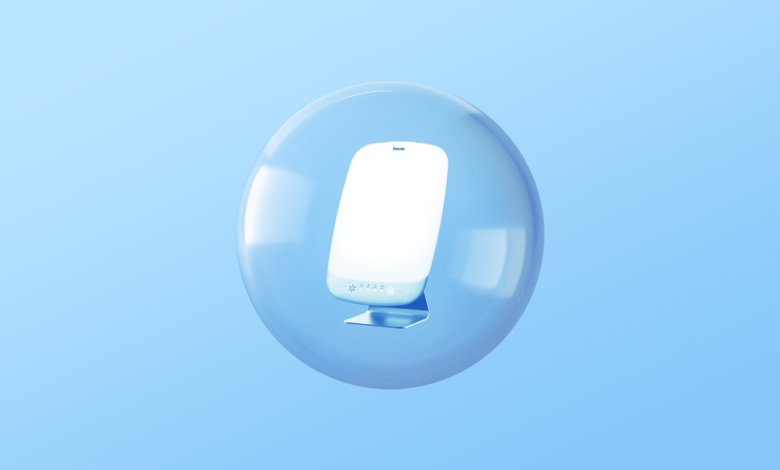
NANCY: It’s a really, really special lamp. It looks like it belongs in an Apple Store. It has a very unique light that it emits, that is designed to more closely mimic natural daylight, but it’s a very cool color that’s not for everyone, which is why it’s great for people to read reviews, watch videos, and decide what works for them.
CAIRA: Yeah, that one more so reminded me of a fluorescent light. The color, it was literally … it’s very white that comes off of that lamp.
ROSIE: How about the Verilux HappyLight? What’s that one about?
NANCY: I love this one. Okay. This one, it’s so funny, because over the years I’ve always been looking for another budget-pick light, but nothing can topple the Verilux HappyLight. It’s a great little inexpensive, compact, cheap lamp. For the price of one of our top picks, you can get two or three. So you can have one in the office, one at home. I’ve actually even heard of people taking this lamp and attaching it to a portable charger and putting it in the car with them as they’re driving to work, and it’s totally effective. People really like the aptly named Verilux HappyLight.
CAIRA: So if somebody really wants more sunlight in their environment, why would they spend up to $200 on one of these lamps when they could get something like the Verilux for a fraction of that cost?
NANCY: Well, again, the bigger the light face, the better chance you have of getting an effective dose of light therapy in an amount of time that makes sense for most people. The one problem with our budget pick is, it provides 10,000 lux at a distance of only 6 inches. So what that means, though, is at a longer distance, it provides less lux. So if you’re in front of it for a longer period of time, if you just have the thing on at your desk all day, that’s fine. But more lux in a shorter period of time is better. That’s why you would pick the Carex or the Boxelite or another one that gives you a distance. And always read what they say: Good light-therapy lamps offer you inches-to-lux for you to make your decisions. So I think that’s it. I mean, it’s a decision you have to make for yourself. Again, you’re not going to have the Carex in your car, but the HappyLight just kind of fits into a lifestyle and a vibe.
ROSIE: So for someone listening who is curious but maybe a little bit skeptical about reaching for or paying for a SAD lamp, what is the most reasonable and low-pressure way to try light therapy without overcommitting, Nancy?
NANCY: I know this sounds very analog, but just try at first putting on a parka, grabbing a travel cup of a hot drink, and just finding a spot in your world where the sun seems to be shining, and just bask for 10 minutes if you can, or take a walk. If you can do it for free. Even though I am the author of the guide to light-therapy lamps, I am also a budget-oriented, nature-first person, so see if that helps. Because the fresh air, the nature sounds, even if you don’t get a lot of sun, all of these things can also boost your mood. And what’s the worst that can happen?
CAIRA: Well, Nancy, we’ve made it to our final question: What’s the last thing you’ve bought that you’ve really loved?
NANCY: Ooh. Okay. I’m going to give you two words that don’t seem like they would go together, but they do. Have you ever heard of a swim parka?
CAIRA: No.
ROSIE: Oh, Nancy, where is this headed?
NANCY: Imagine a giant, waterproof, head-to-calf coat, but the inside lining is a fluffy absorbent towel. Swim parkas. My daughter joined a swim team, and we had her little sad towel, and all the other children are exiting the pool with their parent acting like a handler and putting them in these coats. And I was like, “What is this? Why are you wearing a coat at the pool?” They’re like, “It’s not a coat. It’s a swim parka.” So I went online and immediately bought it, and it’s delightful and warm, but it’s not too warm. And the kid can waddle in it to the car, and it keeps the car from being soaked in chlorine. I just wanted to know how I made it 44 years without knowing about this extreme towel upgrade that is the swim parka.
CAIRA: All right. I’m not going to lie. I thought you wore this in the water.
ROSIE: Same.
CAIRA: This makes way more sense.
ROSIE: Same.
NANCY: Totally. Totally.
ROSIE: Yeah. Same.
NANCY: But it’s equally as mind-blowing. Because why are we out here with a towel when we can have a swim parka?
ROSIE: Fair.
CAIRA: I’m not mad at that.
ROSIE: Thanks, Nancy. Thanks for joining us.
NANCY: It’s always a pleasure.
ROSIE: Nancy Redd, one of our faves.
CAIRA: She’s a gem.
ROSIE: She is such a gem. What are you taking away from this conversation? I found it really interesting.
CAIRA: I think I need to talk to my doctor and see if maybe getting a light-therapy lamp is the move for me. I live in a basement, as you well know, and I think I would really benefit from one.
ROSIE: Yeah, I love that. I think for me, the picks have been pretty consistent over the years as Nancy has tested these, which suggests that there are some really good options there. Carex sounds like it’s not that nice to look at, but it works really well, and it is an efficient choice, especially for the price point. And I also took from Nancy this idea of using these in the morning to really try and jump-start and get right your circadian rhythm.
CAIRA: Yeah, really important.
ROSIE: Really important. That’s it for us. If you want to find out more about Wirecutter’s coverage, if you want to check out any of the SAD lamps we recommended today, go to nytimes.com/wirecutter, or you can find a link in the show notes.
CAIRA: The Wirecutter Show is executive produced by Rosie Guerin and produced by Abigail Keel. Engineering support from Maddy Masiello and Nick Pitman. Today’s episode was mixed by Catherine Anderson. Original music by Dan Powell, Marion Lozano, Elisheba Ittoop, Catherine Anderson, Rowan Niemisto, and Diane Wong. Cliff Levy is Wirecutter’s deputy publisher and general manager. Ben Frumin is Wirecutter’s editor-in-chief. I’m Caira Blackwell.
ROSIE: And I’m Rosie Guerin.
CAIRA: Thanks for listening.
NANCY: Well, actually, we have a whole testing studio in Transylvania. No, I’m joking.
ROSIE: Yeah. Did you meet all of our colleagues who live under dark bridges?
NANCY: No.