Four phones you should buy instead of the Samsung Galaxy S26 Ultra
I get it; you’re a long-time fan of Samsung, and you’ve been eagerly waiting for the brand to deliver a decent upgrade with the Galaxy S26 Ultra this year. Maybe you wanted to see new camera sensors, a slimmer design, a bigger battery using silicon-carbon technology, or something as simple as Qi 2 magnets integrated into the device.
However, Samsung also chose to play it safe, delivering a phone that doesn’t qualify as an iterative upgrade. Sure, there are some subtle design changes and the usual hardware tweaks, but I’d argue that the S26 Ultra isn’t all that different from the Galaxy S23 Ultra when it comes to the basics.
Although Samsung is content with updating the same phone year after year, this is not the case with other phone brands. Chinese manufacturers are pushing the boundaries of phone technology, and if you’re willing to try moving away from Samsung – as scary as that sounds – there are plenty of great alternatives available.
The article continues below
Get the X9 Pro
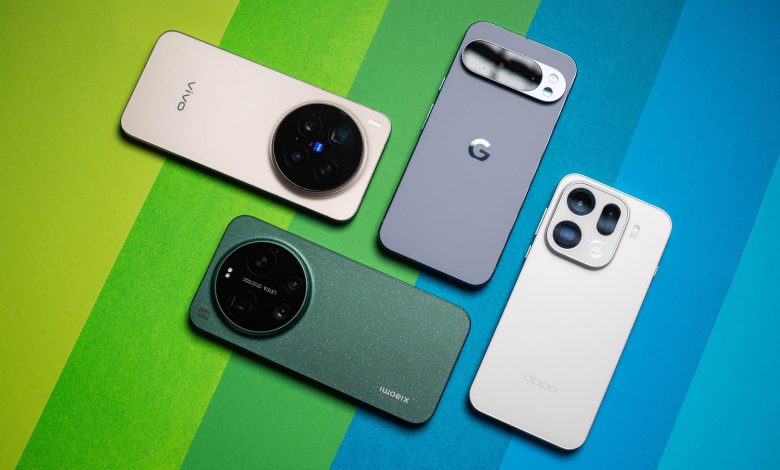
The Find X9 Pro is my go-to recommendation if you’re ready to upgrade this year. The phone has amazing cameras, powerful internals, and a huge battery. Of course, that’s typical of most flagships these days, but the Find X9 Pro simply does things better than its competitors, which is why I’ve used the phone for the better part of four months. Normally, I’d just use the Pixel as my daily driver, but the X9 Pro’s software is good enough to make it seem like a viable alternative — OPPO hasn’t put a foot wrong with this phone.
I also like the design, and the X9 Pro has a really nice feel in the hand. The phone has proven to be quite robust in the four months I’ve used it; after about a dozen falls, I don’t see any visible damage. The MediaTek-powered internals are as powerful as the latest Qualcomm-based phones, and to be honest, there aren’t many faults to point out. One point of contention is that the X9 Pro has limited global availability, but it’s sold in the UK and select western markets, so it’s good to see.
The main reason you’ll want to consider the Find X9 Pro is the cameras; thanks to a new imaging engine and close collaboration with Hasselblad, OPPO has taken things to a new level, and the phone takes decent photos and videos. The main lens lives up to challenging conditions, the telephoto shooter is good at 3.7x and doubles as a portrait lens, even the wide angle is excellent. After taking thousands of photos in six countries, I am convinced that the Find X9 Pro has one of the best cameras of any phone.

The Find X9 Pro is the upgrade you want; the phone clearly holds its own against the Galaxy S26 Ultra, and the cameras are on a completely different level.
Vivo X300 Pro

I’ll agree that the Find X9 Pro is a better all-rounder, but when it comes to cameras, Vivo’s X300 Pro tops my list. Vivo has done a great job with its camera efforts over the past two years, and I prefer the product’s color science and tuning. Although the camera sensors are not very different from the Find X9 Pro, Vivo has a slight edge with the tuning algorithms, and at this stage, even a small advantage makes a difference.
The X300 Pro focuses on technology; the cameras take amazing photos in almost any lighting condition, and the portrait shots in particular are among the best on any phone available today. There isn’t much to fault with the entire phone; it has the same level of internals as the Find X9 Pro, and a bigger battery. The only annoyance is that the model sold in western markets has a smaller 5,440mAh battery, while the Asian model gets a 6,510mAh battery.
Vivo also revamped its software with the X300 Pro, releasing OriginOS globally. The interface is simpler, more fluid, and has extensive customization. Although the X300 Pro is not available in North America, the cameras alone make it the best of the Galaxy S26 Ultra, and Vivo is doing a decent job of bringing the device to select western markets.

The X300 Pro proves that Vivo can make a great flagship, and the cameras may be the best of any phone you can buy today.
Xiaomi 17 Ultra

I didn’t think I would enjoy using the Xiaomi 17 Ultra as much as I did; Xiaomi has faced many software problems, and the cameras are much better this year. Xiaomi is the only brand that still uses a 1-inch sensor in its main camera, and the 17 Ultra is a true powerhouse of imaging.
But what I like even better is that it sort of irons out the problems with the tuning algorithms, resulting in better quality images across the board. And I love the design this year; the green model looks great, and thanks to the larger battery, I had no problems using the 17 Ultra while traveling.
Xiaomi’s software is still not as good as its Chinese competitors, but I will admit that it is better than years ago. Another good thing is that the 17 Ultra is available in the UK and other western countries, and while it costs the same as the S26 Ultra, you get better cameras.

The 17 Ultra looks great, takes great pictures, and costs the same as the S26 Ultra; if you are in the country where it is available, it is a better choice.
Pixel 10 Pro XL

As much as I love using Pixels, I know that Google phones do things differently from all other brands. You don’t get that much customization anywhere, and the interface takes a little getting used to. Google’s insistence on AI also means that the Tensor G5 isn’t as powerful as its MediaTek and Qualcomm rivals, so the Pixel 10 Pro XL doesn’t handle demanding games anywhere.
That said, if you need a phone with lots of useful AI features and great cameras, the Pixel 10 Pro XL is the closest alternative to the Galaxy S26 Ultra in North America. Of course, if you’re a long-time rival of Samsung, you might not like the UI, but what’s undeniable is that the Pixel’s AI features are a tier above everyone else’s, and while you’re not getting a larger 1-inch sensor, Google continues to do a great job of fine-tuning its cameras, and the Pixel 10 Pro XL takes great photos.

The Pixel 10 Pro XL is a viable alternative to the Galaxy S26 Ultra in North America, and while you don’t get as much customization, Google’s AI and camera efforts continue to stand out.