


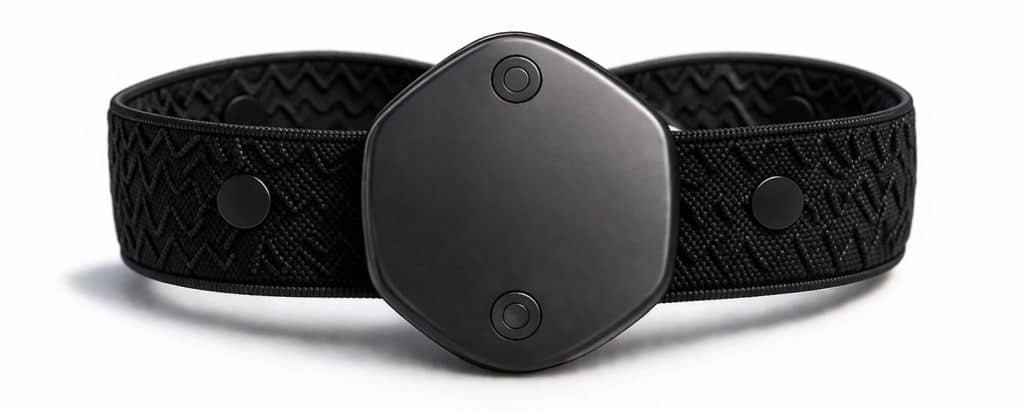
Did we just get a glimpse of where Whoop hardware might be headed next? The company’s newly granted patent offers an interesting look at a wearable device, with drawings showing a pressure-sensitive sensor strap designed to be placed over the arm. The filing includes an optical sensor and energy measurement and points to a deep physiological tracking, including muscle oxygenation data.
A sensor designed for different parts of the body
One diagram shows the device placed on top of the thigh, while another highlights use on the chest, arm and waist. You might be wondering – why would Whoop want the device to be worn in different places in the first place? The answer probably comes down to the quality of the data and the type of environmental signal being measured.
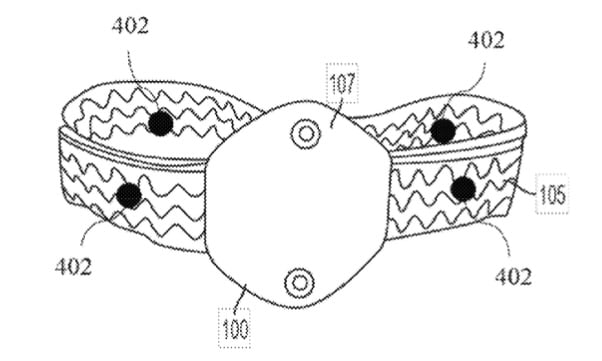
Different areas of the body offer very different insights. Large muscle groups such as the quadriceps can provide a clear picture of muscle oxygen consumption during exercise, which can be particularly useful for running, cycling and strength training. In contrast, areas such as the chest or torso can provide stable readings of broad cardiac signals and recovery metrics.
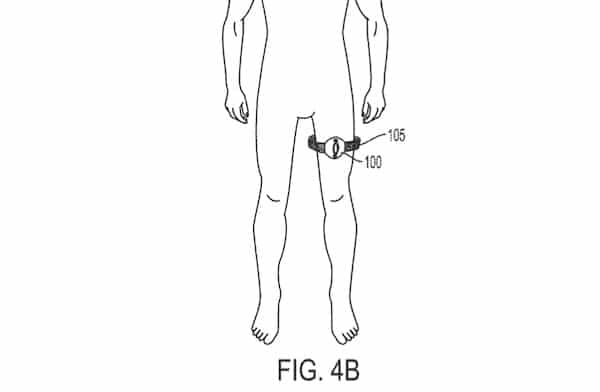
This suggests that Whoop may be building a metric-friendly system. That’s a significant change from the traditional smartwatch approach, where heart rate, recovery and activity tracking are all restricted to one place that’s the best place to capture the signal.
Muscle oxygen can be the real goal
The patent repeatedly points to combining the optical sensor with pressure data to extract deep biological signals. One of the most interesting of these is muscle oxygenation, which is now largely limited to niche devices and specialized sensors.
Placing a sensor on the thigh or arm makes the most sense for this type of measurement. It allows the device to monitor how the muscles use oxygen during the effort, rather than relying solely on heart rate as a proxy for intensity.
If Whoop goes this route, it could open the door to new types of training data. Instead of only tracking strain through heart rate response, the system could begin to show how hard the muscles themselves are working and how quickly they are recovering.
A pressure sensor adds another layer
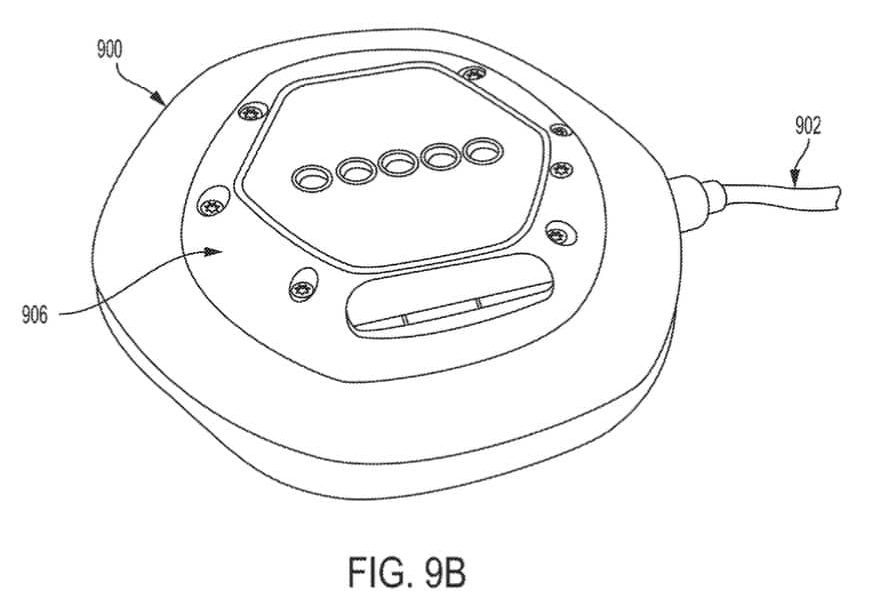
Another important part of the patent is the use of pressure sensing inside the belt.
Rather than assuming that the device is worn correctly, the system can detect how much it is pressed against the skin and adjust its readings accordingly. This has a direct impact on data quality, especially for optical sensors, which are sensitive to both movement and contact consistency.
It also enables more advanced data interpretation. Changes in pressure can affect blood flow and tissue response, which can be used alongside visual cues to refine measurements.
The patent targets more than muscle oxygen
While the muscle oxygen angle is arguably the most eye-catching part of the supplement, the patent itself points to a broader set of health metrics.
Among the parameters referred to are blood oxygen saturation, oxygenated and deoxygenated hemoglobin, and total hemoglobin levels. That suggests that Whoop may be doing deep tissue analysis and blood flow analysis.
Filing also refers to tissue saturation and blood flow-related signals, which may be used to improve recovery and strain information. In practical terms, that can help give a clearer picture of how blood flow responds during exercise and how quickly the body returns to baseline afterwards.
Also discussed are pulse waveform data and pressure-based vascular measurements, which may support more advanced cardiovascular metrics, including improved blood pressure trend measurements. That’s especially noteworthy given that Whoop already offers Blood Pressure Insights, suggesting that this patent could point to future hardware designed to improve the quality and reliability of those readings.
What that could mean for the next Whoop
Of course, this is not a guaranteed product roadmap, so it should be taken as an early signal rather than a direct preview of the next device. What makes this filing so interesting is that the patent drawings don’t seem to show the placement of the wrist, instead focusing on other parts of the body.
That leaves open the possibility that this isn’t a direct replacement for the regular Whoop. Instead, it could be a separate device designed to work alongside a key wearable, possibly as part of the company’s broader body-based tracking ecosystem.
What gives this filing weight is that, in the past, almost all of Whoop’s patents have gone on to appear in real-world products. While that’s not a guarantee, it makes this sound like more than just a theoretical idea on paper.
This article first appeared on Gadgets & Wearables, the first media outlet to report the story.
Source: USPTO
Sign up for our monthly newsletter! Check out our YouTube channel.
And of course, you can follow Gadgets & Wearables on Google News and add us as a favorite source to get our expert news, reviews, and opinions in your feed.
The post Whoop explores more details on muscle oxygen wearables appeared first on Gadgets & Wearables.