
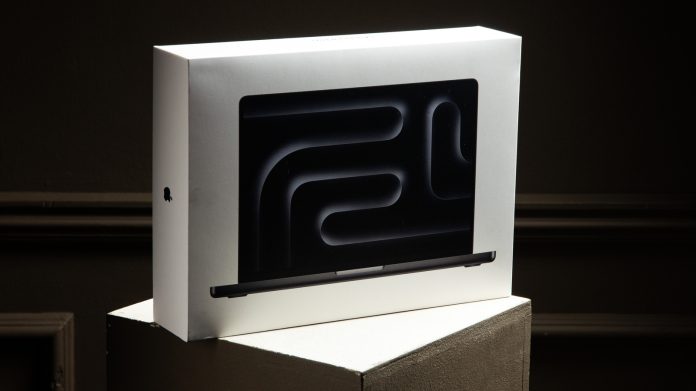

MacBooks have always enjoyed praise from consumers, but Apple’s changes to its in-house silicon have taken laptops to a new level. The entry-level MacBook Neo, powered by the iPhone chip, and the MacBook Air both offer impressive specs and all-day battery life. However, those looking for serious power should always look to the MacBook Pro. The latest in Apple’s catalog of laptops is powered by the M5 series of chips with 16GB of RAM and 1TB of storage. You can decorate it with M5 Max, 128GB of RAM, and 8TB of storage.
This makes it one of the most powerful laptops you can buy, but the MacBook Pro also excels in other areas. It has a 120Hz Mini LED screen, speakers with punchy bass, and a high-quality trackpad. All this makes the MacBook Pro a reliable machine. While it covers all the basics pretty well, Apple devices aren’t exactly known for having the most exciting feature sets – and the MacBook Pro is no different.
When you step into the sea of Windows laptops, you will be overwhelmed at first. However, you will soon realize that choice is not really a bad thing. In fact, some laptops that rival the MacBook Pro in terms of performance also tend to offer features that it lacks. From a second screen to unmatched customization and user optimization, here are five laptops with exciting features you won’t find on a Mac.
Asus Zenbook Duo
Like most manufacturers that make Windows laptops, Asus has a wide variety of options in its catalog. The $2,500 Zenbook Duo, however, is far from the most boring laptop you can buy. Its experimental dual-screen design almost puts it in a class of its own. It can be specified with an Intel Core Ultra X9 388H processor, 32GB of RAM, and 2TB of fast SSD storage. This already ranks it as a high-performance laptop, but that’s not the highlight here. Not only does it incorporate the MacBook Pro’s Mini LED technology by offering a 3K OLED 144Hz display – it has two of them.
The Asus Zenbook Duo allows you to use it in several different ways. Laptop mode requires you to place the Bluetooth keyboard on top of the bottom screen. Alternatively, you can prop the laptop on its side and use the two displays in portrait orientation. You can also use the kickstand to place the displays in landscape mode for a more traditional setup. Both displays are touchscreens and support stylus input.
In our review of the Zenbook Duo 2025, we noted a few annoyances. First, it feels heavier than its advertised weight would suggest. Battery life, as you can imagine, is also not its strong suit, as the laptop needs to power two bright displays. However, all of its downsides can be quickly erased when considering how different the experience is that it offers.
HP Omen Max 16
The new MacBook Pro models are advertised as being able to run games like “Cyberpunk 2077” or “Assassin’s Creed: Shadows,” which is impressive in itself. However, if you’re primarily looking for a gaming laptop, Windows is the better platform, and Windows laptops that come with separate GPUs can deliver much higher performance and better graphics than Macs. The HP Omen Max 16, as recommended by RTINGS, is one of the best gaming laptops you can buy.
Pricing starts at $2,550, which gets you an Intel Core Ultra 7 255HX processor, 16GB of RAM, a 512GB SSD, and a 12GB Nvidia GeForce RTX 5070 Ti GPU. This is a pretty decent specification that can handle graphics-demanding games at high settings quite well. Of course, you can stuff this thing with a Core Ultra 9 275HX CPU, 64GB of RAM, 2TB of storage space, and an RTX 5090 GPU, with 24GB of VRAM. When you’re fully stocked, you’re looking at a price tag of around $5,000.
Although the 14-inch MacBook Pro starts at a relatively affordable $1,700, you end up paying the same price for the 16-inch model when you match the RAM and storage. The HP Omen Max 16 can also be upgraded to include a high-resolution OLED 240Hz display. When paired with a strong graphics card, competitive titles like “Counter-Strike 2” or “Valorant” play better on screens with higher refresh rates.
Lenovo Legion 9i
In our Lenovo Legion 9i review, we gave it a 10/10 rating. It had some very powerful internals, lots of port choices, and a liquid cooling system that kept the temperature steady. However, the new 18-inch model has a larger 240Hz display, updated materials, and a vapor cooling system. Pricing starts at a whopping $4,500, which gets you an Intel Core Ultra 9 275HX processor, an RTX 5080 GPU, 32GB of RAM, and a terabyte of SSD storage. If money isn’t an issue, $7,000 gets you an RTX 5090 GPU, 192GB of RAM, and double the storage. You can also add a second M.2 SSD.
Looking at the specs, it’s safe to say that the Legion 9i Gen 10 wipes any MacBook Pro category when it comes to gaming performance. Another area that comes out on top is communication. Port selection on the MacBook Pro isn’t bad — you get an HDMI port, an SD card slot, a headphone jack, and three Thunderbolt 4 ports (Thunderbolt 5 for the M5 Pro and M5 Max). However, the Legion 9i comes with three USB-A 10Gbps ports, three USB-C ports – two of which are Thunderbolt 5 ready – an SD card slot, a headphone jack, and an Ethernet port. While the Thunderbolt 5 ports can power the laptop, the DC-in port is conveniently located on the back. This is also where you find the HDMI port.
Framework laptop
The MacBook Pro comes with a sleek aluminum construction that puts most of its competitors to shame. Apple has also implemented a trackpad, keyboard, and speakers in its laptops. While this gets you a premium experience like no other, the MacBook doesn’t score high in terms of user experience – you’re stuck with the specifications you’ve chosen at checkout. It also doesn’t help that Apple charges outrageously for RAM and storage upgrades. This is where the Framework Laptop we reviewed shines.
It comes in three screen sizes, and the current generation models come in both AMD and Intel variants. The Framework Laptop’s strong suit is customization — both at checkout and afterward. You can customize it to your liking by choosing a different CPU or display panel. RAM and storage upgrades are more expensive than what Apple charges, and you can even choose to leave these bits blank if you have your own components you’d like to use. If the same black bezel is normal for you, you can choose one in a different color. Depending on your region, you can also choose a different keyboard layout.
The Framework Laptop uses what it calls “Expansion Cards” in its ports. This allows you to select only the ones you want and move them where you can. The price is greatly influenced by your choice of components.
Asus ProArt P16
The MacBook Pro’s 120Hz Mini LED display looks good, but it’s not the best – even the Apple iPad Pro has a tandem OLED display that’s pretty impressive in comparison. In the laptop space, the Asus ProArt P16 is a worthy competitor as powerful as the MacBook Pro but also offers a superior display experience. It sports a 4K 120Hz OLED panel with anti-reflective coating and Dolby Vision support. It’s also a touchscreen, a feature that was sadly missing from the MacBook lineup. With a Pantone Certified display, Asus targets creatives and professionals alike with its ProArt series.
The Ryzen AI 9 HX 370 processor powering the laptop is no slouch either. You get an 8GB RTX 5070 GPU which also automatically puts this laptop at the forefront of gaming performance. Pricing starts at $3,000, where you get 64GB of RAM and a 2TB M.2 NVMe SSD. The ProArt P16 also has an additional slot for expanding another SSD. If you’re serious about gaming or working on applications that require 3D, the upgraded model features an RTX 5090 GPU with 24GB of VRAM. Port selection is good with two USB-A and USB-C ports, an audio combo jack, an HDMI port, and a card reader. You get a total of six heated speakers and Dolby Atmos support.