
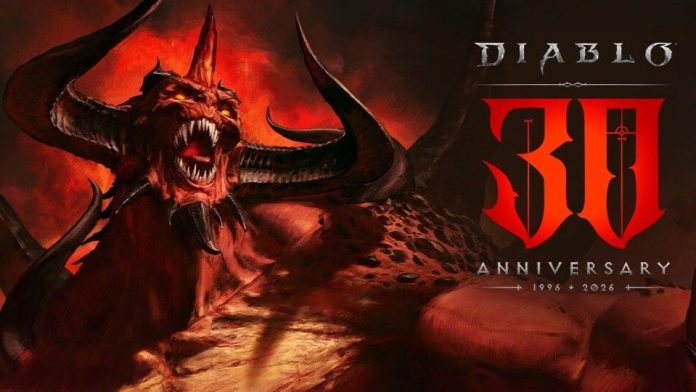

The Royal Festival Hall in London has recently been transformed into a musical gateway to the fiery pits of Hell, and no I’m not talking about the fun of the London Underground.
As I sat in the audience for the Diablo 30th Anniversary Symphony on 06/06/(202)6, surrounded by hundreds of other fans, it felt like a kind of full circle moment for me. After all, it was my spamming to friends about the current state of Diablo 3 that got me into gaming in the first place. This franchise has changed my life in so many ways, and the concert was something of a pilgrimage through three decades of iconic, haunting, and soulful music that has defined the Diablo franchise from its humble beginnings in 1996 all the way up to Diablo 4.
Watching a full live orchestra play the Diablo music found in every game session was like an out-of-body experience. I found myself mesmerized by the way the choir’s voices, booming over the strings, functioned as instruments themselves, truly carrying the weight of the gothic horror drama.
Watching a full live orchestra play the Diablo music found in every game session was like an out-of-body experience.
An instantly recognizable 12-string guitar riff on Tristram’s theme was the highlight of the night. As those familiar, melancholy notes rang out, I heard a gasp from the other fans sitting next to me. It was a shared connection with a piece of music that has been the centerpiece of many a session over the years. It was heard several times during the game, as it went deep into the soul of Diablo 4’s soundtrack, which connects all the franchises, yet it is clearly seen as Diablo 2’s soundtrack.
Before the performance, I had the privilege of sitting down with the two creators behind these sounds: Charlotte Pyle, Lead Sound Producer, and Derek Duke, Music Director at Blizzard Entertainment.

Finding the right people for the job

For those who live and breathe these games, it’s easy to assume that the people who make the music have been lifelong gamers in the traditional sense, but the paths to Blizzard are as varied as the scores themselves.
Charlotte Pyle joined the studio nine years ago, coming from the film industry. “I was approached while working in the film industry about a role in cinema sound production,” Pyle explained. “I did a lot of interviews, and they called me saying they were interested in me joining, but they wanted me to actually be a top music producer”.
Derek Duke, on the other hand, is a cornerstone of Blizzard’s legacy. “I started at Blizzard as a contractor, writing music, then I had the opportunity to go full time,” Duke shared. Having worked with the studio for nearly 25 years, his time spans the evolution of all of Blizzard’s music.
Blizzard’s “dark” franchise

We touched on the differences between Blizzard’s franchise, and the creative process behind Diablo’s unique and terrifying sound.
“Diablo is our ‘M for Mature’ game. Our dark, gothic franchise,” Duke explained. “It’s very heavy, very immersive; it has that sense of dread. Military World certainly less bright, more neoclassical.”
I’ve always felt that Mephisto’s theme in Diablo 4 gave a feeling of creeping death versus having jaws snapping at your heels. When I asked if they look to horror/thriller cinema for inspiration, Duke noted that their influences come from all over the place, explaining that they listen to a wide variety of music and film rather than limiting themselves to one genre.
How collaboration has evolved

As technology has improved, so has the way Blizzard creates its songs. The team works with musicians and singers from all over the world. In fact, it was explained that this evening will be the first time that many musicians will sing in the same room, despite the fact that their sounds have been combined for many years as we circle the Sanctuary.
“Technology has evolved a lot, but it allows us to move faster and work more efficiently,” Duke said. “Especially with things like Diablo 4, it’s made for the best collaboration. We work with singers and instrumentalists all over the world – from electric violinists in Canada to percussionists in LA. It’s amazing”.
This collaborative spirit extends to the development cycle of the game itself. I asked how quickly the guys met with the writers when it came to making a piece of music for a particular cutscene or side quest.
“We’re always in touch with the game team – that’s one of the benefits of a music team that’s so focused on every single game,” Pyle said. “The moment we first hear about something, we get the call, we get the concept art, and we look at the stories as quickly as possible”.
Duke set an example. “Neyrelle’s theme was going to be created when we started on that film with Neyrelle in it, so we would decide that Neyrelle needed a theme, because she was used in the story, so we started working on her theme that could be used in many cinematics and throughout the story,”
Translating the digital to the live stage

The challenge of taking music intended for a PC headset and taking it to a large concert hall was one of the most exciting topics we’ve touched on. With the symphony, the band didn’t just play digital files; they depend on the human part of the soundtrack.
“Arrangements specially created for the symphony,” Duke explained. “We have the four soloists we used in Diablo 4 fly in to perform live. There will be no stops or starts or second takes; it will be shot in one go”
A legacy of sound

One of the most impressive things about Diablo 4 is how its soundtrack manages to feel completely new while tapping into those “twins” of nostalgia, those certain notes we talked about that immediately take you back to Diablo 2.
“We are always aware of the past and preserve that heritage,” Duke said by way of their latest entry. “We always want to change the sounds of the franchises, but keep the past for the future. It’s great that you refined that”.
I left that night with the feeling that the team was behind Diablo 4 audio has a deeper focus on history than you might think, helped in no small part by a team of Blizzard veterans. It can’t be easy to keep the franchise’s legacy alive while still promoting Diablo 4’s unique identity, but they’ve pulled it off. This was more pronounced than before when I heard the Infernal Symphony itself. The change of pace from the classic tracks of Diablo 2 to the melting despair of Kyovashad’s theme made it clear that they were able to go big and stand out with Diablo 4. However, even in the midst of that massive orchestral scale, I’m incredibly glad there’s still room for that 12-string guitar.

Join us Reddit at r/WindowsCentral to share your information and discuss our latest news, reviews, and more.