
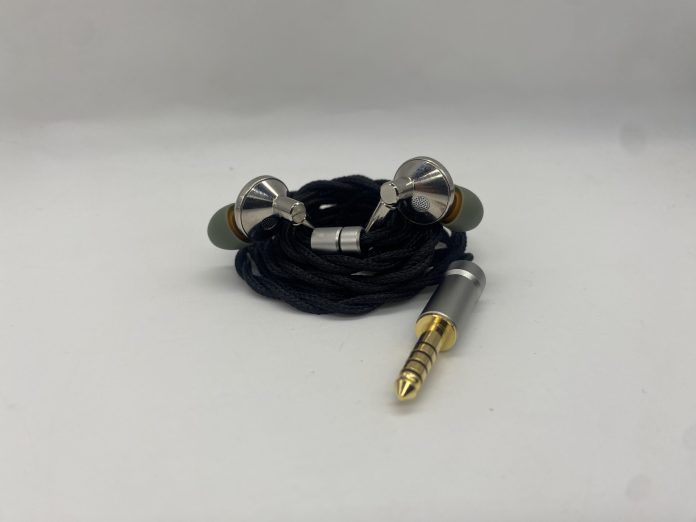
Audio champs ddHifi started learning about earphones just last year, and have continued to produce affordable models that don’t compromise on quality. 2026 saw the release of the Skyfall and Iris IEMs in India, as well as two updates to the Memory, one of their first models from 2025.
Also working with MOONDROP, the Memory 4.4 trades the original USB-C input for its cable-based names while reworking the tuning and acoustics with two unique options. Looking at the model designed with a copper palladium plated chassis, the Pd4.4, is the Memory 4.4 a step up from the original?
Package Contents:
- Memory earphones
- IS-Size ST35 Eartips (Pre-Installed)
- Extra Ears: One pair each S/M/L size
- Black Storage Case CZ120B
- Manual, Warranty Card, and Certificate of Compliance
Visual design
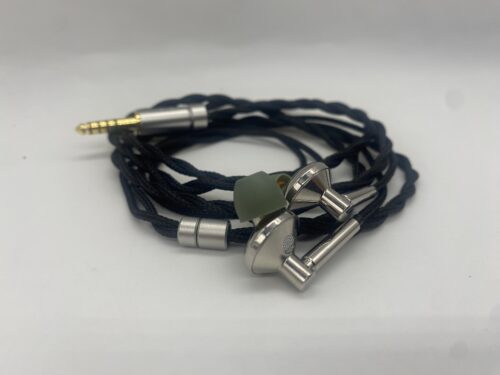
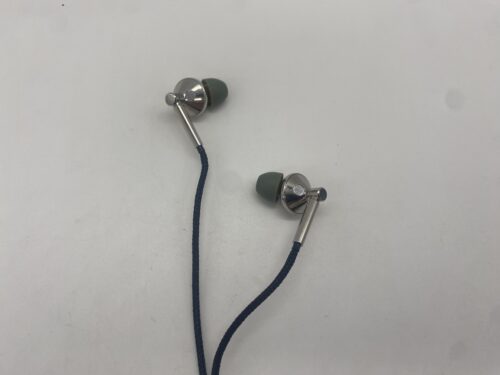
As the name might suggest, Memory’s design philosophy relies on recapturing the nostalgia of the sound of the past. Retro-future aesthetics aren’t exactly new to the audiophile scene, but they’re remarkably rare for IEMs. The Memory Pd4.4 is the same chrome with a simple stem-like shell, which cancels out the color and shape preferences common to the in-ear area. While I aesthetically like the finish of the Pd4.4, it is more prone to visible prints and stains compared to the aluminum version, the AL4.4.
Having a standard earbud design gives the Memory line a head start in terms of comfort, but places more demands on the right fit. The feeling of security with a standard IEM wrap setup is missing, but the small 4.4 design stays closed, firmly supported by the inner part of your ear. Where the 4.4 feels distinctly secure is in its build quality, which feels solid and reliable.
Sound Design
MOONDROP returns to the 4.4 configuration, challenging the 13mm planar driver to outdo its contemporaries with a dual-stage design and four-magnet array. This design increases the efficiency of the driver and limits distortion, allowing the driver to squeeze more power into the frequency spectrum while maintaining the precision the planar designs are known for. In addition, the redesign of the front and rear pipes provides a cleaner acoustic profile than the original Memory. The 4.4 cable extends the connection capacity, enabling a larger scope of sound sources.
The differences in some models are the materials used in the housing and the cables, which contribute to a strong sonic difference and a small difference in prices. The Pd4.4 uses pure palladium-plated copper in its housing, and custom black braided 6N OCC wire, giving the Pd4.4 strong passive isolation.
- Effective FR: 20Hz – 20kHz
- Impedance: 16Ω±15% (@1kHz)
- Sensitivity: 121dB/Vrms (@1kHz)
- THD: ≤0.1% (@1kHz)

Sound stage
The attempts made to replace the Memory 4.4 sound stage are impressive and disappointing. In terms of layering and placement, the Memory 4.4 is amazing for its price range. The instruments are easily picked out when they are focused but remain understandable when in the midst of busy mixes. The range and direct power doesn’t create the biggest space I’ve heard in an IEM, but it’s probably the closest class to the aforementioned 4.4 power.
Unfortunately, the stage design doesn’t make up for its lack of depth. These great positives are slightly limited by a sense of flatness that is almost eliminated by taut fluctuations in the middle. While this is a bit of a letdown, I don’t think this difference in size should detract from the outstanding sound stage. For someone who wants something short and simple for over-the-top compensation, the Memory 4.4 is really good.
The Low End
The low end at 4.4 won’t overwhelm the mind or the speakers, but it achieves what a planar driver is intended to do. Dynamic precision sounds great at this range, giving visible notes that are more supportive than powerful. Bass guitar and synth hits have a round, bouncy quality that makes them equally rich. Kick drums don’t yield a lot of buffing, though they have a constant speed that keeps them uniquely rewarding.
Mids
Midrange is left very neutral, with vocal frequencies somewhat emphasized. The instruments are kept warm, serving to highlight the high-impact singing. I’ve found that this setup works best with singer/songwriter music, where the instruments are there to support them.
They are high
Along with its polar opposite width, the higher ends create a hotter, faster flavor. The highs are not overly bright, instead focusing more on the lows. Although that makes them thinner, it maintains the consistency of Memory 4.4 while ensuring that it is not too bright.
Summary
ddHiFi’s update to the original Memory showcases its reimagined technology as a high-performance IEM. There are no fancy bells or whistles, no superlatives to distract from the sound, and no stunning visuals. The Memory 4.4 makes its money with strong design concepts and fluid sound that always keeps your attention. Audio-hungry listeners may find its closeness and strong identity unsatisfying, but those longing for a straightforward, plug-and-play experience will find much to like about the 4.4.
Both versions of ddHiFi Memory 4.4 are available from Audio46. The Memory Pd4.4 retails for $189.99 and the Memory AL4.4 retails for $159.99.