
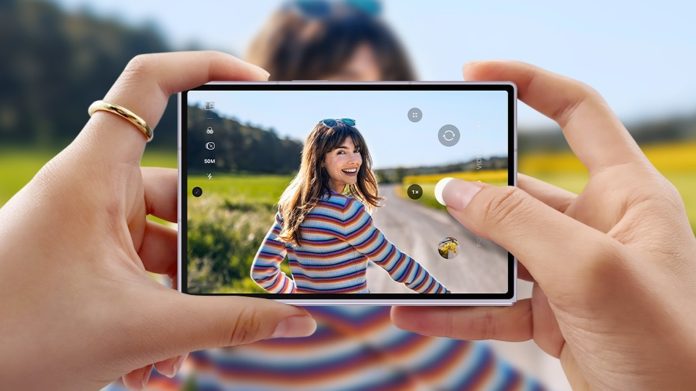

Samsung recently updated its foldable smartphone lineup for 2026, and the highlight of the launch was a completely new smartphone: the Samsung Galaxy Z Fold 8. Despite inheriting its name from last year’s Samsung Galaxy Z Fold 7, it looks nothing like its predecessor. The Galaxy Z Fold 8 is smaller, stockier, and wider than the regular Galaxy Z Fold. Needless to say, it’s a very different proposition from Samsung’s regular Galaxy S26, released in early 2026. So, if you’re in the market for a new smartphone, you need to know a few things before you decide to spend your hard-earned money on both.
Starting with the display, it’s the S26 here that has a standard 6.3-inch Dynamic AMOLED 2X display, compared to the Galaxy Z Fold 8’s dual display setup that includes a 5.5-inch cover display and a larger 7.6-inch inner display. Both phones support a variable refresh rate of up to 120Hz, but the Fold 8’s ability to transform into a small tablet gives you the display’s biggest selling point. The S26, on the other hand, remains the more straightforward choice for anyone looking for a compact flagship.
There is also a big difference in size and weight. The Galaxy S26 measures just 7.2mm in thickness and weighs 167 grams. The Galaxy Z Fold 8 is only 4.5mm thick when unfolded, but inevitably thicker when folded and weighs 201 grams. Samsung has tried to address the durability concerns associated with folding with a redesigned hinge, two layers of titanium under the foldable display, Gorilla Glass Ceramic 3 on the front, and an IP48 rating. The Galaxy S26, however, has an advantage when it comes to protection from the elements thanks to its more robust IP68 rating.
Performance, cameras, and battery
Despite the major differences in their form factors, the Galaxy Z Fold 8 and the Galaxy S26 have a few things in common. In the US, both phones are powered by Qualcomm’s Snapdragon 8 Elite Gen 5 chip. The Samsung Galaxy S26 is offered in 256GB and 512GB storage options, and comes equipped with 12GB of RAM. The Fold 8 offers more storage flexibility, with 256GB, 512GB, and 1TB options on offer. The top-of-the-line 1TB variant ships with 16GB of RAM, compared to 12GB in the other two options.
Moving on to the cameras, the Galaxy S26 gets a traditional triple camera setup that includes a 50MP primary camera, a 12MP ultrawide, and a 10MP telephoto with 3x optical zoom. The Fold 8 gets two 50MP wide and ultrawide cameras, but lacks a dedicated telephoto camera. Samsung only advertises up to 10x digital zoom on the Fold 8, compared to 3x optical and up to 30x digital zoom on the S26. So, if your photography exploits include long zoom range shots, the S26 is actually a versatile choice.
The Samsung Galaxy Z Fold 8 gets a 4,800mAh battery, which is slightly larger than the S26’s 4,300mAh unit. However, it’s important to note that the Fold 8’s battery needs to power two displays, with the larger display being much larger, so overall battery life may be closer than you’d expect. Samsung itself rates the Fold 8 at up to 26 hours of video playback, while the S26’s smaller screen and standard form factor give it a performance advantage depending on how the phones are used.
The $1,000 Question: Which one should you buy?
The feature-loaded Galaxy S26 launched in the US at $899.99 for the 256GB model, but it can be bought for less at various retailers. The base 256GB variant of the Galaxy Z Fold 8 starts at $1,899.99 for the same amount of storage, making it $1,000 more expensive before discounts, trade-ins, or carrier offers come into the equation. The 512GB variant takes the Fold 8 to $2,099.99, while the 1TB version will cost users a staggering $2,499.99.
Obviously, if you’re looking for the best value for money performance, the Samsung Galaxy S26 is no slouch. It gets the same Snapdragon 8 Elite Gen 5 processor in the US, the same 12GB of RAM, and the same versatile rear camera setup. It’s also lighter at 34 grams, has better IP68 dust and water resistance, while costing less than half that.
That, however, does not make the existence of the Galaxy Z Fold 8. Its form is naturally cool, and it will turn many heads. The internal display of the phone makes it better suited for multitasking, documents, websites, videos, and running multiple apps at the same time. Samsung has also specially prepared the Fold 8’s large display for side-by-side reproduction, while keeping features like Samsung DeX, although S-Pen support is still missing.
Simply put, for most consumers, the Galaxy S26 is the smartest choice. The Galaxy Z Fold 8 makes sense if you’re specifically looking for a device that can replace a regular smartphone and, to some extent, a small tablet. Whether that change is worth the extra $1,000 in storage is the big question buyers have to answer.