
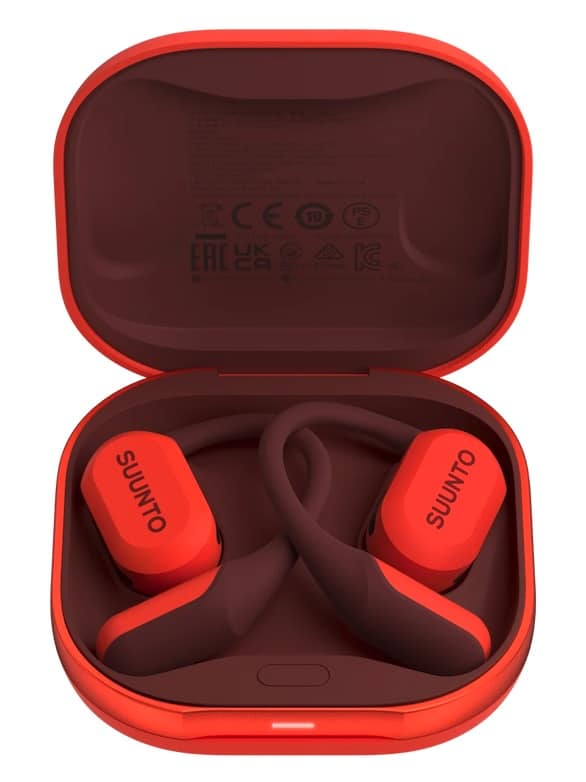

Suunto has officially launched the $179 Spark, a new pair of open-back earbuds that take the brand in a different direction than the bone conduction range. Along with up to 36 hours of total battery life and a lightweight earbud-style design, the new model also delivers performance-oriented metrics.
More than other earbuds
This is what makes the introduction of the Spark more interesting than the usual audio output. Suunto already has several open-ear products in its lineup, including the Wing and Sonic series, but those focus more on awareness and training-friendly listening than performance data.
Spark keeps that basic awareness approach, but adds a layer of understanding usually reserved for watches or chest straps. It can track cadence, monitor running style and monitor head position during exercise, making it close to a lightweight training tool.
Head position is an interesting parameter because it often changes as fatigue builds. Runners tend to lean forward or strain their neck and shoulders over long distances, which can affect performance. Having an answer to that, even in a simplified form, would be helpful for people trying to refine their form without complicating their setup.
This is where the brand starts to shine. It doesn’t just bring sound, but it tries to add context to the way you walk.
A new direction for Suunto audio
In terms of sound, the new switch is to the air-conducting earbud design. Instead of the wrap band used on the Wing and Sonic, the Spark uses two separate earbuds that sit just outside the ear canal. That should sound very familiar to anyone used to wireless earbuds, while allowing for environmental awareness during a run or ride.
That change alone would open this up to a wider audience. Bone conduction works well for most athletes, but the fit isn’t for everyone, and the design is clearly sports-first. Spark looks like a more flexible option that still retains the main advantage of staying alert.
Details and everyday usability
The specification sheet reinforces that broad stance. The Spark supports LHDC 5.0 high-definition audio, spatial audio with head tracking, custom EQ settings and two-device connectivity via Bluetooth 5.4, which puts it in line with more premium earbuds than those focused solely on sports.
Battery life is quoted at up to 36 hours with a charging case, which should translate to several days of mixed use without needing to recharge. The earbuds also have IP55 water and sweat resistance, making them suitable for regular training and everyday use.
The weight of less than 10g per earbud is another important detail because comfort is often very important with open ear designs. If these sit securely without adding pressure, they can work well for longer sessions where heavy earbuds start to show.
How does it fit next to Wing 2
This gives Suunto two different directions in its sound system. The Wing 2 remains the most dedicated training option, with synthetic suspension, safety features and a strong focus on outdoor use.
Spark feels flexible. It’s still aimed at active users, but the design and feature set suggest it’s meant to be used all day, not just during a workout. That includes commuting, casual listening and casual use where bone conduction may sound too special.
For Suunto, this looks like a logical expansion rather than a move away from its core audience. The company is building a broader ecosystem around training, and Spark adds another entry point that may appeal to users looking for something simpler and more familiar.
Sign up for our monthly newsletter! Check out our YouTube channel.
And of course, you can follow Gadgets & Wearables on Google News and add us as a favorite source to get our expert news, reviews, and opinions in your feed.
The post Suunto introduces Spark with cadence and form analysis appeared first on Gadgets & Wearables.